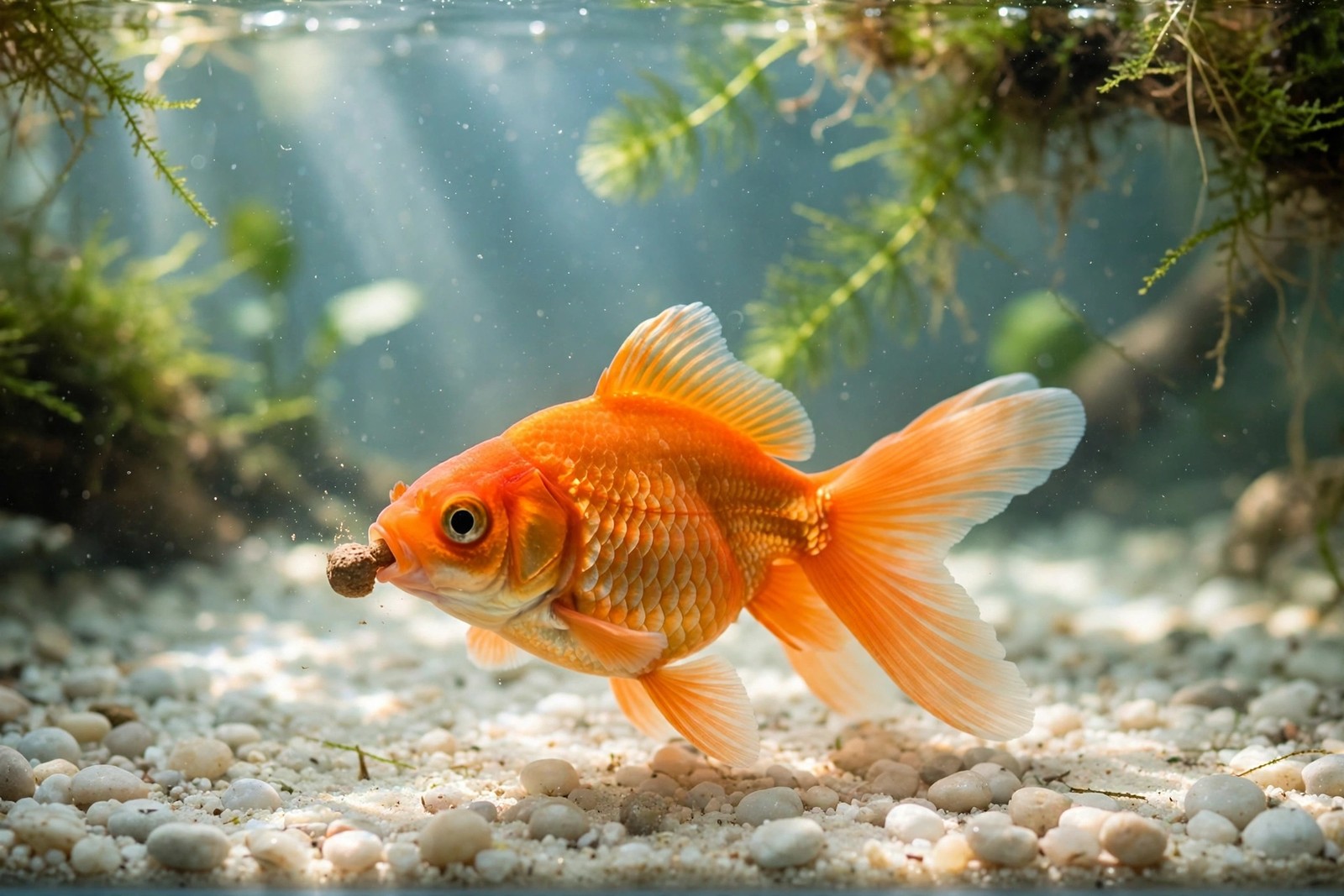
Watch a goldfish feed and you will see a lot of apparent indecision: a pellet goes in, comes partway out, goes in again, and only then disappears. That cycle is how goldfish are built to eat. Their jaws carry no teeth, and the grinding happens further back, on bony plates in the throat that crush food against a hard pad. A dry, firm pellet needs several passes through that mill, softening and breaking down a little each time, so spitting and re-taking is the middle of a normal meal rather than a rejection of it.
Mouthing, Softening and Sorting as One Routine
Goldfish feed by sorting as much as by swallowing. Between pellets they mouth the substrate, take in small stones or bits of decor, and spit them out again while sifting for edible scraps, which is why a goldfish tank is rearranged so often. At the surface the same sorting applies: a piece that is too big is held, crushed, dropped and recovered, and fragments broken off are chased and eaten individually. Fancy varieties work more slowly than sleek single-tailed fish, so give slower fish their share by spreading food across the surface.
How Normal Mouthing Differs From Real Rejection
In normal mouthing, the pieces get smaller, the goldfish keeps returning to them, and by the end of the meal very little is left. In real rejection, whole pieces come back out unchanged, the fish loses interest and swims away, and the same food is refused at the next meal too. Size is the first suspect: offer a smaller pellet, crush larger ones, or pre-soak dry food in tank water for a few minutes so it arrives soft. Stale food that has lost its smell in an open container is another frequent cause, and switching to a fresh supply settles it. Sinking foods suit many fancy goldfish better than floating ones, because a fish that feeds head-down at the bottom swallows less air with its meal.
Feeding Habits That Reduce the Mess
Because goldfish work food over so thoroughly, uneaten fragments drift and foul the water quickly, and goldfish produce heavy waste even from food they finish. Feed measured amounts the fish clear within a few minutes, twice a day for adults in warm water rather than one large meal, and lift out leftovers instead of leaving them to soften into the gravel. If you keep gravel, choose smooth pieces too large to be picked up and swallowed by mistake, because small gravel is the size a mouthing goldfish can take in and fail to spit back out. A turkey baster kept for the tank makes removing settled scraps after feeding a thirty-second job.
When Spitting Means Something Is Wrong
A goldfish that tries to eat but swallows nothing across a whole day needs a closer look. Check for a piece lodged in the mouth only from outside, by watching whether the mouth opens and closes evenly, and never probe inside it yourself. Test the water the same day, because poor water quality suppresses appetite and makes feeding behaviour erratic, and look for clamped fins, gasping at the surface, stringy waste or loss of balance alongside the spitting. Those added signs, or a full day of failed feeding in a fish that usually eats eagerly, are reasons to contact an aquatic veterinarian promptly rather than cycling through more foods.
Matching Food to the Fish Over Time
The pattern becomes clear when meals are written down: which pellet size gets finished, which foods are mouthed endlessly and abandoned, and whether pre-soaking changed the result. A week of notes usually settles whether you are watching normal throat-crushing or a food that genuinely does not suit your fish. Keeping that feeding record in KinsLe's Care Teams, where each meal duty is marked complete with a timestamp, lets everyone feeding the goldfish use the size and type that the record shows actually gets eaten.