
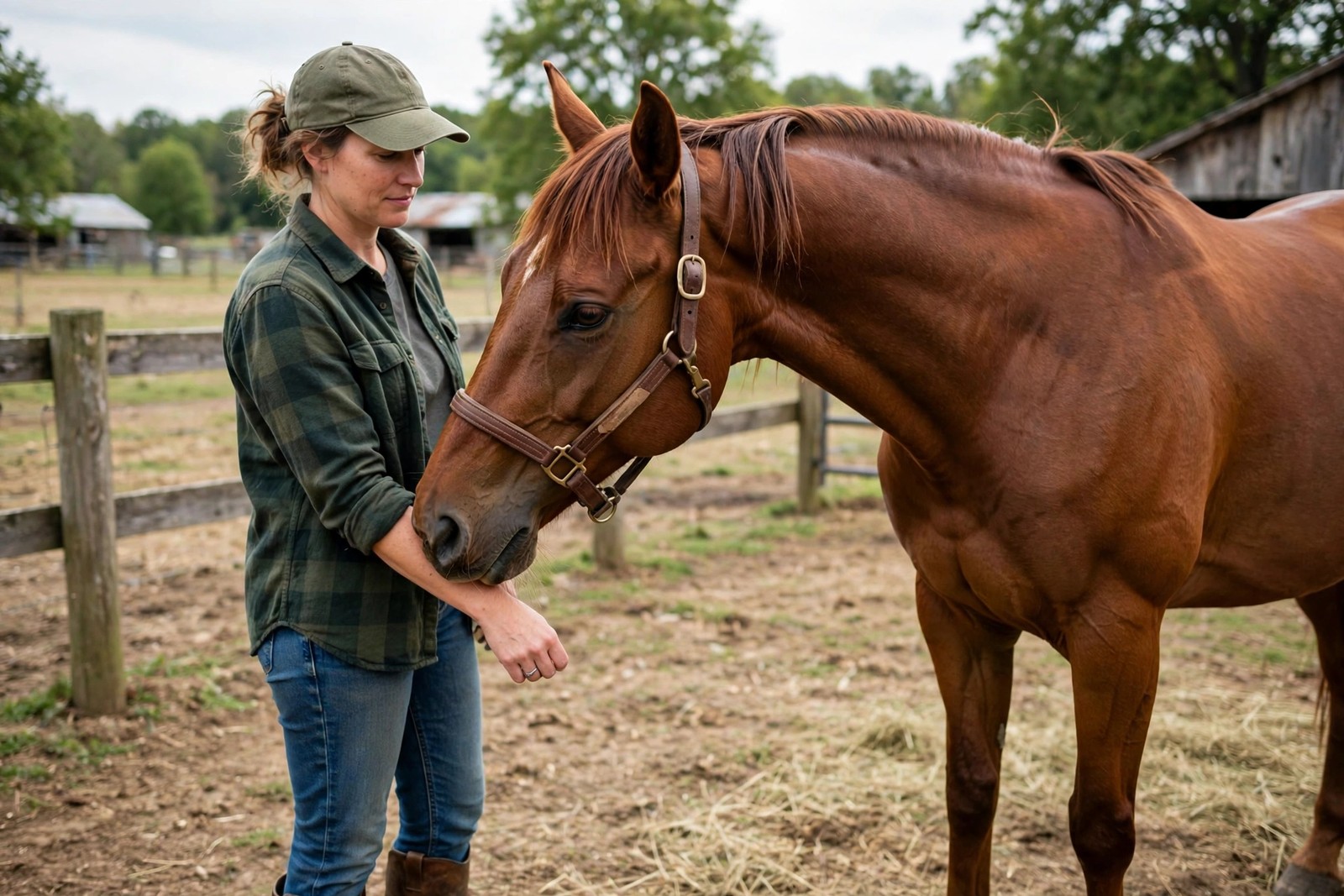
A horse who pushes you with his head is usually doing one of three things: testing a boundary, asking for attention, or trying to rub an itchy face on the nearest available surface — you. It's rarely aggression, but it does matter, because a 1,000-pound animal's casual nudge can knock a person off balance, and behavior that gets rewarded tends to escalate into crowding, rubbing, and barging.
Reading the Push in Context
The meaning depends on when it happens. A push right after you've hand-fed treats often means "more, please" — your horse has learned that nudging humans produces snacks. A shove while you're leading is usually a spacing question: he's drifting into your bubble to see whether the boundary is real today.
Rubbing is different again. A horse who has just had his bridle removed, or who is sweaty under a halter on a hot day, may simply be itchy. You'll see a rhythmic, insistent rubbing rather than a single push, often accompanied by a very satisfied expression once he finds a good post — which he would prefer not to be you.
Also watch for a sudden change. A horse who has never pushed but starts pressing his head against walls, fences, or people, or who seems dull or off his feed alongside it, deserves a call to your veterinarian. New head-pressing behavior combined with other changes is a health question, not a training one.
How to Respond in the Moment
The goal is boring consistency. When your horse pushes into your space:
- Calmly move him back out of it — a light pressure on the chest or a step toward his shoulder, asking him to yield a step or two.
- Redirect him to stand quietly where you put him.
- Reward the standing: a scratch, a kind word, your relaxed attention.
- Repeat exactly the same way next time, and the time after that.
Avoid pushing back with your hands on his face, which most horses read as an invitation to a shoving game they'll win. Avoid scolding, too — you're not punishing a rude horse, you're re-drawing a line he was checking. Within a few sessions, most horses test less once they learn the nudge buys nothing and standing politely buys your attention.
If treats are part of the problem, move them to a bucket or feed pan. Many pushy horses become noticeably more polite within a week of snacks no longer coming from hands and pockets.
Teach an Alternative, Not Just a "No"
Horses learn fastest when there's a clear "do this instead." Teach a simple stand-and-wait: ask your horse to stand square, reward him for staying, and gradually build duration before grooming, tacking up, or turning out. A horse who knows standing quietly earns good things has less reason to mug you for them.
Scratch sessions also help: if your horse loves a good wither or chest scratch, offer it on your terms when he's standing politely. He still gets the contact he wants — just not by taking it.
Compare Notes With Your Trainer, in One Thread
Boundary habits only improve when everyone handling the horse responds the same way — and that coordination is easier with KinsLe Messenger. KinsLe Messenger is the per-pet communications hub, so your conversations about this horse live in his own thread: you can tell your trainer the chest-pressure cue is working, ask whether he's still pushing at turnout, and agree on one consistent response everyone will use.
That shared thread keeps the plan from depending on who happened to be at the barn that day.
A polite horse is made one calm repetition at a time. Keep the conversation going with KinsLe Messenger, and explore more horse behavior answers on KinsLe.