
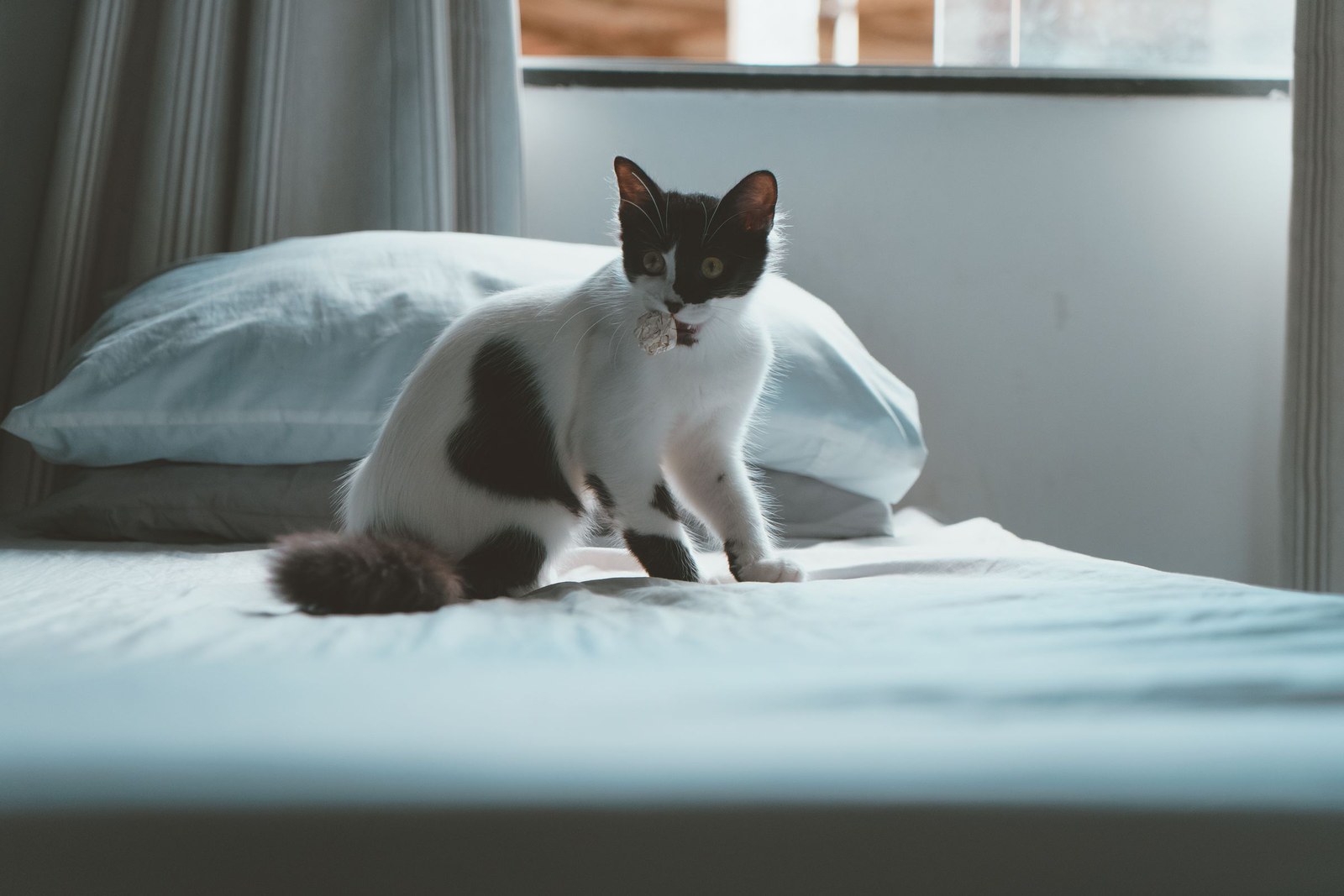
Your kitten cries at night because she is lonely, a little cold, and unsure — possibly for the first time in her life, she is sleeping without her mother and littermates piled against her. It is normal, it is not a behavior problem, and with a warm bed near you and a predictable bedtime routine, it usually fades within the first week or two.
What She Is Actually Missing
In the litter, kittens sleep in a warm heap, lulled by siblings' heartbeats and their mother's scent. A silent, dark, unfamiliar room is the opposite of that. Night is also when a small kitten feels most vulnerable, and crying is how she would call her mother back.
Some kittens also cry because they genuinely need something: a litter box they cannot find in the dark, an empty stomach after a long evening of play, or a room that feels chilly to a small kitten. Rule out the practical needs first, then treat the rest as homesickness.
A Bedtime Routine That Works
Consistency is the cure. About an hour before bed, give her an energetic play session with a wand toy — ten to fifteen minutes of real hunting play — then feed her a small meal or the last portion of her dinner. Hunt, catch, eat, groom, sleep is the natural feline sequence, and working with it is far more effective than tiring her out with random play earlier in the evening.
Then settle her in her bed with the lights low and the household winding down. A blanket that smells like you, a gently warm (not hot) wrapped warm-water bottle or microwaveable pet heat pad, and a ticking-clock-style heartbeat toy can all substitute a little for the missing littermates.
Where Should She Sleep?
Near you is kindest in the first days. Many new owners put the kitten's bed or open carrier beside their own bed, or let the kitten sleep in the bedroom, so she can hear breathing and feel less alone. If you plan for her to sleep elsewhere eventually, transition gradually over a couple of weeks rather than moving her abruptly once she has settled.
When Night Crying Is a Warning Sign
See a veterinarian promptly if crying comes with any of the following:
- Refusing food, vomiting, or diarrhea
- Lethargy during the day, hiding, or loss of interest in play
- Straining in the litter box, or crying while urinating
- Sneezing, runny eyes, or labored breathing
- Crying that escalates night after night instead of improving
Kittens are small and can go downhill quickly, so when in doubt, a call to your vet is always reasonable. Crying that is purely homesick sounds worst in the first two or three nights and steadily improves.
Sharing the Bedtime Routine When Someone Else Is on Duty
If a family member or friend is kitten-sitting overnight, they need the routine exactly as you run it — the play-then-feed order, where she sleeps, what settles her. Care Pass on KinsLe shares that routine as a temporary, scoped link, and the person receiving it needs no account and no app to open it. That keeps midnight care consistent even when you are away, which is what helps a young kitten feel secure fastest. Hand the friend who is sleeping over a Care Pass on KinsLe, good only for this one overnight stay, covering the wand play before her final meal, the blanket carrying your scent, and the bed placed beside theirs.