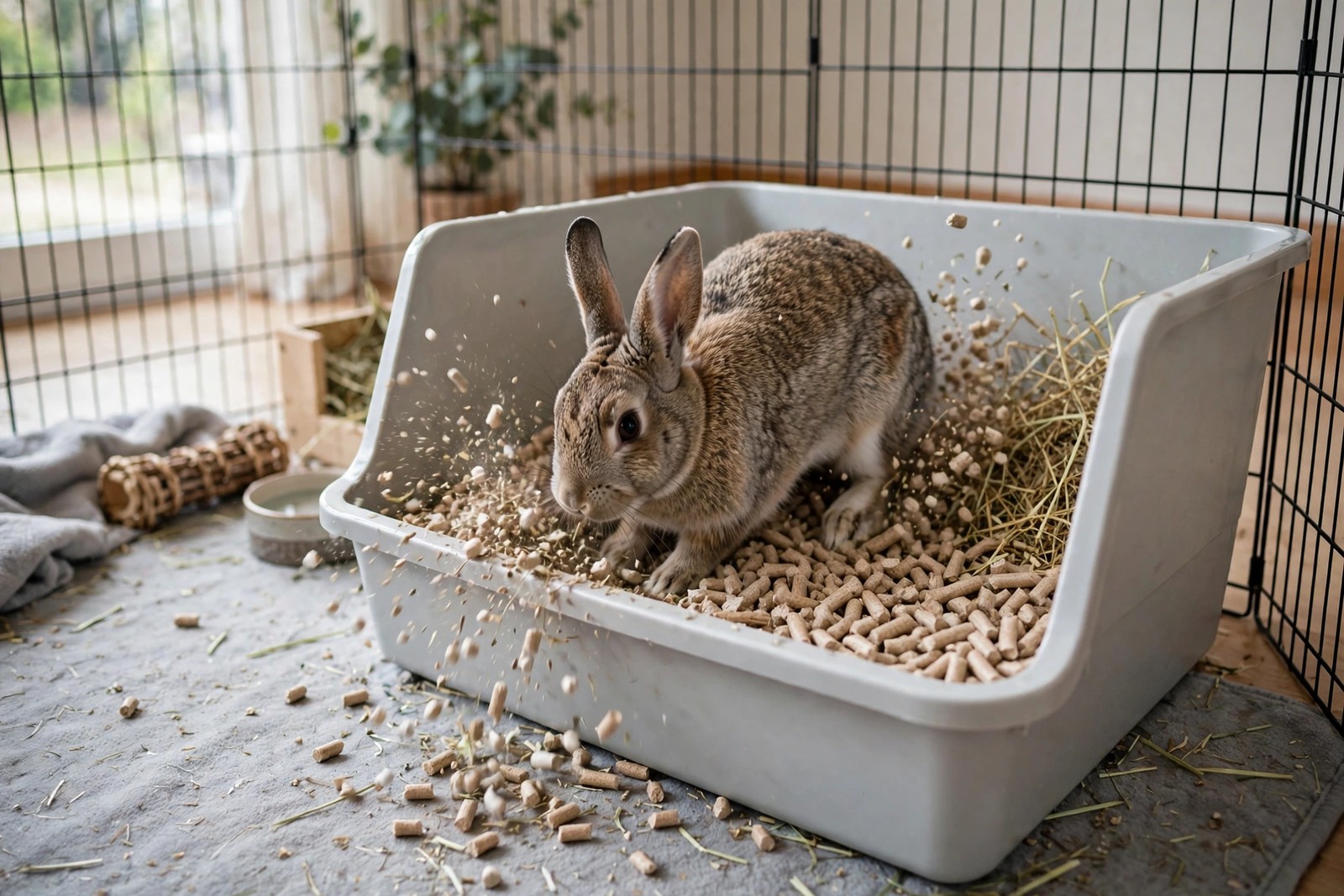
Your rabbit is not trashing the litter box on purpose. Digging and kicking sit at the center of what a rabbit is built to do. Wild rabbits dig burrows, clear entrances, and kick loose earth backward with powerful hind legs, and a pet rabbit brings that same program indoors. In most homes the litter box is the only place filled with loose, movable material, so the box receives the full digging routine, entrance kicks and all.
Why the Box Takes the Brunt
Watch the sequence and the instinct shows clearly. A rabbit hops in, turns, scratches with the front paws, then pushes material backward in strong kicks before settling or hopping out and scattering more on exit. Young rabbits and rabbits with little to do often dig with extra enthusiasm, and a rabbit that feels the box is too shallow may dig harder, searching for the depth its instincts expect. A sudden change in how much a rabbit digs, paired with eating less, hiding more, or producing fewer droppings, is a different matter and deserves a vet call, because rabbits hide illness quietly.
Placement drives much of the mess too. Rabbits usually pick one corner for toileting and return to it faithfully. A box placed where you prefer, rather than where the rabbit already wants to dig and toilet, gets half-used and half-excavated, with litter kicked toward the chosen corner anyway. A cramped box that barely fits the rabbit also sprays more, because every turn sweeps litter over a low rim.
Fix the Box, Not the Rabbit
Start with a high-sided litter box, large enough for your rabbit to turn around fully, with one lower entry side cut or built in so hopping in stays easy. High walls on the other three sides catch the backward kicks that cause most of the scatter. Fill it with enough depth of litter that digging feels worthwhile, a layer your rabbit can actually move and rearrange, topped in the eating end with fresh hay. Many rabbits like to graze while they toilet, so hay at one end keeps the box attractive and encourages good habits at the same time.
Move the box into the corner your rabbit has already chosen, even if that corner was not your first pick. Containing digging in the right place beats fighting over the wrong one. Place a washable mat under and just outside the entry to catch what still escapes, sweep the area briefly each day, and refresh litter before odor builds, because a dirty box invites toileting beside it instead of inside it.
Give Digging a Place of Its Own
A rabbit whose only diggable material is the litter box will keep mining it. Add a dedicated digging box: a roomy cardboard or plastic box filled with hay, shredded paper, or a mix of both, with a few hidden treats or favorite greens tucked inside to reward exploring. Set it near the play area, not beside the litter box, so the two jobs stay separate in your rabbit's routine. Replace soggy or flattened filling often, and expect the digging box to look gloriously untidy. Every minute spent excavating hay is a minute not spent excavating litter.
Supervise at first to be sure your rabbit digs through paper rather than eating large amounts of it, in which case plain hay alone is the safer filling. Over a few weeks, most rabbits settle into a clear pattern: toilet and light digging in the litter box, serious excavation in the digging box.
Keeping both boxes in shape is steady, small work that suits sharing. In the household plan, Sam refreshes the litter box each morning and checks its depth, Priya refills and fluffs the digging box in the evening, and the jobs are written down so a busy day does not skip either one.
That shared upkeep stays on track when KinsLe shows each task to the home, as the Care Teams list names who handles the morning box refresh and the evening digging-box refill for everyone to confirm.