
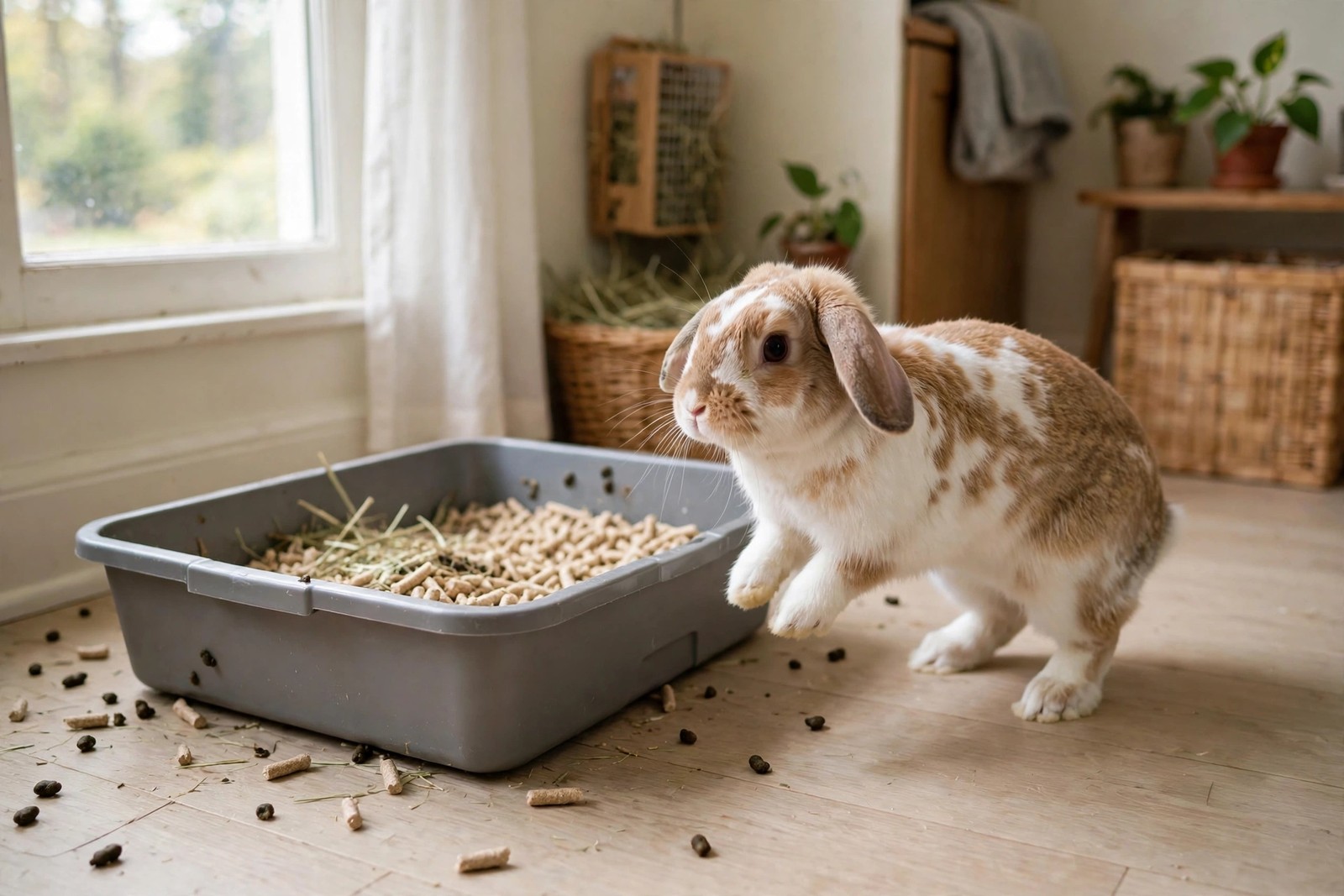
A few stray droppings outside the litter box are usually normal rabbit communication — most often territory marking — rather than failed litter training, especially in a new space or with an unneutered rabbit. What matters is the pattern: a scattering of dry pellets is very different from puddles everywhere, soft droppings, or a sudden change in a rabbit who was previously reliable.
Marking versus missing
Rabbits leave small, dry, round pellets to say "this place is mine." Expect more of them when your rabbit first explores a room, after another pet has visited, when furniture moves, or during adolescence. These marking droppings usually ease as the space starts to smell familiar and the routine settles.
Urine outside the box is a stronger signal that something needs adjusting. Spraying — urine flicked onto walls or objects — is classic unneutered male behavior, though females can do it too. Puddles in random sleeping spots, straining, or wetness around the tail are not marking and deserve closer attention.
Check the box itself first
Before blaming your rabbit, audit the setup:
- Size: Can your rabbit sit fully inside and turn? A cramped box invites near-misses.
- Access: Is the entry low enough? Older rabbits or those with sore joints may avoid a high hop-in.
- Cleanliness: A box that smells strongly gets avoided; spot-clean daily and refresh litter regularly.
- Location and number: One box may not cover a large pen or free-roam area — add a second box where misses cluster.
- Litter and hay: Paper-based litter with hay at one end encourages proper use; a box with no hay is far less appealing.
Small changes here fix a surprising share of "behavior problems" within a week.
Age, hormones, and household changes
Unneutered rabbits mark more — it is hormonal, not naughty. If marking is persistent and your rabbit is old enough, discuss neutering with your rabbit-savvy vet, weighing the health and behavior benefits for your individual rabbit.
Changes at home matter too. A new pet, a house guest, a moved enclosure, or even a new rug can restart marking for a few days. Keep routines steady, give your rabbit a hideaway to retreat to, and let the behavior fade rather than scolding, which rabbits do not connect to the droppings at all.
When droppings point to a vet visit
Book a check if you see soft or uneaten cecotropes smeared around, diarrhea, far fewer droppings than usual, straining to urinate, blood in urine, or droppings paired with reduced appetite or hunched, quiet behavior. A sudden breakdown in litter habits in a trained adult rabbit is a recognized early clue that something physical — pain, dental trouble, or a urinary issue — needs ruling out.
Never restrict hay or water to reduce output; a rabbit's gut must keep moving, and fewer droppings from eating less is a warning sign, not a win.
Spotting the pattern together with Family Sharing
One person sees the morning misses, another cleans the evening ones, and nobody sees the whole map. KinsLe's Family Sharing creates a per-pet care circle with roles, so the whole household can note where and when misses happen in one place — and a cluster near a new piece of furniture or along one wall quickly reveals itself as marking rather than a failing box. Patterns are what turn guesswork into a fix. Family Sharing keeps that map of misses visible to everyone in the circle on KinsLe, so a cluster by the new rug reads as marking rather than a box problem.