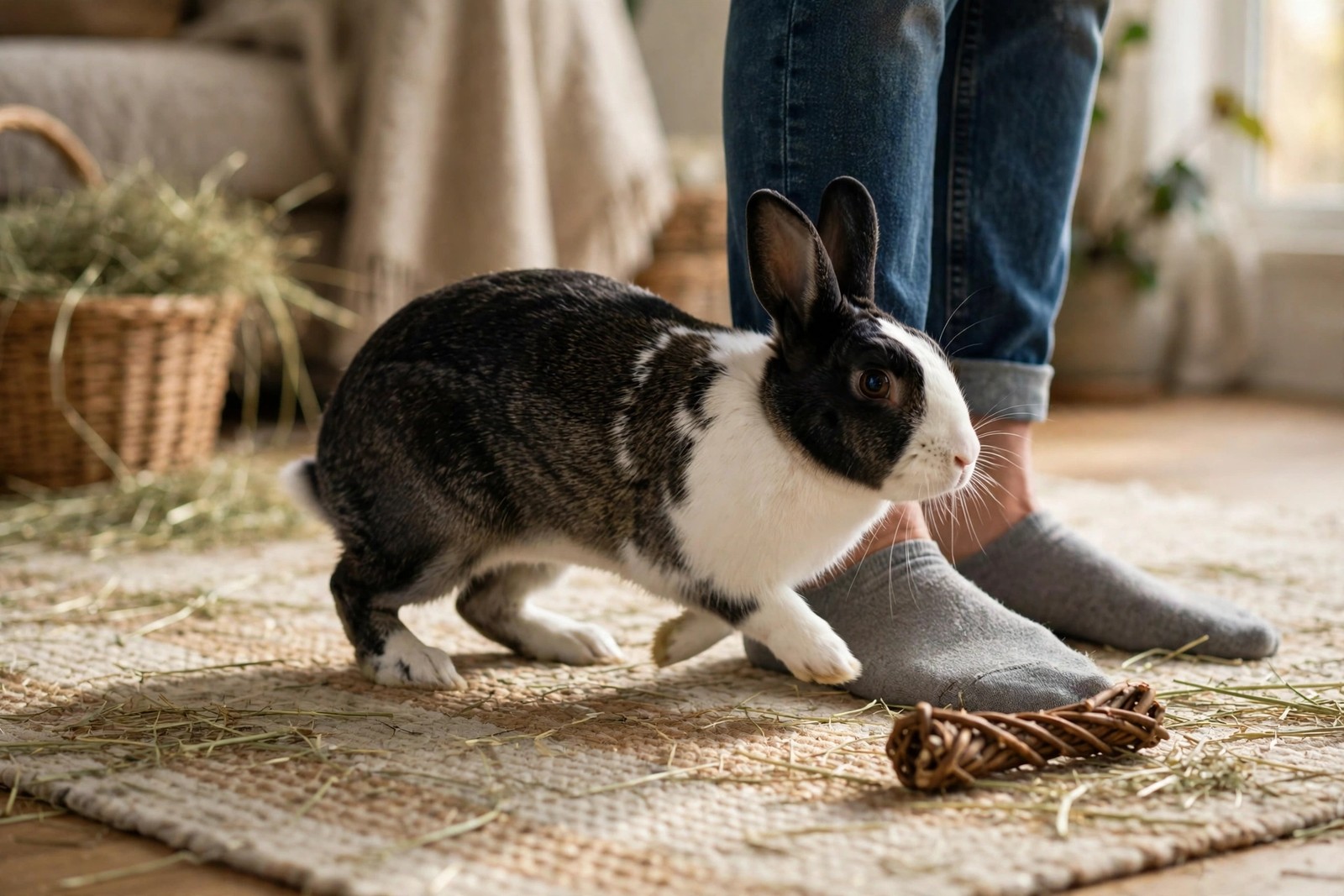
A rabbit weaving loops around your ankles is paying you a compliment, in rabbit language. Circling the feet is one of the clearest social signals a rabbit makes, and in most homes it means courtship, excitement, or both at once. Understanding which one you are seeing matters, because a hormonal rabbit needs a different response from a simply delighted one, and both need you to move carefully so an orbiting rabbit does not get stepped on.
Reading the Circle
In the wild pattern this behaviour comes from, a rabbit circles a prospective mate. Pet rabbits transfer the whole performance to the person they are most bonded to. The courtship version tends to be tight and persistent, looping your feet again and again, and it often arrives with sound: soft honking, oinking, or low grunting that many owners miss because it is so quiet. An unneutered rabbit may add stronger signals — nudging hard at your ankles, attempting to mount a foot, spraying urine, or showing a sudden possessiveness about space and favourite objects. This version commonly starts as a young rabbit matures, and it tends to intensify rather than fade on its own.
The excitement version looks looser and brighter. Your rabbit circles when you enter the pen with greens, when the exercise gate opens, or when you sit down at floor level for company, then moves off to eat, explore, or flop. Ears are up, the body is relaxed between loops, and there is no mounting or spraying. Neutered rabbits circle this way for years, because the behaviour also says, in plain terms, that you are important and something good is about to happen.
What to Do About It
Start with your feet. A circling rabbit is directly in your stride, so shuffle rather than step, and avoid sudden kicks or stamps if your rabbit surprises you — a startled correction teaches fear, not manners. Give the energy somewhere better to go: scatter a small handful of hay or herbs to forage, offer a willow or applewood chew, or start the supervised floor-time session your rabbit was probably asking for.
If the circling is hormonal, talk to a veterinarian experienced with rabbits about neutering or spaying. Beyond settling courtship behaviour, the conversation matters for long-term health and for calmer handling, and your vet can explain the timing and aftercare for your rabbit's age and condition. Expect the circling to ease gradually over the weeks after surgery rather than stopping overnight, since hormones and habits both take time to settle.
Learn the one version that is not courtship. A rabbit who circles compulsively in one direction inside the pen, tilts its head, rolls, loses balance, or goes off food is showing something medical, not affectionate, and needs a veterinarian promptly rather than redirection. Ordinary foot-circling, by contrast, is balanced, social, and stops when your rabbit wanders off to graze. Keeping the facts straight is easier with a written record, and KinsLe's Pet Passport gives you one place to note when the circling started, whether your rabbit is neutered, and what your veterinarian advised, so the next visit starts from evidence rather than memory.