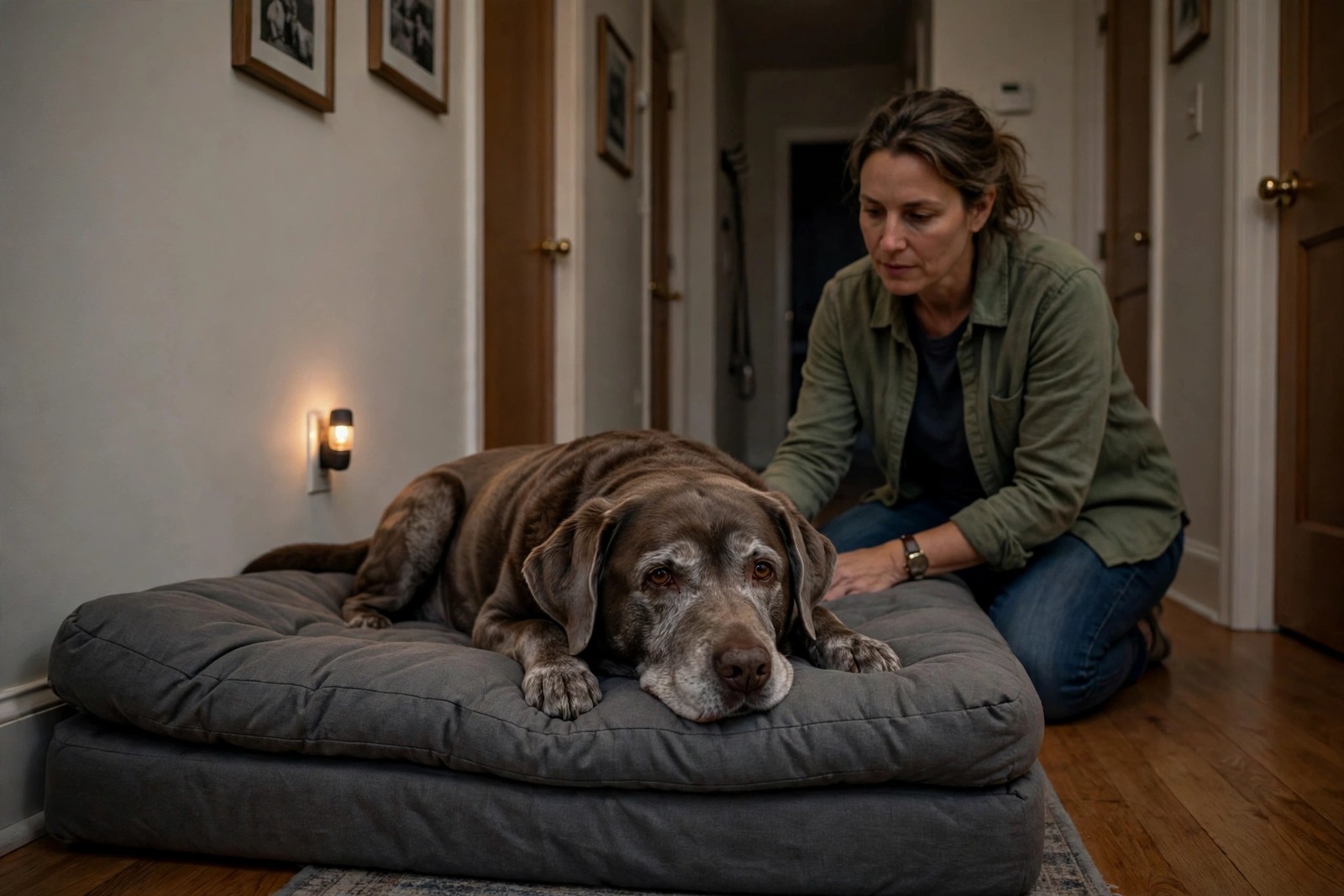
An older dog who slept soundly for years and now wanders the house at 2 a.m. is rarely just being difficult. Night removes the distractions that mask problems during the day, so pain, confusion, and anxiety all tend to surface after dark. Working through the likely causes in order, with a written log, gets most families to an answer faster than guessing.
Pain That Will Not Let a Dog Settle
Arthritis in the hips, elbows, or spine is a leading suspect. A dog may fall asleep, wake stiff and sore after an hour in one position, pace until tired, then repeat the cycle. Watch for pacing paired with panting, licking at a joint, reluctance to use stairs, or difficulty rising in the morning. A thick, supportive bed on a non-slip floor, a bedroom kept comfortably warm, and a gentle evening walk rather than a boisterous one all help comfort, but ongoing night pain needs a veterinarian to examine the dog and discuss pain control. Never give human pain medicine, because several are dangerous for dogs.
Cognitive Dysfunction and Sundowning
Canine cognitive dysfunction, similar in some ways to dementia in people, often shows a sundowning pattern: fairly normal days, then restlessness, vocalising, and aimless walking as light fades. Other clues include staring into corners, getting stuck behind furniture, new house soiling in a previously clean dog, clinginess, and a reversed sleep-wake cycle with long daytime naps. There is no single home test, so your log of times, triggers, and what settled your dog is genuine diagnostic material for your veterinarian.
Other Night-Time Causes
Anxiety can rise in seniors as hearing and vision fade, leaving a dog unsure in a dark, quiet house. A full bladder is simpler still: older kidneys and weaker muscles mean a dog that once lasted all night may now need a late outing, and pacing by the door is communication, not confusion. Increased thirst, hunger at odd hours, or new panting can point to medical problems, so mention them rather than treating pacing as only behavioural.
Building a Calmer Night Routine
- Keep one predictable sequence: final toilet trip, lights lowered, same sleeping place, and a calm cue your dog already knows.
- Add a low night light along your dog's usual route to the door, and block stairs if disorientation makes them risky.
- Feed the evening meal and do the last walk at consistent times, and keep daytime naps from swallowing the whole afternoon by adding a short sniffy walk, a gentle game, or a food puzzle earlier in the day.
- If your dog wakes, resettle quietly with a toilet chance first, then minimal fuss, so night waking does not become a rewarding social event.
Book a veterinary visit promptly if pacing is new and nightly, and sooner if your dog cries out, stops eating, loses weight, drinks far more, or cannot settle at all. Bring two weeks of notes on sleep, toilet trips, appetite, and any medicines already being given, because patterns across nights are what separate pain from confusion from a bladder problem. Travelling with that history in KinsLe Pet Passport means any veterinarian, including an out-of-hours clinic, can see your senior dog's full picture at once.