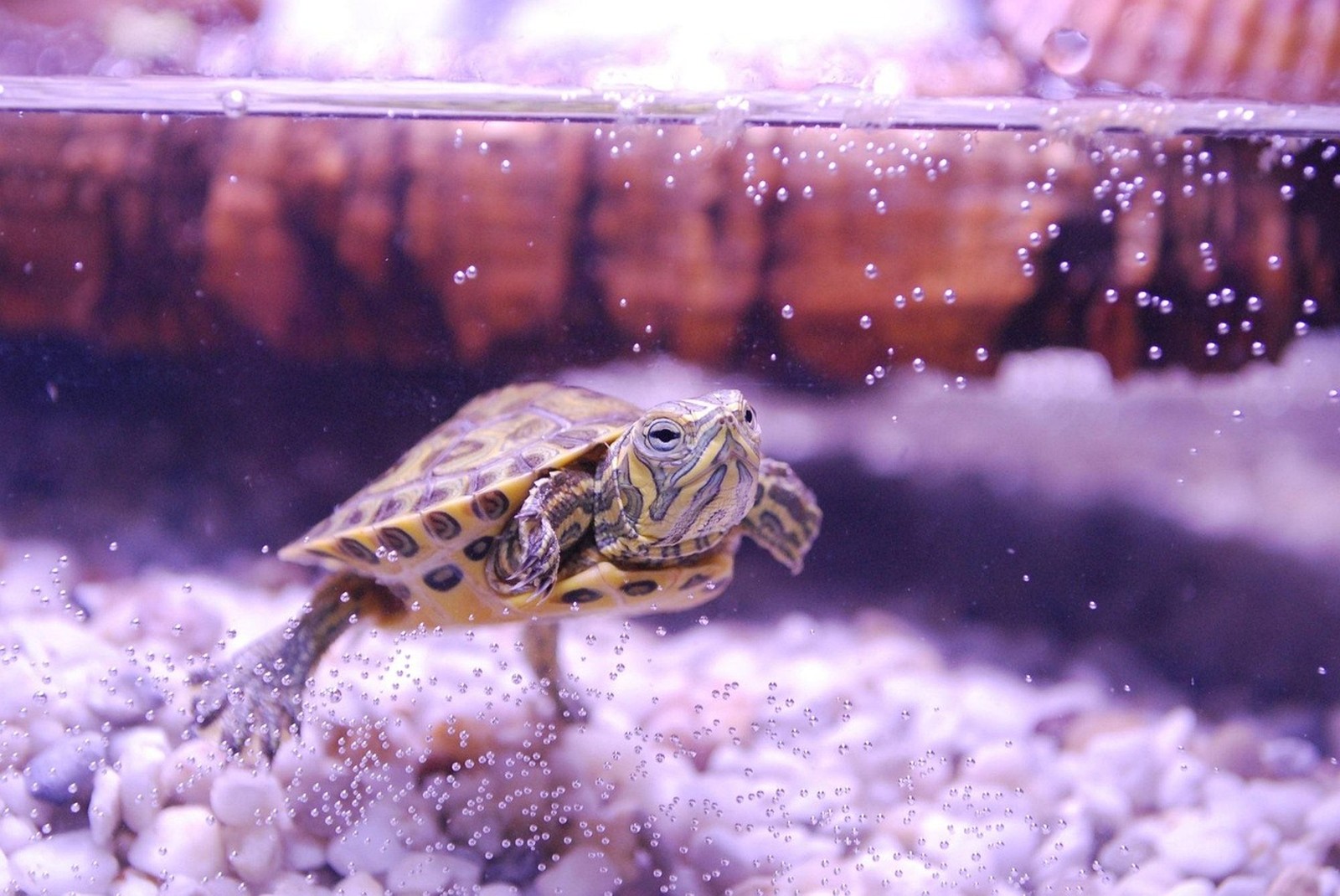
A slider that snaps up every pellet and lets leafy greens drift untouched is not being stubborn; it is choosing the food that smells strongest and delivers the richest return. Commercial pellets are formulated to be eaten eagerly, with concentrated protein and fat in each piece. A piece of lettuce carries none of that scent signal, so the fix is strategy: change when greens are offered, how they are presented, and how much pellet food arrives alongside them.
Young Sliders and Adults Need Different Balances
The right target depends on age. Hatchling and juvenile sliders grow fast and naturally eat a larger share of animal protein, taking pellets, insects and other protein foods readily while they build shell and body. As a slider matures, its digestion and nutritional needs shift toward plants, and a healthy adult's intake should be mostly leafy greens and aquatic plants and vegetables, with pellets forming the smaller share rather than the meal itself. An adult kept on a pellet-heavy diet for years can gain excess weight, put strain on its organs, and develop shell growth that rises into peaks along each scute instead of staying smooth. That is the real cost behind a preference that looks harmless at feeding time.
Offer Greens When Hunger Is Working for You
Timing changes the result more than pleading does. Put the day's greens in the water first, early in the feeding routine, and hold the pellets back, so the turtle meets the plants while it is genuinely hungry rather than after it has filled up. Many sliders ignore a floating leaf for an hour and then graze it steadily once they realise nothing richer is coming immediately, so leave greens in the tank for several hours before removing what is left. Healthy adult sliders can safely miss pellet portions on greens days while they learn, because a well-kept adult does not need protein food at every meal; a growing juvenile, a thin turtle or one recovering from illness should not have food withheld, and those cases belong in a conversation with a reptile veterinarian.
Presentation Tricks That Get Greens Eaten
Chop greens finely and mix them through softened, crumbled pellets so the flavours arrive together and the turtle takes leaves in with the food it wants. A vegetable clip or a small weighted fork at the bottom holds leaves where a grazing turtle can tear pieces off naturally. Rotate the menu widely, because individual sliders have strong personal tastes: try dandelion greens, collard greens, mustard greens, turnip tops, green leaf lettuce and grated carrot or squash in small amounts, and note which disappear. Briefly coating chopped greens with the water from the pellet container, or mashing a pellet into a thin smear over a leaf, lends the scent the turtle follows without adding a full protein portion.
What to Reduce, and What Not to Rely On
As greens start to be eaten, step the pellet portion down gradually over a few weeks rather than removing it overnight, and keep protein treats such as feeder insects as occasional extras instead of a daily habit. Avoid leaning on fruit to win the turtle over, because sugary foods are a poor stand-in for leafy greens and can upset digestion when fed often. Iceberg lettuce is mostly water and fills the turtle without delivering much nutrition, so it works poorly even as a transition food.
Judging Progress Over Weeks, Not Days
A slider that has refused greens for years rarely converts in a week, and steady partial success is the realistic pattern: first a few bites of one favoured green, then regular grazing, then a tank where pellets are the topping rather than the meal. Weigh the turtle monthly and look at the shell's shape and the flesh at the leg openings, which show weight gain early. Recording each day's offering and what was left, in KinsLe's Care Teams, where feeding duties are marked complete with a timestamp, keeps the slow transition visible and stops one hopeful day from being mistaken for a finished change.