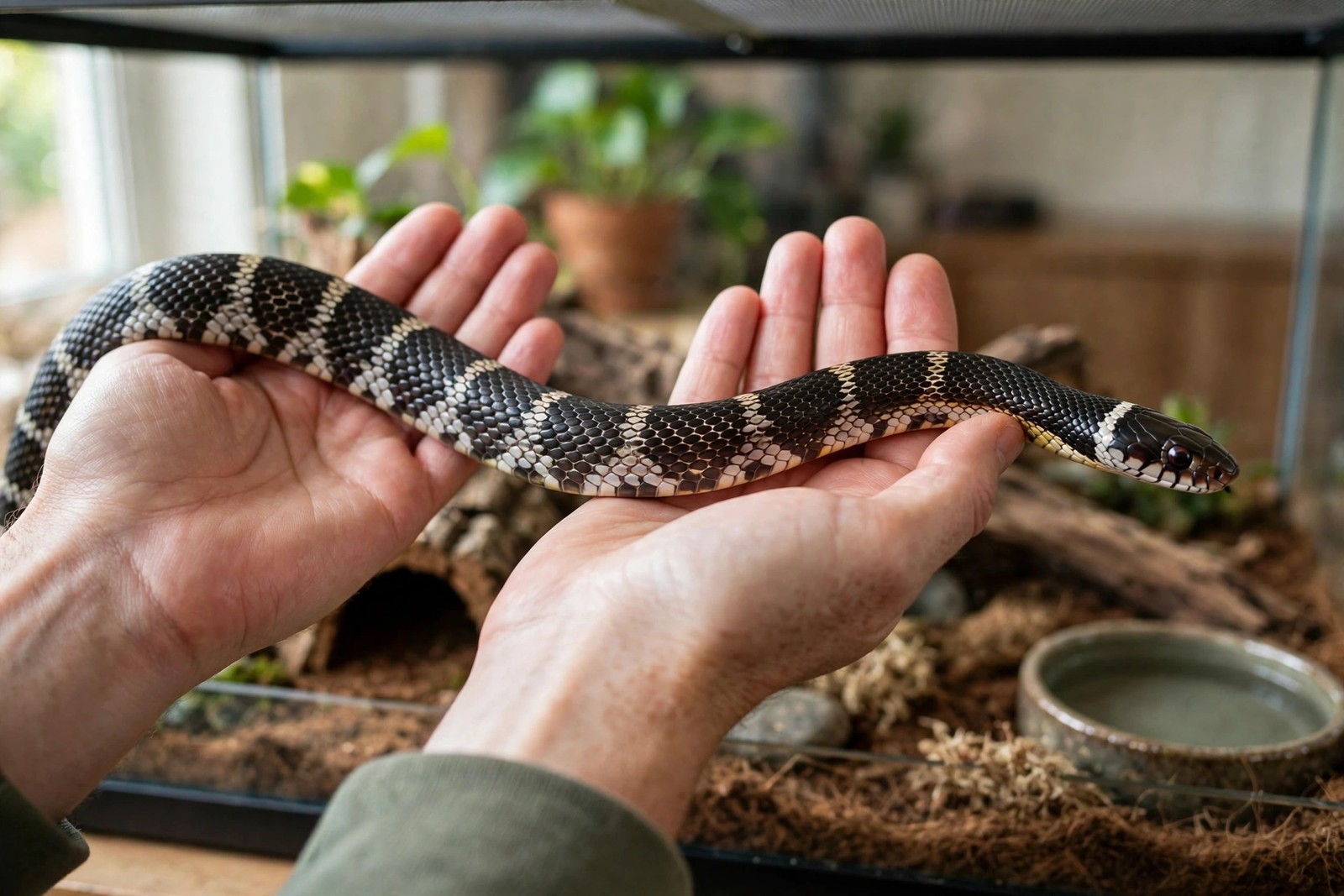
The sharp, lingering smell that appears halfway through a handling session is musk: a defensive discharge released from glands at the base of the tail, usually mixed with waste from the cloaca and often smeared as the snake thrashes or wriggles. To a predator, a mouthful that tastes and smells foul is a reason to drop it, and that is the point of the behaviour. A pet snake that musks is not being difficult; it is signalling that being held currently feels like being caught.
Which Snakes Musk, and When
Some species reach for this defence far sooner than others. Garter snakes, water snakes, king snakes and many colubrids are known for musking when first picked up, while heavy-bodied pythons and boas rely more on stillness and are less inclined to it. Young snakes of almost any species musk more readily than adults, because everything that grabs a small snake in the wild is a predator. Handling at the wrong moment raises the odds further: a snake deep in a shed cycle with cloudy eyes, a snake that has just eaten, or one that has been chased around its enclosure and cornered before lifting is a snake already convinced the encounter is dangerous.
How the Way You Lift Decides the Response
Snakes are taken from above by predators, so a hand descending and grabbing triggers the defence before you have done anything else wrong. Open the enclosure calmly, let the snake register your presence, and lift by scooping under the middle of the body so its weight is supported rather than dangling. Move slowly and predictably, avoid pinning or gripping tightly to control wriggling, and let the snake travel hand over hand at its own pace once it is up. Washing your hands before handling matters too: a hand that smells of a prey item, or of another animal the snake fears, can put it on the defensive from the first touch.
Short Sessions Build the Lesson That Handling Ends
Trust is built by repetition with a safe ending, not by one long session that wears the snake down. Start with a few minutes of calm holding, two or three times a week, and return the snake to its enclosure while it is still relatively settled, so the memory it keeps is that handling stops and home follows. If musking happens, stay unhurried: finish putting the snake back without squeezing, dropping or rushing, wash your hands and the snake only if it is fouled, and leave it alone for a day or two before the next session rather than handling it repeatedly in one day. Over weeks, regularly handled snakes typically musk less often and then rarely, because the prediction changes.
Times to Leave the Snake Alone Entirely
Some days the right answer is no handling at all. Leave a snake undisturbed for at least a day or two after a meal, because handling a recently fed snake risks it bringing the meal back up. Skip sessions while the eyes are cloudy and the skin is dull before a shed, when the snake feels vulnerable and cannot see clearly. A snake that has just arrived in a new home needs a settling period of quiet, successful feeds before handling lessons begin. Respecting those gaps is part of why the sessions you do hold go well.
When Musking Comes With Other Worries
Musking on its own is behaviour, but musking paired with repeated striking, refusal of several meals, discharge from the mouth or nose, wheezing, or swelling around the vent is a snake that may be unwell or in pain as well as frightened, and a veterinarian who treats reptiles should examine it. A vent area that stays red, swollen or soiled after an episode also deserves prompt attention. Keeping a short note of each session, what triggered the musking and how quickly the snake settled, in KinsLe's Care Teams, where handling duties are marked complete with a timestamp, gives that vet visit, and every handler in the household, a clear record to work from.