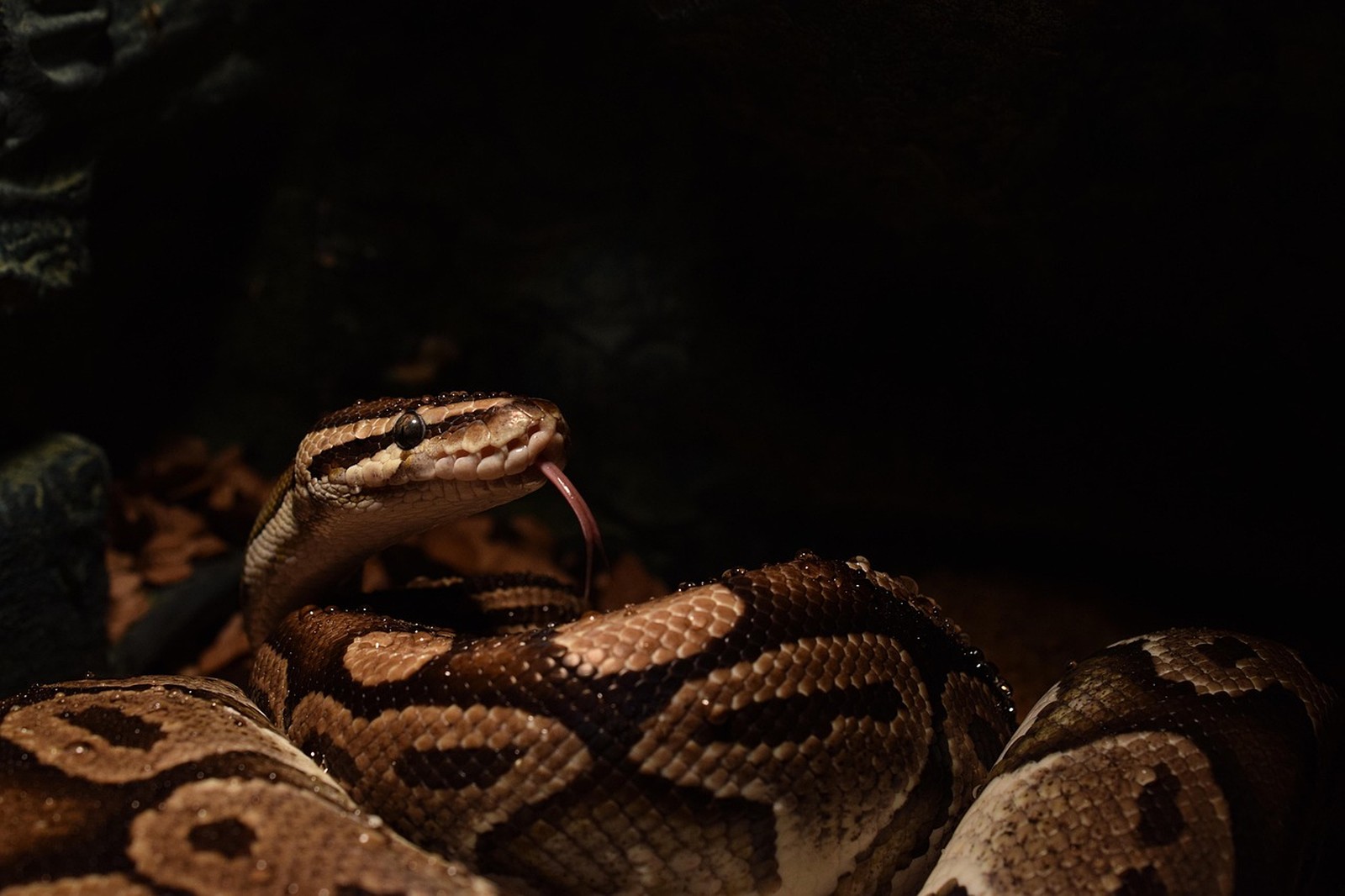
A snake raised up at the glass, head swaying gently as it tracks you across the room, looks uncannily attentive, and in a way it is. It is not studying your face, because snake vision does not work that way. It is following the one thing its senses are tuned to detect above all else: movement, backed up by scent sampled from the air and, in many species, by the warmth radiating from a living body. What looks like staring is a hunting and checking system doing exactly its job through the glass.
Vision Built to Catch Motion, Not Detail
Snake eyes are far better at registering that something moved than at resolving what it is. A still person beside the tank may go almost unnoticed, while the same person walking past produces a clear, trackable signal, which is why the head comes up when you cross the room and drops when you sit still. Contrast matters too: a dark shape against a lit doorway stands out strongly. Across snakes the shared rule holds: movement is information, stillness is background. The following behaviour, head raised and oriented toward the source, is how the snake keeps that signal centred while it decides what the movement means.
Tongue Flicks and Heat Complete the Picture
While the eyes track, the tongue works. Each flick collects scent particles and delivers them to a specialised organ in the roof of the mouth, letting the snake test whether the moving thing smells like prey, like a familiar keeper, or like something to avoid. Rapid, repeated flicking while following movement means the snake is actively investigating. Pythons, boas and pit vipers have a further channel: heat-sensitive pits that build a rough thermal picture of warm-blooded animals, so a hand or a cat near the glass can register even in dim light. A snake pressing toward a warm hand on the glass is often following heat, not showing affection for the hand itself.
When the Audience Is Really About Dinner
Attention sharpens noticeably as a feeding day approaches. A hungry snake cruises more, watches movement outside the tank with sustained interest, and may track the family dog or a passing child with the fixed focus of a food response, because in its world a warm moving animal of roughly prey size is worth checking. This is the moment for care: do not tap the glass to provoke a strike, do not handle the snake with the smell of prey on your hands, and keep faces away from a hungry snake at glass level. Feeding with tongs, on a steady schedule, and washing hands before any handling keeps the food response aimed where it belongs.
Curiosity and the Settled Snake
Not every raised head is hungry. A settled, curious snake investigates changes in its surroundings: new furniture near the tank, a different person, or activity at an unusual hour can all draw a period of watching from a resting coil or a favourite perch. The curious snake moves slowly, tongue-flicks at a moderate pace, and settles once the novelty fades, while the hungry snake tracks persistently and stays engaged. Arboreal species watch from height and diurnal species watch by day, so timing tells you something about which system is driving it.
Watching That Should Make You Check the Setup
Constant glass-level pacing paired with following movement is different from interested watching. A snake that spends long spells pressing and rubbing along the glass, refuses meals, and never settles may be too warm, too cold, short of hiding places, or stressed by a tank placed in a busy walkway with traffic on several sides. Check the temperature gradient and hide provision first, and consider whether moving the enclosure to a calmer wall changes the behaviour over the following week. If restlessness continues with weight loss or repeated meal refusal, a reptile veterinarian should examine the snake. Noting feeding days, temperatures and the staring spells together in KinsLe's Care Teams, where care duties are marked complete with a timestamp, turns a puzzling habit into a pattern you can actually read.