
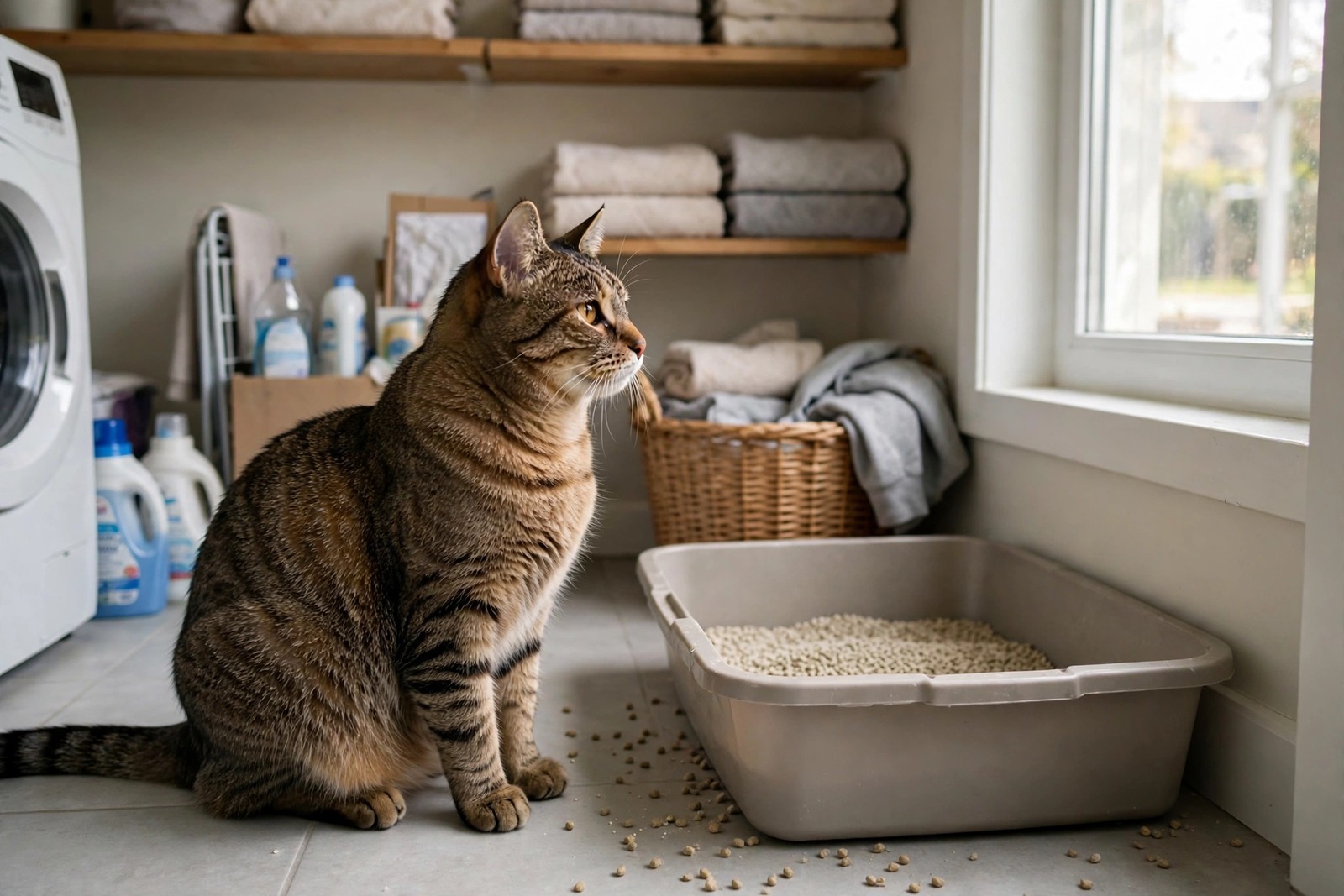
A cat who suddenly stops using the litter box is almost always telling you something — either the box has become unpleasant, or getting to it or into it hurts. Cats are creatures of habit, and a reliable cat who starts missing the box has usually made a deliberate decision, not a mistake. Your first job is to figure out whether the problem is the setup, the environment, or her body.
Start With the Box Itself
Before assuming anything medical, audit the box the way your cat experiences it. Scoop at least once a day — cats have far more sensitive noses than we do, and a box that looks "fine" to you may smell like a wall to her. Wash the box with mild, unscented soap weekly, since plastic absorbs odors over time. Check whether anything changed recently: a new litter brand, a different texture underfoot, less litter depth than usual, a lid you added, or a plastic liner that catches her claws. Even swapping to a scented litter can be enough to send a picky cat elsewhere.
Location matters just as much. Boxes parked next to a noisy washing machine, a furnace that rumbles, or a door that bangs will lose to a quiet closet every time. If the box moved recently, move it back, or shift it gradually a few feet a day toward the new spot.
Rule Out Pain and Illness First
A sudden litter box strike is one of the most common early signs that a cat is unwell. Urinary tract infections, bladder crystals, constipation, arthritis, and kidney or thyroid issues can all make the box a place associated with pain — and cats often blame the box itself, trying a new spot in the hope that it will hurt less there.
Watch for these red flags:
- Straining, crying, or spending a long time in the box with little to show for it
- Small, frequent urine spots or blood in the urine
- Going right next to the box, as if she tried but couldn't manage it
- A senior cat suddenly struggling to step over a high-sided box
Straining to urinate — especially in a male cat who produces nothing — is an emergency. Otherwise, any sudden change that lasts more than a day or two deserves a prompt vet visit rather than weeks of behavior experiments.
Check the Household, Too
Stress is the third big culprit. A new pet, a new baby, a visiting dog, construction noise, or even a stray cat visible through the window can make a cat feel her toilet area is unsafe. Multi-cat homes add another layer: a confident cat may be quietly guarding the box and ambushing a shy housemate on the way in or out. If misses cluster near one box or one room, territorial tension is a strong suspect.
A Simple Troubleshooting Order
Work through changes one at a time so you know what fixed it. Restore the old litter, add an extra box in the spot she's chosen, lower the entry for an older cat, and add a calm play session to burn off stress. Keep a short note of when misses happen — patterns by time of day or household activity are often the clue that cracks it.
Keep Everyone in the Loop With KinsLe Messenger
When the vet advises a trial — a new litter, a follow-up in a week, watching for straining — that guidance needs to reach everyone who scoops, feeds, or supervises. KinsLe Messenger is the communications hub for each pet, keeping vet updates, family notes, and sitter messages in one per-pet thread instead of scattered across group texts. Everyone sees the same advice, and nobody accidentally undoes the plan. In her KinsLe Messenger hub, message the sitter tonight with the vet's exact trial — the restored litter, the extra box by the closet, and a watch for straining — so the sitter follows one plan while you are out.