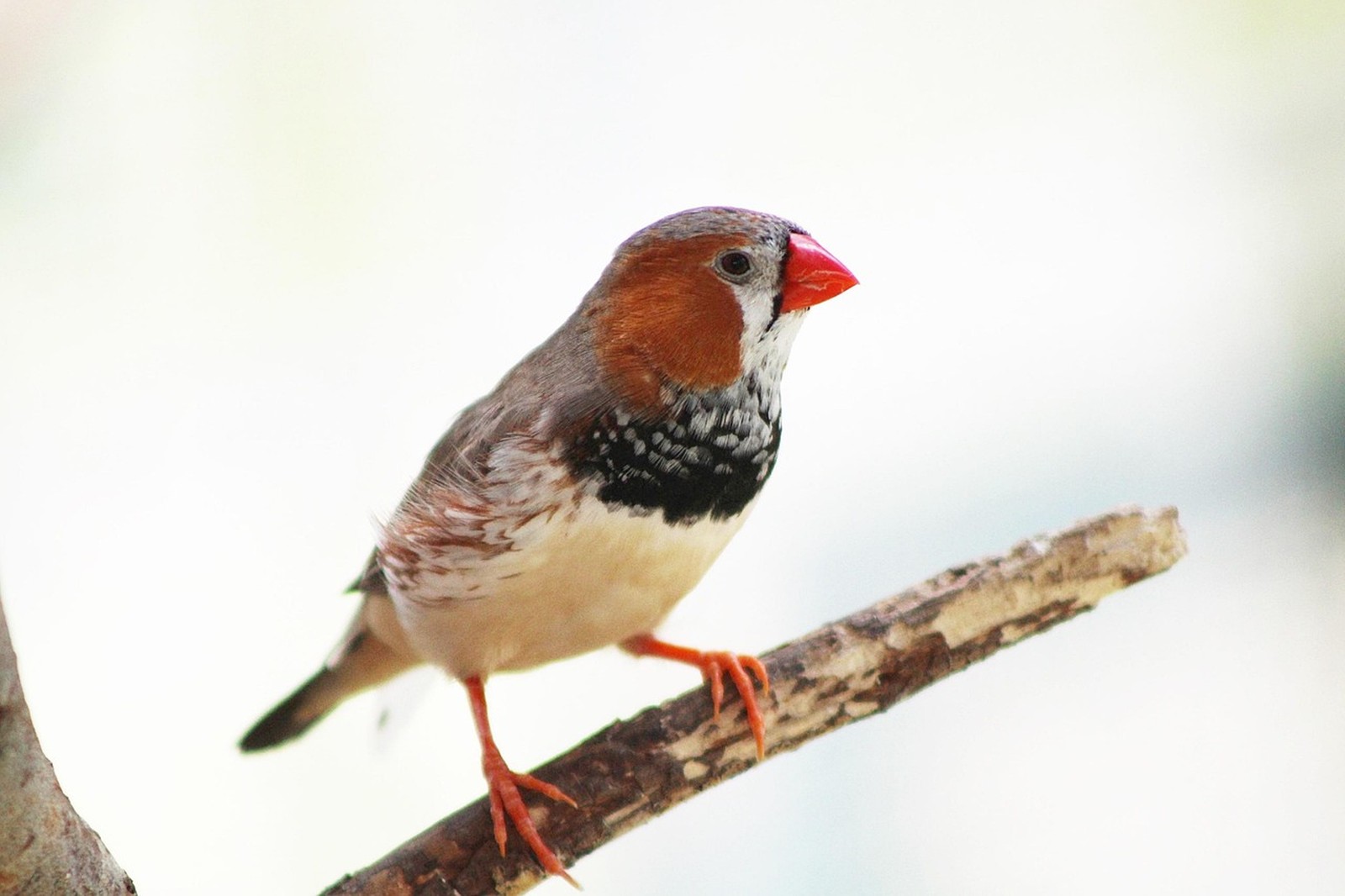
A bare patch confined to the head tells a useful anatomical story. A finch preens the feathers within reach of their beak, yet the crown, cheeks and back of the head sit beyond that reach, so damage there usually arrives from outside the bird, from the skin itself, from the way new feathers are coming through, or from a nutritional problem shaping the moult. That is why the location matters more than the bare patch alone, and why a vet will ask about the whole cage rather than only looking at the missing feathers.
Cage-Mate Plucking, Considered First
A companion can reach exactly the places the finch cannot. One bird may pull or over-preen head feathers during squabbles over a perch, food dish or nest site, or through persistent attention from a dominant partner. Watch without hovering: note which bird approaches, whether feathers are pulled or the finch flinches and moves away, who gets displaced from food, and whether the loss is worsening while a particular companion is nearby. Timing matters too, including a recent pairing, a new bird added to the cage, breeding behaviour, or a change in cage size or layout. Photographs taken from the same angle on different days can show whether the patch is spreading, holding steady, or filling in.
Mites and the Look of the Skin
Mites are another possibility a vet investigates in finches, and the skin and face give clues worth describing carefully. Report the bare skin in plain words: smooth and clean, dry and flaky, red, thickened or crusty. Look from a normal distance rather than handling the bird repeatedly, and note any crusting around the beak, cere or eyes, any change in the beak surface, and whether the finch rubs their head against perches. Also report scratching, restlessness at night, sneezing, or loss appearing elsewhere on the body. Those details help the vet decide what to examine under magnification, but they do not identify mites from home, and no owner observation can separate one skin problem from another with certainty.
Moult, and Iodine Deficiency
A moult can look uneven before it looks tidy. During a normal replacement of feathers, pin feathers emerge as short, spiky shafts, energy and appetite usually stay recognisably normal, and the bird continues to eat, move and vocalise as usual. Record whether you can see pins coming through the bare area, whether loss is appearing in a broader pattern, and how long the change has lasted. Iodine deficiency is a classic possibility in finches that a vet may also investigate, particularly where diet history makes it relevant. Describe exactly what seed mix and other foods are offered, what the finch actually eats from that mix, and whether any foods are refused. Do not start a supplement on suspicion alone, because the vet first needs to establish whether this possibility fits the bird, the diet and the examination findings.
What to Report, and When to Push
Bring a concise history: when the loss was first noticed, which companions live in the cage and their relationships, recent introductions or moves, the foods offered and eaten, the look of the skin, and any change in appetite, droppings, song or activity. Fluffing up, sitting quietly, reduced eating, breathing changes, bleeding, or spreading loss move the conversation from routine to prompt, because a finch is small and can decline without giving many warnings. If one bird is being chased or pulled at whenever you watch, report that behaviour on the call rather than waiting for the appointment date to arrive.
A dated record in the Pet Passport on KinsLe, holding cage-mate details, diet notes and dated photographs, lets the vet compare the patch against the history instead of relying on a remembered guess.