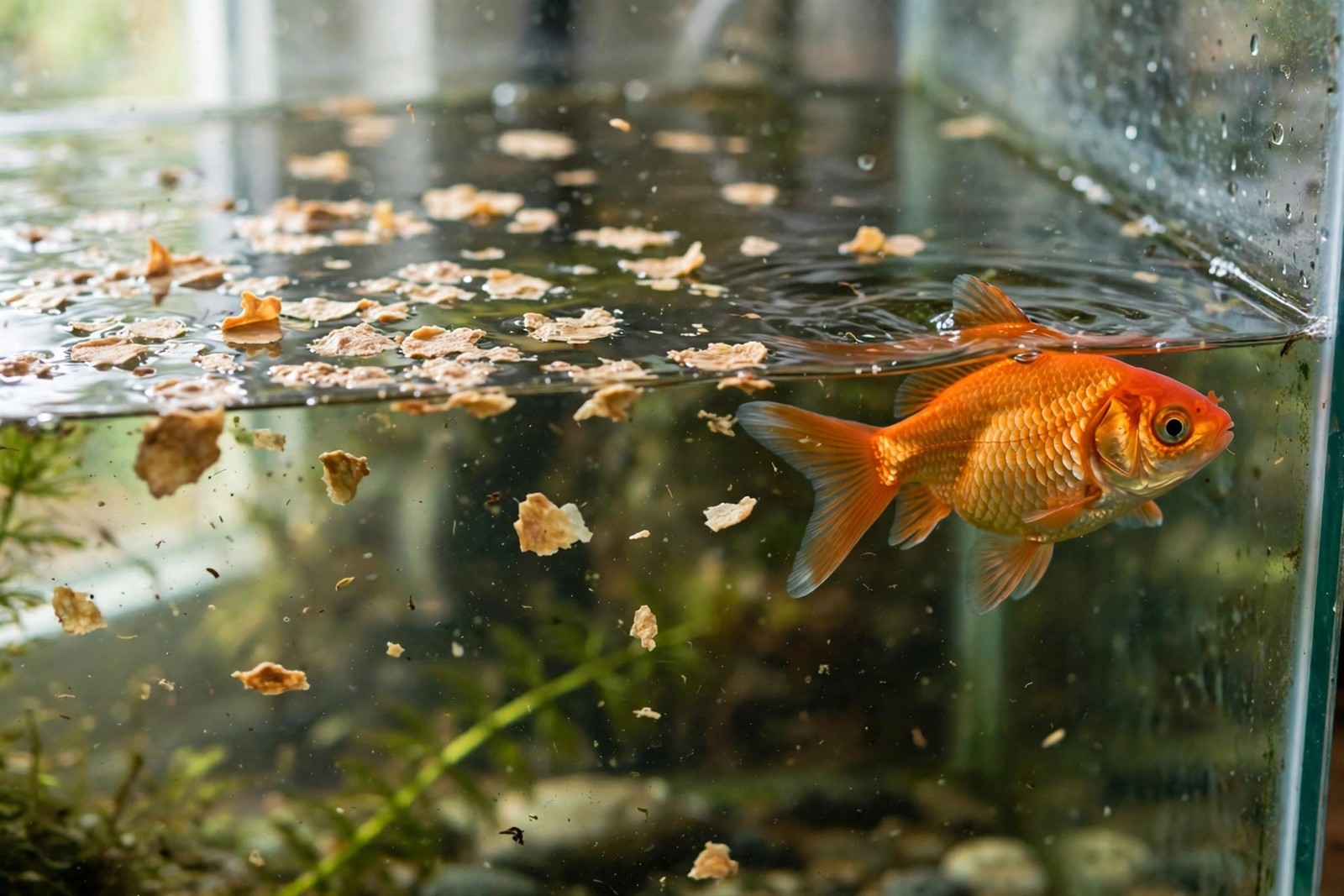
When a fish goes off its food, resist the urge to reach for a treatment first. In a tank, appetite is usually a water report before it is a disease report, so test the water before anything else: even a small ammonia reading, any nitrite at all, or a sudden chill will switch a whole tank off its food at once. After water, work the list: new tank or new tank mates and bullying (a fish being chased off food stops trying), a recent change of food, mouth or gill problems, internal parasites (often with stringy white droppings and weight loss despite some eating), and general infections. How many fish are off food is the key sorting question: everyone off usually means the environment; one fish off usually means that fish.
The Order of Operations for an Appetite Problem
Fix water first — partial water change with matched, dechlorinated water if any reading is off — then observe at feeding time deliberately: is the fish interested but unable, spitting food out (mouth or food-size problem), hiding (bullying or illness), or ignoring food entirely? Note breathing rate, body condition, droppings, and any spots or fin damage, and write the dates down; fish problems are diagnosed from patterns, and 'off food since Tuesday, water tested clean Wednesday' is real diagnostic information. A healthy adult fish missing a day or two during a heatwave or after a tank move is usually fine; a fish off food for three or more days in clean water, or off food with weight loss, stringy droppings, or breathing changes, needs advice from an aquatic vet or a genuinely experienced fish shop, and isolation in a hospital tank if you have one. Never keep dumping extra food in for a non-eater — uneaten food becomes ammonia and makes the original problem worse.
Working With Your Vet
An appetite problem in a fish is worked through in a particular order: watch the fish closely at feeding time, write down when the refusals began and what changed in the tank around the same days, and leave any diagnosis to a veterinarian. Reading about likely causes can help you judge urgency and decide what to measure, but it cannot examine gills, mouth or droppings for you — and the timeline you bring, with water readings attached, is often the most useful evidence an aquatic vet gets.
All fish off food with any water reading off is a same-day water emergency; one fish off food beyond three days, or with wasting, stringy droppings, or laboured breathing, needs specialist advice promptly.
For a fish, the useful log is a feeding log: what was offered each day, what was eaten, spat out or ignored, the ammonia, nitrite and temperature readings beside it, and any droppings or breathing changes on the same line. A pattern that stays invisible in your head — refusals that began the day a new tank mate arrived, spitting that started with a new food — stands out on that page within a fortnight. Revisit the log whenever the tank changes: new fish, a filter clean, a heatwave or a house move all reset what counts as normal for this animal.
All of it — readings, refusals, droppings, the day each sign appeared — belongs in one place: KinsLe's Pet Passport holds the fish's full record as a portable packet, ready to hand over at a shop visit or a vet call.