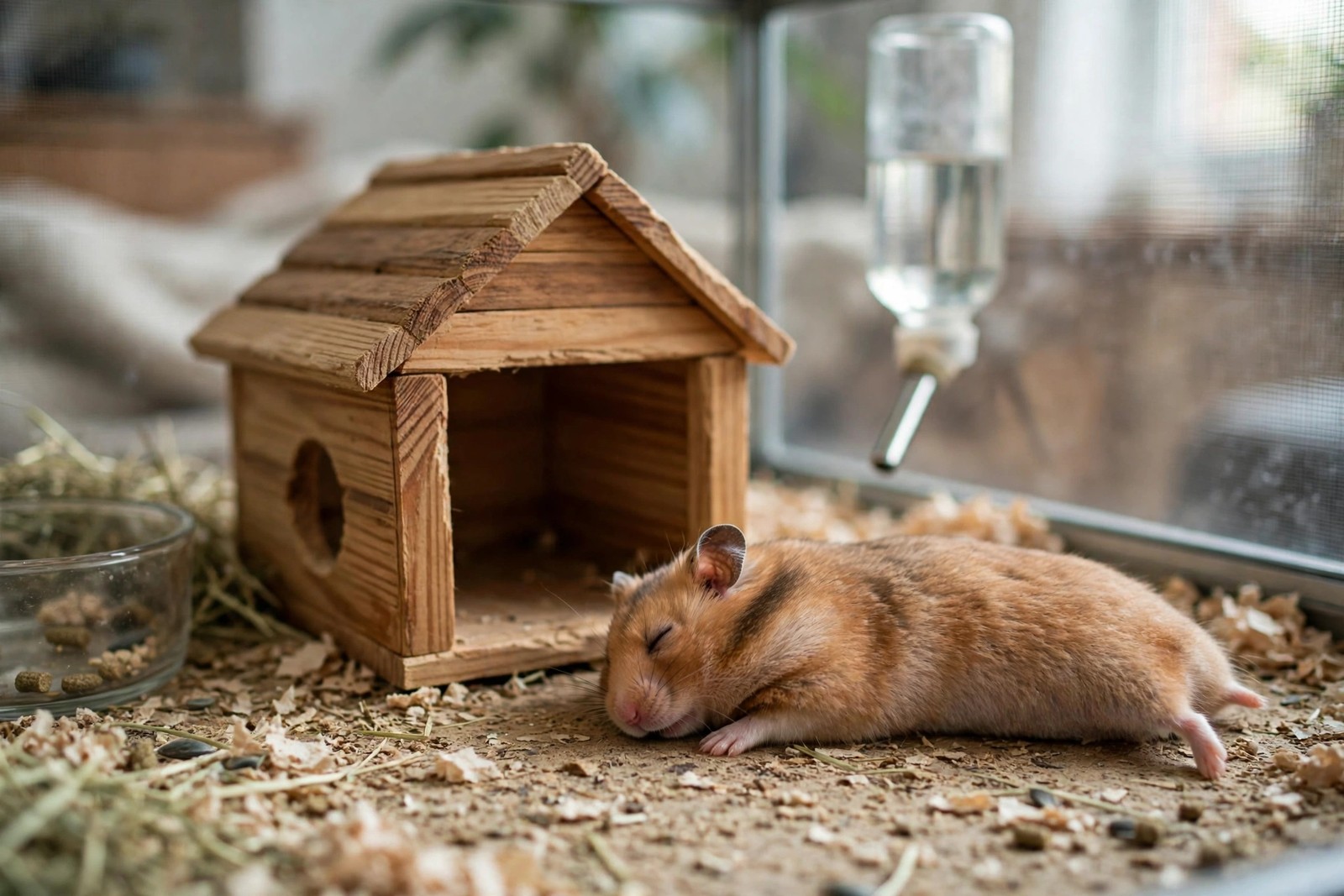
Hamsters are devoted nest sleepers. The nest is where the food store is guarded, where scent says home, and where a small prey animal can be invisible for the day, so a hamster who suddenly takes to sleeping out in the open has changed his mind about something specific. The change is information rather than misbehaviour, and working through the likely causes in order, heat first, housekeeping second, health always in view, will usually find the answer without disturbing him more than necessary.
Too Warm Is the Usual Verdict
A nest is a ball of shredded bedding packed into a house or corner, which makes it the best-insulated place in the enclosure, and insulation works against a hamster in a warm room. Hamsters are comfortable in the sort of temperatures people find cool-to-moderate and cope poorly with heat, having no effective way to sweat it off. A hamster sleeping flat out on bare substrate, pressed against the cool side of the enclosure, or sprawled in a sand bath during a warm spell is thermoregulating with the only tool he has: location. Check where the enclosure sits before assuming anything medical: direct sun through a window for part of the day, a nearby radiator or heat vent, and a room that warms up while the house is empty are the classic traps, and moving the enclosure to a shaded, draught-free spot out of the sun's daily path often restores nest sleeping within a day or two.
A Nest He No Longer Recognises as His
The second common cause is the nest itself. Hamsters soil surprisingly little of it, but a nest that has become damp, or where hoarded fresh food has softened and spoiled in the warmth, will be abandoned for a cleaner corner, and he will often start the new nest from scratch nearby. Well-meant deep cleaning creates the same result: if the whole nest was thrown out and the house scrubbed during a cage clean, the spot no longer smells like his bedroom, and many hamsters respond by sleeping in the open or building somewhere entirely new for the following days. Spot-clean the damp areas, remove spoiled stored food, and always return a portion of the old, dry nesting material with his scent on it; a nest that still smells like him is a nest he will use. Offering a second house or hide gives him a choice of sleeping sites at different temperatures, which suits an animal who likes to relocate through the day.
Age, Access, and Illness
In an older hamster, sleeping outside the nest can be about logistics: stiff joints, reduced strength, or failing sight can make a high house entrance, a steep tube, or deep bedding genuinely hard work, and he settles where he can rather than where he would choose. Ground-level hides and shallower thresholds answer that version. The version to act on promptly is the sick hamster: one who sleeps in the open and is also eating or drinking less, losing weight, hunched, wobbly, less active at night, or has a wet tail area, discharge, or laboured breathing needs a vet promptly, because small prey animals decline quickly and a changed sleeping place is often the first visible sign an owner gets. A hamster who is otherwise eating, hoarding, running, and building as usual, and who returns to the nest when the room cools, is almost certainly a hot hamster rather than a patient.
Catching the Pattern Early
Because the causes are so checkable, this is a habit worth assigning rather than leaving to chance encounters. Note the room temperature and where he slept each day for a week, photograph the nest area before cleaning days, and record appetite and wheel activity the same evening; the pattern that emerges separates the heat cases from the housekeeping cases from the ones heading to the vet. KinsLe's Care Teams supports exactly that rhythm, letting you assign the daily enclosure-temperature check and nest inspection to a named person and see each one marked complete with a timestamp, so a subtle change in a small animal's habits is caught by a system rather than by luck.