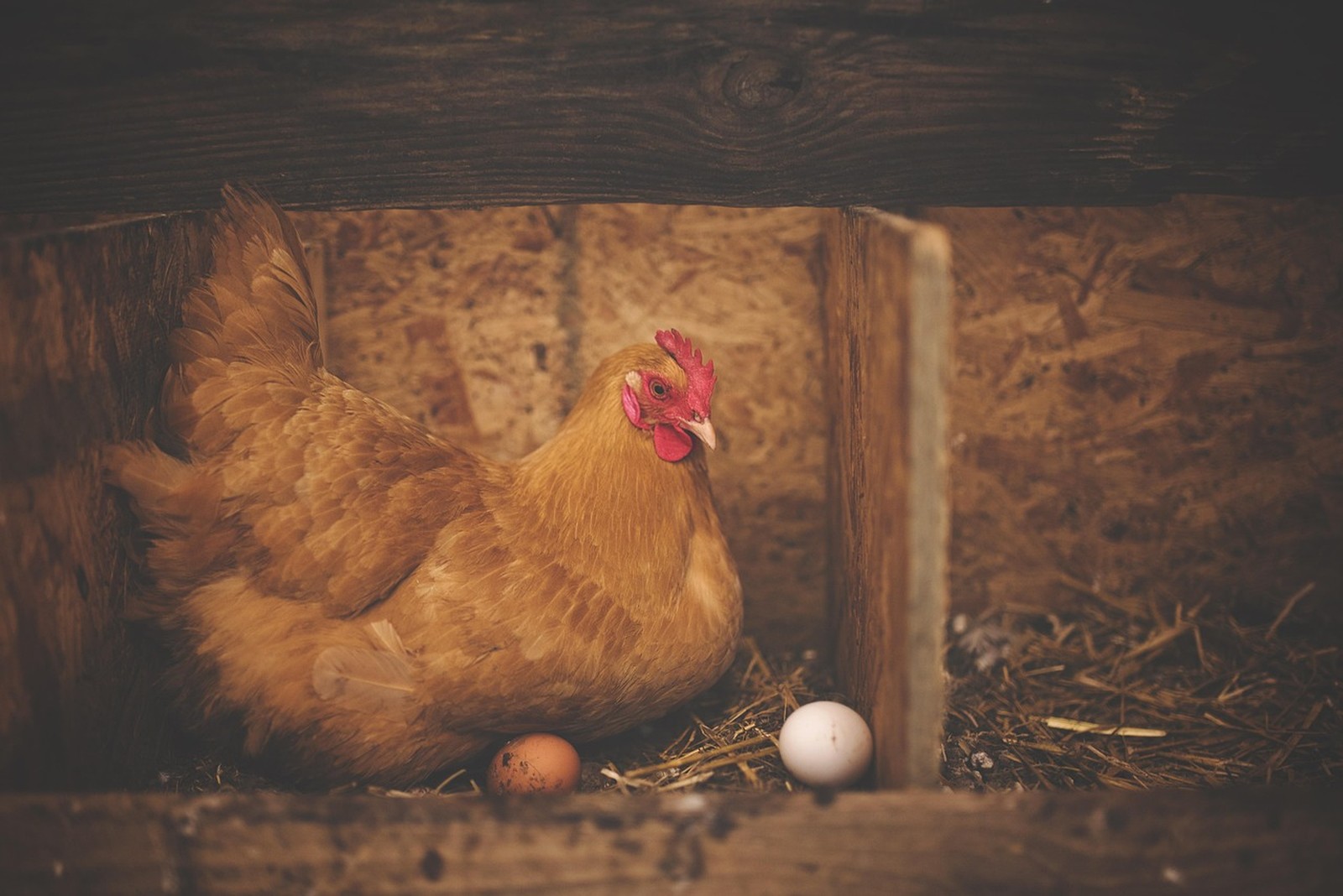
Broodiness is not stubbornness, illness, or a hen misbehaving. It is a hormonal state that switches a laying hen into an incubating mother: she stops laying, settles onto a nest, and defends it as if her next three weeks are already planned. Some keepers welcome it as the cheapest incubator they own. Others, with no rooster and no wish for chicks, need it ended before the hen loses condition. Both responses are legitimate — what matters is choosing one and carrying it through properly.
Recognising a Truly Broody Hen
A broody hen sits on the nest almost around the clock, including overnight instead of roosting, and she flattens herself over the eggs like a feathered pancake. Reach toward her and she puffs up, growls, screeches, or pecks; lift her off and she returns within minutes. She typically plucks feathers from her own breast, which both warms the eggs against bare skin and lines the nest. Her comb often looks paler than a laying hen's, she produces one very large, strong-smelling dropping on her single daily outing, and she takes that short break only to eat, drink, and dust-bathe at speed. Warm weather, lengthening days, a nest left full of eggs, and a secluded dark nest box all encourage the switch, and some breeds — Silkies are famous for it, and many Orpingtons and Sussex hens are keen mothers — go broody far more readily than high-production laying hybrids.
Option One: Let Her Hatch
She can only hatch fertile eggs, which means eggs from a flock with a rooster, or fertile eggs bought in and slipped under her. Mark the chosen clutch with a pencil line so later additions from other hens can be removed, because eggs started on different days hatch badly out of sequence. Chicken eggs take about twenty-one days. Move her, ideally, to a quiet broody pen at ground level with her nest, feed, and water within a short walk, so other hens cannot add eggs, jostle her, or lay in her nest, and chicks cannot fall from a high box on hatch day. Candle or simply wait, remove any egg that cracks or smells, and make sure she leaves the nest daily — a hen who never eats or drinks needs lifting off once a day. The alternative, used by many keepers, is to let her sit on dummy eggs and then tuck day-old chicks under her at night near the three-week mark, watching closely the next morning that she has accepted them as her own.
Option Two: Break the Broodiness
If there are no fertile eggs and no chicks wanted, end the state kindly but firmly, because a hen can sit for many weeks and lose weight, muscle, and laying condition, and a warm nest is also a fine home for mites. Collect every egg several times a day so nothing accumulates, take her off the nest repeatedly, and block the nest boxes at night so she must roost. The method keepers rely on is a broody pen: a wire-bottomed cage raised off the ground, with feed and water but no bedding or nest material, set somewhere bright and busy. Air flowing under her cools the bare breast that broodiness keeps warm, and most hens give up within a few days, returning to the flock once she roosts and lays normally again rather than sprinting back to a nest.
Whichever route you choose, check her daily: feel whether she is getting thin, look for mites around the vent and nest, and make sure she eats and drinks. A hen who is weak, hunched away from the nest, or off her legs needs a veterinarian rather than another day of sitting. The routine is what makes either plan succeed, and KinsLe's Care Teams helps you run it: assign the morning and evening egg collections, the daily lift-off and condition check, or the broody-pen check to whoever helps with your flock, with each finished task timestamped so no collection gets missed.