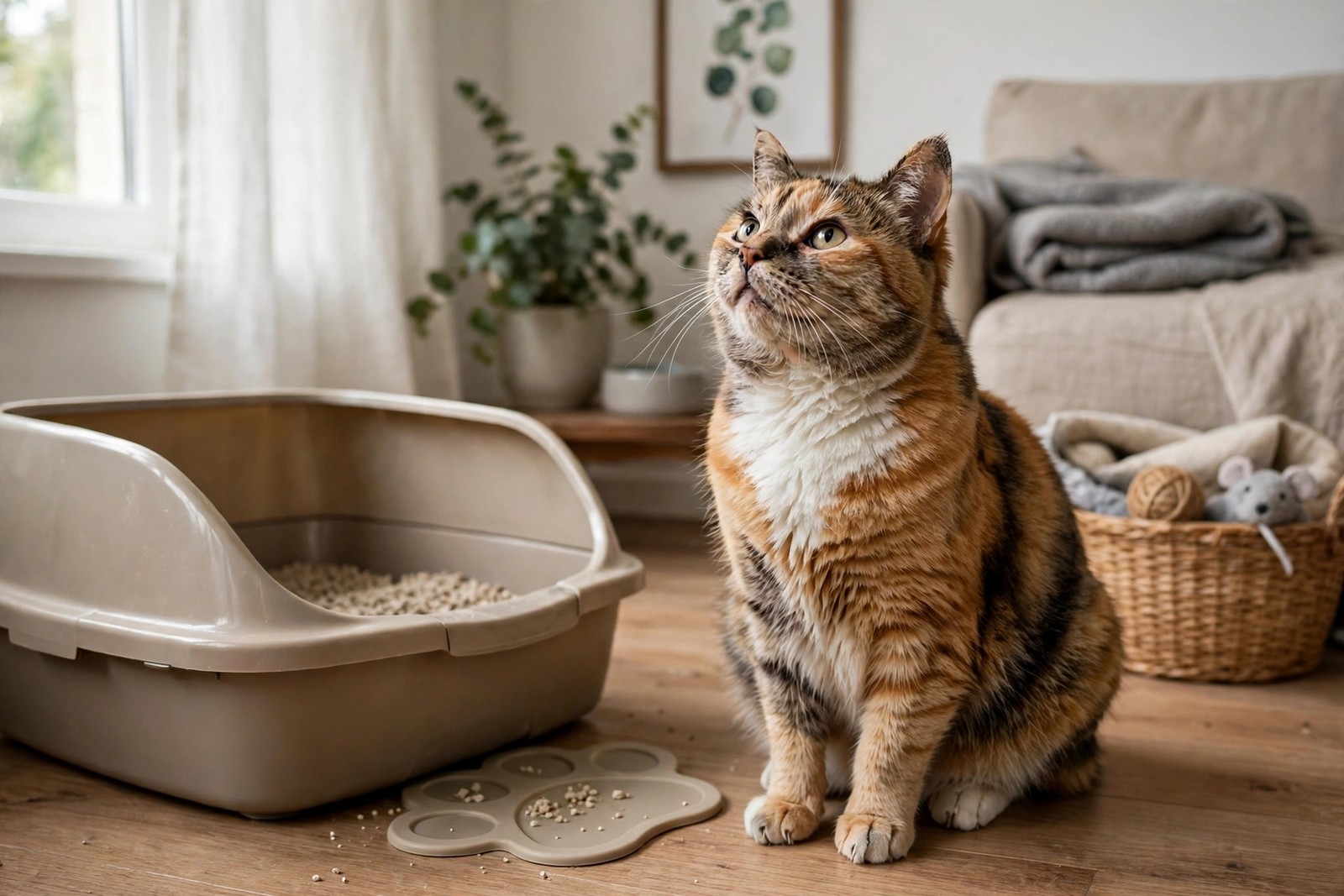
When an older cat who was always reliable starts peeing outside the litter box, start with your veterinarian, not with frustration. In senior cats, a new litter box change is a symptom first and a behaviour problem second. Rule out a medical cause with a vet visit, then work through access and comfort at home, because the two often overlap — a cat in pain both needs treatment and needs an easier box while she recovers.
Medical causes to rule out first
Your vet will ask when it started, how often it happens, whether the puddles are large or small, and whether your cat strains, cries, goes more frequently or drinks more than usual. Small, frequent spots in several places feel different from one large puddle beside the box, and that distinction helps guide the exam. Bring notes rather than relying on memory, and mention any new medication, recent stress or changes in appetite, weight and sleep that appeared around the same time.
Do not punish, shout at or rub your cat's nose in a mess. She is not being spiteful. Punishment adds fear around toileting and can make a senior cat hide to go, which delays exactly the pattern information your vet needs.
Access problems that are common in seniors
Walk your cat's route as she experiences it. Is the box down steep stairs, behind a baby gate, or in a room whose door is often closed? Is the entry high-sided, forcing a painful hop? Can she turn inside, or is the box tucked so tightly she must reverse out? Sore joints, weaker balance and poorer night vision turn a routine she managed at eight into an obstacle course at fifteen.
Adding a second, easier box near where she sleeps often helps more than replacing the original. Try a low entry, a larger footprint and a quiet spot on the same floor as her bed and food. Keep at least one box per cat plus one extra in multi-cat homes, and make sure a younger, bolder cat is not guarding the hallway or ambushing her on the way out.
Cleaning and tracking the pattern
Clean accidents with an enzymatic cleaner made for pet urine, following the product directions, so scent does not invite a repeat visit to the same rug corner. For a week or two, log where and when each accident happens, what the nearest box looked like — clean, soiled, occupied — and what was happening in the house. Patterns emerge quickly: always overnight suggests route lighting or distance; always beside one box suggests entry or cleanliness; random small spots suggest you should call the vet again sooner.
Block favourite accident spots temporarily with furniture, a scratcher or a feeding station once they are thoroughly cleaned, since cats rarely toilet where they eat. Washable pads or mats under and around the new box can protect floors while you solve the cause.
Sharing the pattern through KinsLe Messenger
That log becomes genuinely useful when everyone involved can see it. KinsLe Messenger is the per-pet communications hub for your cat, so vet updates, family observations and sitter notes about accidents, appetite and medication stay in one thread tied to her profile rather than scattered across texts. Share the where-and-when pattern with your vet through that hub, and the conversation starts from evidence instead of guesswork.
Through the KinsLe Messenger thread on KinsLe, you can send your vet the week's accident log — where each puddle appeared, when it happened, and whether the nearest box was clean — and ask whether that pattern warrants another visit.