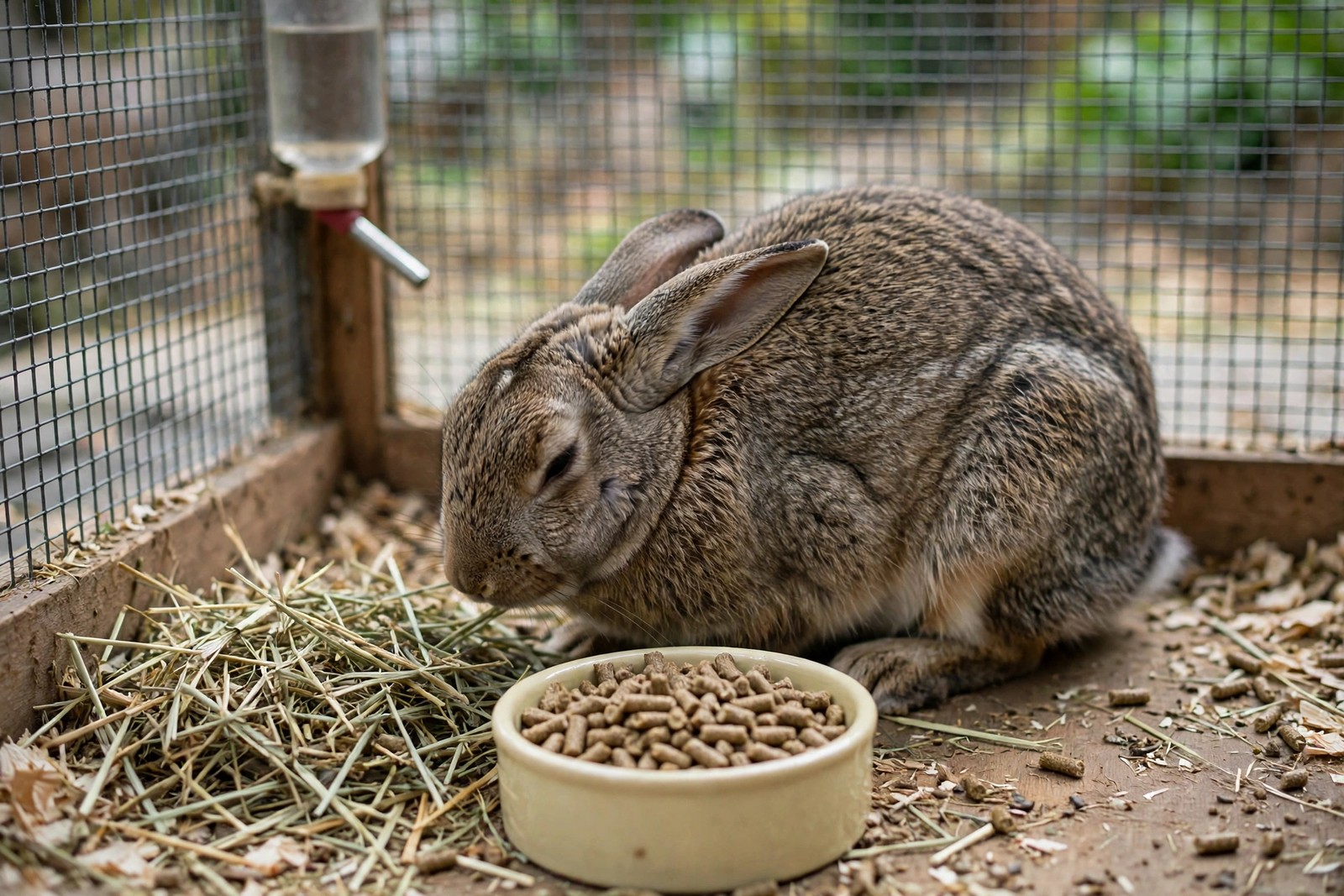
A rabbit that refuses food is an emergency in slow motion. Without a near-constant flow of food through the gut, motility stalls — gastrointestinal stasis — gas and pain build, and within 24–48 hours the situation can turn life-threatening. A rabbit who has eaten nothing for 12 hours, is producing few or no droppings, sits hunched and quiet, grinds their teeth (a pain sign), or has a bloated-feeling belly needs a vet today — do not wait overnight to see whether it improves on its own.
Common Causes — and What the Vet Looks For
Stasis is usually a symptom of something else: dental disease (spurs on the cheek teeth are a classic), pain anywhere in the body, stress (a move, a predator scare, losing a companion), a diet too low in fibre (too many pellets or treats, too little hay), dehydration, or an underlying illness. The vet will examine the mouth and abdomen, assess hydration and temperature, and work on both gut motility and the underlying cause. While you arrange the visit: keep hay and water within easy reach, offer favourite greens or herbs (wetting them adds fluid), keep the rabbit warm and quiet, and do not syringe-feed unless a vet instructs you — a rabbit with a blockage should not be force-fed.
Working With Your Vet
For a rabbit off their food, the order is tight: note when eating stopped, when droppings last appeared and whether tooth-grinding or hunching has started, then get those details to a vet the same day rather than watching overnight. An examination can separate dental spurs, pain, dehydration and other triggers that look identical from the outside, and the timing you report — last meal, last droppings, last normal behaviour — often shapes where the vet looks first. Bring the rabbit in a secure carrier lined with hay, and keep handling to a minimum on the way, since a painful, gassy gut makes lifting and restraint more stressful than the journey itself.
This is one of the clearest emergencies in rabbit care: eating nothing for 12 hours, no droppings, tooth-grinding, or a hunched silent rabbit all mean the vet today — an exotics vet if yours is reachable, the emergency service if not. General information only; stasis needs hands-on treatment, not home waiting.
For a rabbit prone to gut slowdowns, past visit notes, vaccination dates and weight history give the next vet a running start instead of a blank page. On KinsLe, Pet Passport holds that history as one packet for this rabbit, ready for visits, boarding stays and handoffs.