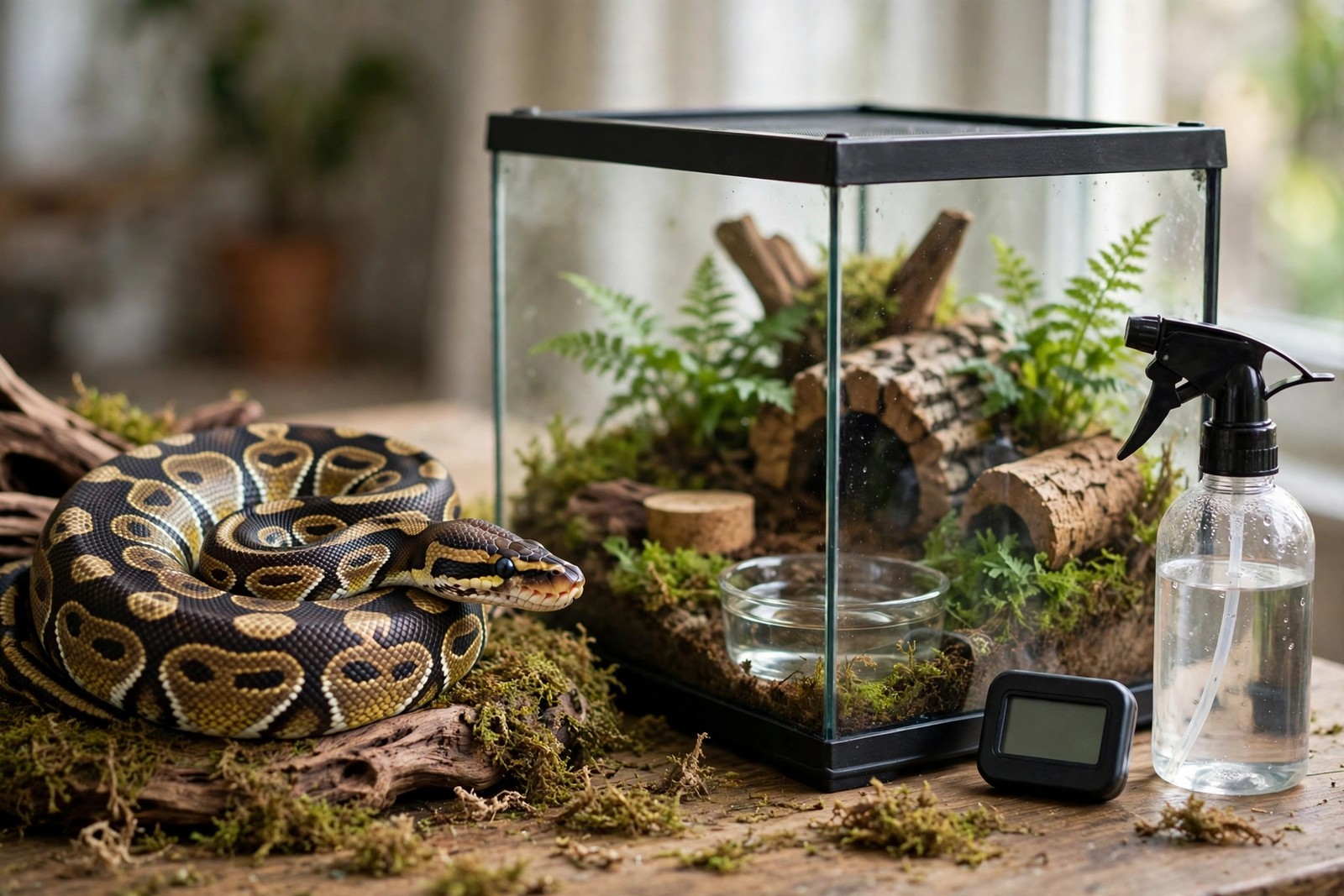
Context decides whether a ball python's fast is routine or a warning sign. Adults in breeding condition may skip meals for weeks or months and stay healthy, while a juvenile missing feeds deserves closer attention sooner. Work through the checklist before worrying: enclosure temperatures (warm side around 31–33°C / 88–90°F, cool side around 25–27°C / 78–80°F, measured properly), a hide at each end so the snake can feel secure at both temperatures, humidity around 50–60% (higher in shed), whether a shed is coming (cloudy eyes, dull skin — many refuse then), prey size and presentation (offered at night, warmed, left undisturbed), and recent changes — a new enclosure, handling, or a move all commonly stop feeding.
When a Fast Stops Being Normal
Track weight monthly: a snake holding weight through a fast is in a very different position from one losing it. Vet-worthy signs alongside food refusal include weight loss (a visible spine ridge or triangular body shape), wheezing, mucus or bubbles (respiratory infection), mouth sores, mites (tiny black dots, often around the eyes and chin), retained shed, or lethargy. Weigh and log meals so you can show a pattern rather than a feeling. Offer food every one to two weeks during a fast rather than daily (repeated refusal can itself become stressful), minimise handling of a non-feeding snake, and never force-feed without veterinary guidance.
What Owners Need to Know
For a ball python, appetite follows security and warmth more closely than coaxing. A snake that can rest unseen at a warm end, cross to a cooler hide, and drink fresh water is set up to feed when ready; a snake lying exposed on cold substrate is not, however tempting the prey looks. Recheck the gradient at hide level before blaming the snake, because a thermometer on the glass can read a different world from the one the python occupies.
Practical Steps That Help
Use this order during a fast, changing one condition at a time:
- Verify warm-side and cool-side temperatures at hide level, not on the glass
- Fit a snug hide at each end so the snake feels cover against its coils
- Offer a warmed prey item at night, then leave the enclosure undisturbed
- Space further offers a week or two apart instead of presenting food nightly
- Weigh monthly and note each offer, shed, and refusal with its date
Patience between offers protects the routine you are building. Nightly presentations to a snake that already feels exposed can deepen a refusal, while a quiet week after one adjustment shows whether that adjustment helped.
A Note on Health Information
Treat the guidance here as background for observation, not as an examination of your snake. A reptile veterinarian makes the diagnosis after seeing the animal. Breathing difficulty, collapse, obvious pain, or refusal paired with rapid weight loss warrants a same-day call rather than a longer wait at home.
Making It Part of Everyday Life
For a fasting python, the useful record is narrow and dated: monthly weight, each prey offer and its outcome, shed dates, and the temperatures you measured that week. Those entries turn a vague worry into a sequence a vet can read, and they show whether a fast is holding steady or sliding. Within KinsLe, duties for this snake can be handed over through Care Teams — one person weighs, another offers food — while timestamps show when each job was completed.