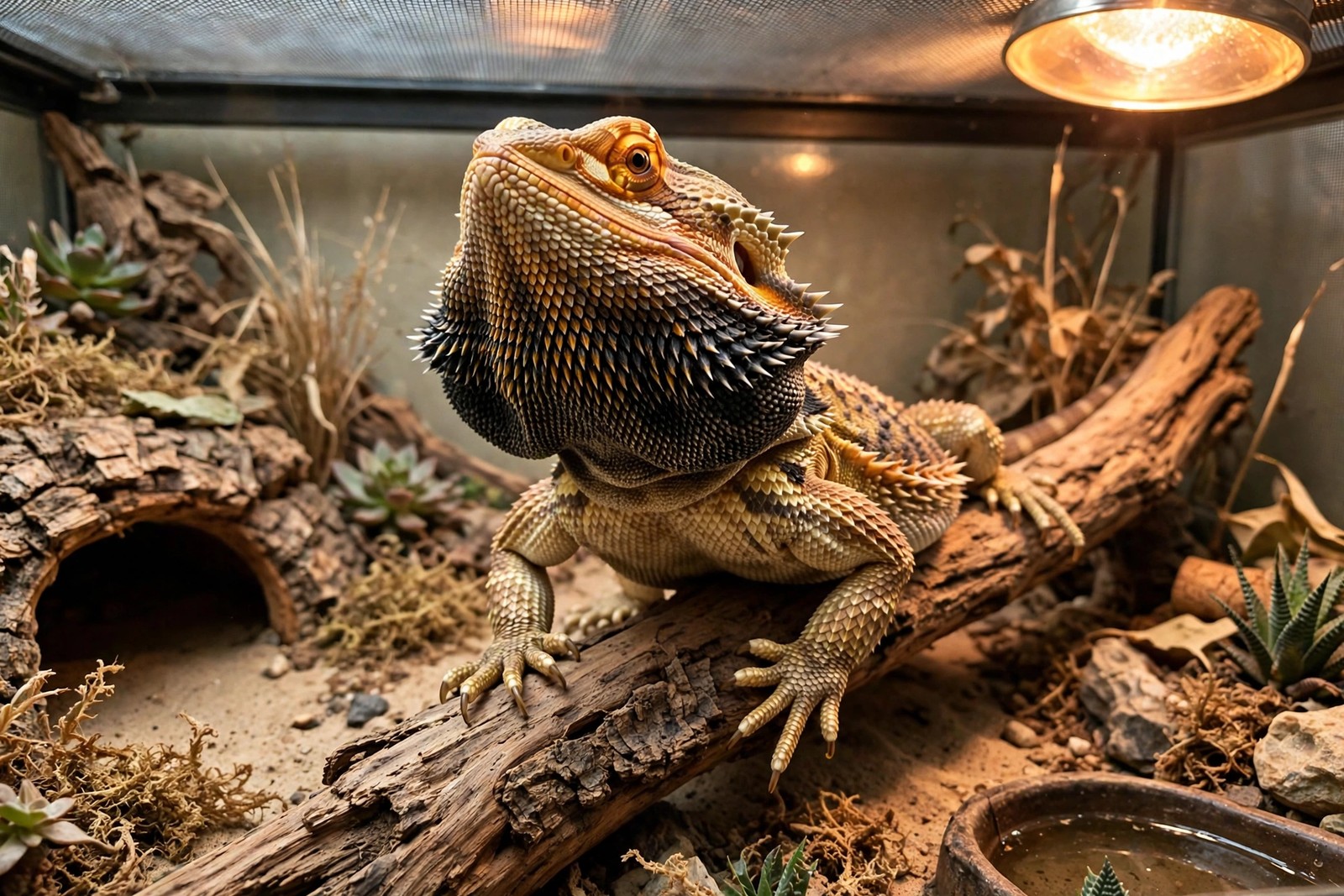
The beard is a bearded dragon's billboard. The spiky fold of skin under the throat can puff out and darken from pale tan to jet black within moments, and because dragons cannot speak or bark, that colour change carries real information. Reading it well means looking at how long the black lasts, what triggered it, and what the rest of the dragon is doing at the time.
Display: territory, rivals, and breeding signals
In the wild, a black beard is a statement aimed at other dragons: this territory is occupied, this male is mature, back off. Pet dragons run the same programme at reflections in the glass, at another reptile across the room, at the family dog, and sometimes at their own owner looming overhead. Display usually comes with theatre — the beard puffs, the body flattens or inflates, the head bobs in sharp jerks, and the dragon looks alert and full of itself rather than miserable. Males darken especially readily in breeding season, when hormones make rivals of every reflection. A display beard fades once the rival is removed or covered and the dragon settles.
Stress: the beard as a complaint
A dragon that feels stressed also darkens, but the picture differs: the beard stays dark at a lower level, the body stays low and still, and the dragon may hide, refuse food, or glass surf. Common triggers include too much handling, handling from above like a predator, a new enclosure, loud household changes, an enclosure that is too hot, too cold, or too exposed, and being housed within sight of another dragon. Work through the setup methodically — check the warm and cool end temperatures with a reliable thermometer, confirm hides exist at both ends, and reduce handling for a few days — rather than changing everything at once.
Illness: when black means unwell
A persistently black beard paired with a dragon who is lethargic, off food, losing weight, has sunken-looking eyes, or produces abnormal droppings should be treated as a dragon telling you it feels wrong. Pain and nausea darken beards too, and dragons are good at hiding illness until it is advanced, so a beard that stays black all day, day after day, with a quiet dragon attached, earns a prompt reptile vet appointment. Take notes on temperatures, lighting hours, recent food, and supplements, and a fresh dropping sample if you can, because those details shape the consultation.
What to do in the moment
Start by removing the audience: cover the reflective glass, move other pets away, and let the dragon be. Offer water, check the basking spot is being used normally, and observe rather than handling for reassurance, because being picked up mid-display rarely reassures. If the beard fades as calm returns, you were watching communication. If it does not fade, treat the persistence itself as the finding and keep a simple daily log of beard colour, appetite, activity, and droppings until you speak to a vet.
Juveniles, females, and seasonal patterns
Young dragons darken their beards too, but usually in brief, easily triggered flashes — a hand arriving too fast, a sibling in a neighbouring enclosure, a shadow passing overhead. Because juveniles are prey-sized and know it, their black beards more often mean startle than dominance, and they fade as handling becomes routine and predictable. Females can display and darken as well, particularly when gravid or when confronted by another dragon, though males in breeding condition remain the most theatrical. Owners who log episodes often find a seasonal shape to them, with display beards clustering in the brighter, longer days when hormones rise, and a quieter beard through the slower months — a pattern worth knowing before mistaking a seasonal display for a new problem.
That log is far stronger when everyone who feeds or checks the dragon contributes to it. KinsLe's Care Teams lets your household record temperature checks, feeds, and beard episodes with timestamps against one profile, so a pattern of brief displays looks clearly different from a beard that has stayed black for days.