
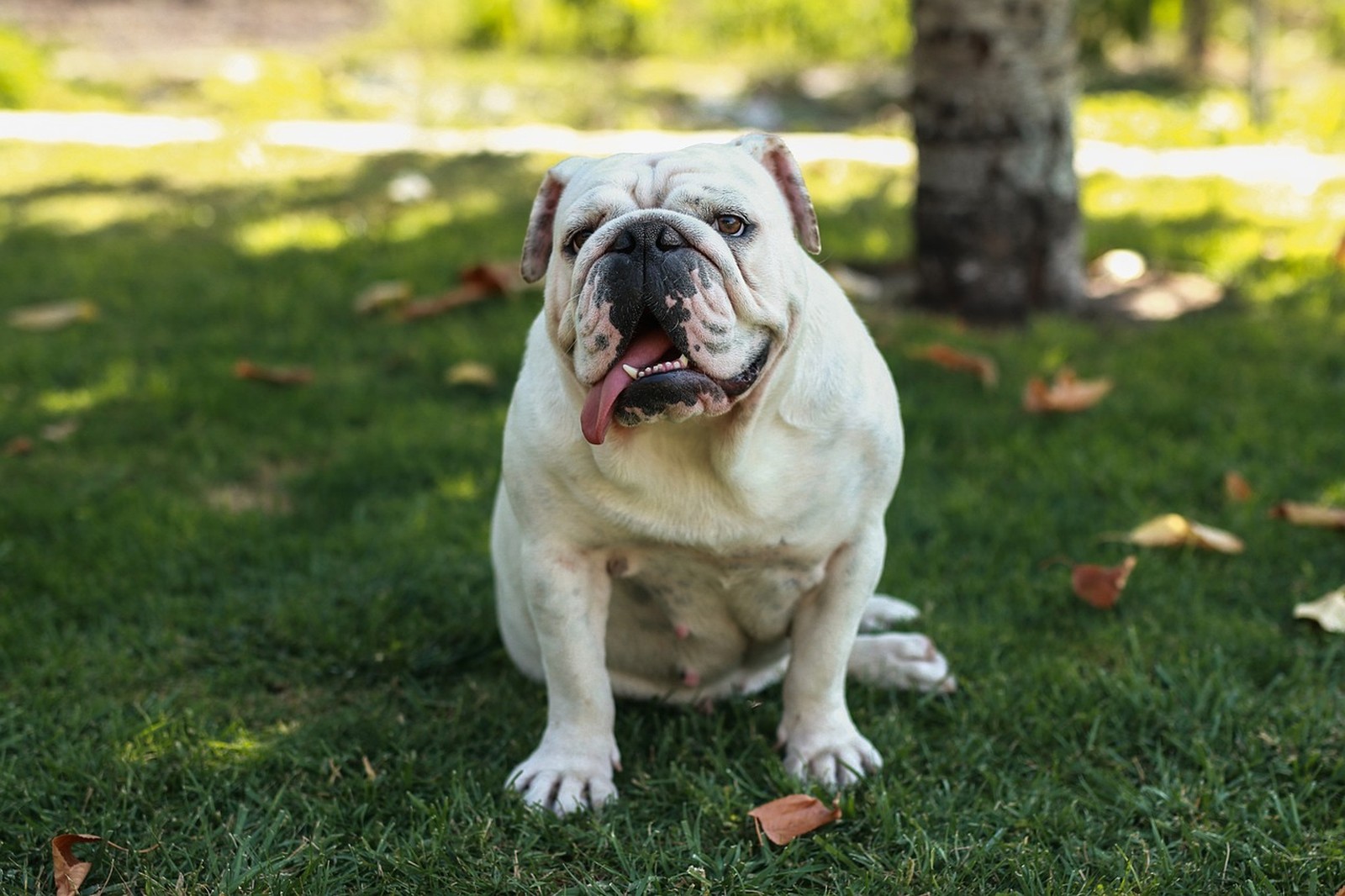
When a Bulldog Turns Down Food, Look at Comfort First
Few breeds love a meal like a Bulldog, so a refused bowl today is a genuine signal — but in this breed the signal often points to comfort before illness. Bulldogs regulate temperature poorly, breathe through shortened airways, and carry skin folds, teeth, and joints that can all ache quietly. A dog who is too warm, whose folds are sore, or whose mouth hurts may simply not feel like eating until the discomfort passes. Start by moving her somewhere cool, watching her breathing settle, and reading her body: is she restless, drooling more than usual, pawing at her face, or slower than normal getting up?
Heat and Airway: The Bulldog Appetite Switch
A Bulldog's breathing competes with everything else she does, and eating requires coordinated chewing and swallowing through that same narrow airway. On a warm or humid day she may choose to spend her effort on cooling herself, lying flat on a cool surface and ignoring food until evening. Snoring that has grown louder, snorting fits, or gagging at the bowl suggest the airway or a throat irritation is part of today's picture. Feed only when she is cool and calm, in small portions, and never after exertion while she is still panting. If refusal reliably follows warm days, that pattern itself is worth raising at her next check-up.
Teeth, Folds, and Other Quiet Bulldog Discomforts
Bulldog mouths crowd large teeth into a short jaw, and sore gums, a cracked tooth, or food packed between teeth can make a devoted eater hesitate at hard kibble. Lift her lip and look for redness, swelling, or a tooth that looks different, and watch whether she approaches the bowl, takes one piece, and backs away — that sequence often means pain rather than disinterest. Damp, irritated skin folds around the face and tail, or a sore ear, can also flatten her mood and appetite for a day. Gentle daily fold care and a mouth check cost little and rule out the most common hidden reasons a Bulldog goes quiet at the bowl.
A Calm Feeding Reset for a Stubborn Breed
Take the refused meal up and offer her regular food again at the next mealtime in her coolest resting place, softened with a little warm water if chewing looked effortful. Bulldogs are champion negotiators, and producing a richer alternative today teaches her that refusal pays; keep the menu boring and predictable while you assess her. Encourage water, keep walks short and shaded, and let rest do its work through the day. A Bulldog whose appetite returns with the evening cool and who is breathing easily was most likely telling you about heat and comfort, and tomorrow's normal breakfast is the confirmation to look for.
Bulldog Red Flags That Mean the Vet Today
Laboured, noisy breathing at rest, blue-tinged or pale gums, collapse, or an inability to settle are emergencies in this breed — seek veterinary care immediately rather than watching at home. Repeated vomiting, diarrhea, refusal of water as well as food, or a dog who cannot rise comfortably also belong in the same-day category. Because Bulldogs hide discomfort stoically, a full day of refusal in an older dog, or any refusal paired with changed breathing, justifies a call even if nothing dramatic is visible. Walk in with her temperature notes, breathing observations, and mouth-check findings logged in her KinsLe Pet Passport, and the vet can move straight to the likely systems.