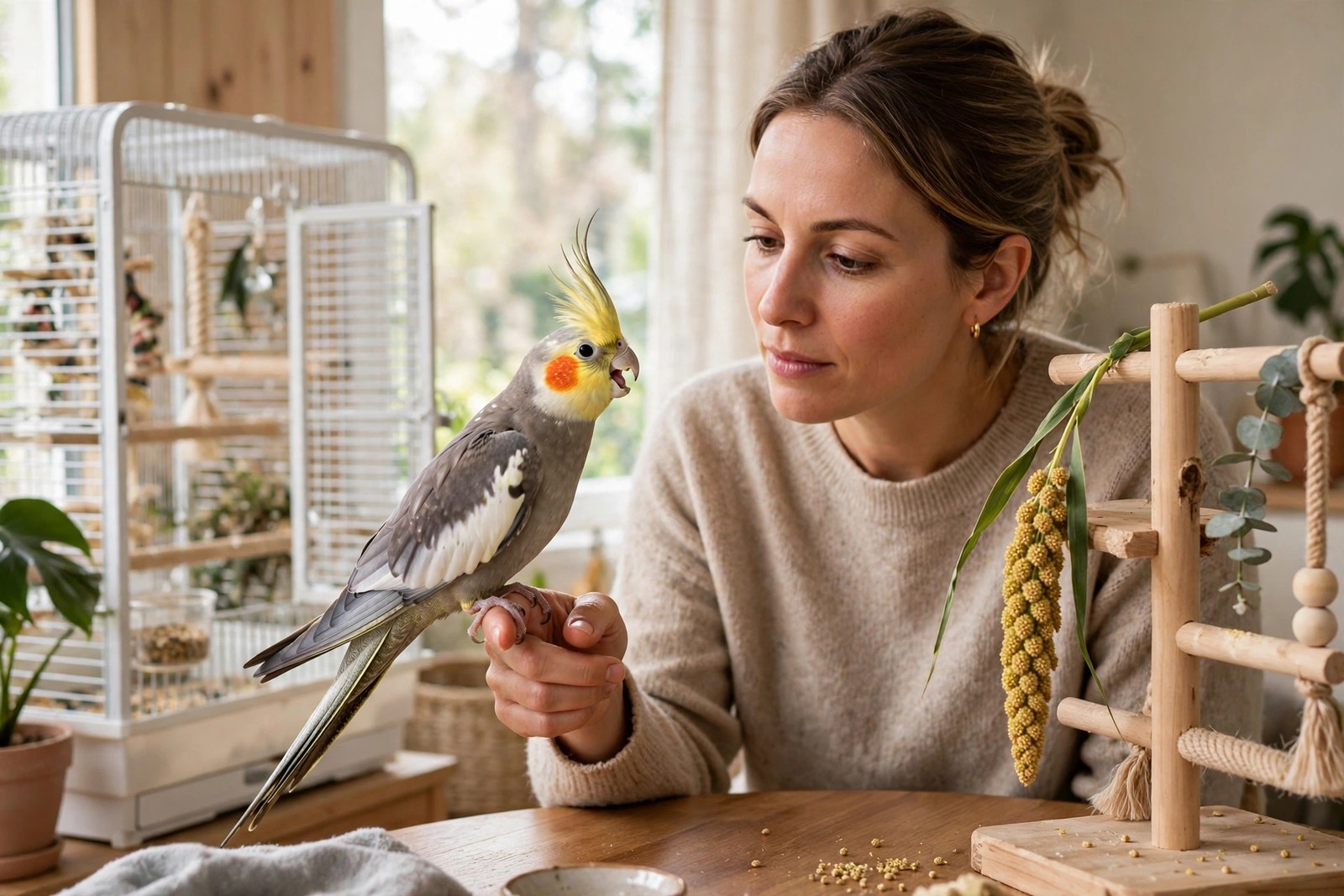
A hiss from a cockatiel is the bird being honest with you: it is frightened, or it feels trapped, and it is asking for distance. It is often paired with the full display: body swaying, crest flattened or raised in alarm, beak open, and sometimes lunging. It is not naughtiness and it is not a bid for dominance; it is a small prey animal telling a very large one that it is scared. Common triggers are a hand entering the cage territory, being approached too fast or from above, being grabbed, an unfamiliar person or object, a bird who is hormonal and guarding a nest-like space, or a bird who is in pain or unwell and cannot cope with handling today.
Answering a Hiss the Right Way
The correct response is to freeze, withdraw your hand slowly, and let the bird's heart rate come down — pushing past a hiss teaches the bird that warnings do not work, and the next signal is a bite; many 'suddenly biting' cockatiels are birds whose hisses were ignored for months. Then change the setup, not the bird: approach at the bird's pace, offer treats from outside the bars, let the bird choose to step up rather than being scooped, and keep hands out of the cage except for essential care while trust is rebuilt. If hissing is new in a previously tame bird and comes with fluffing, appetite change, or droppings changes, treat it as a health flag: pain makes birds defensive, and an avian vet check comes before behaviour conclusions in that picture.
Working With Your Vet
When hissing is the symptom you take to an avian vet, the useful record is a trigger log, not a general health diary. Note what your hand was doing in the seconds before each hiss, the time of day, and whether this was cage territory or neutral ground — a bird defensive only at the cage door is telling a different story from one who has become defensive everywhere. Add whatever arrived alongside the change: fluffing, reduced appetite, changed droppings, less whistling. A short phone video of an episode, taken without pushing the bird further, shows the vet the full display — sway, crest, beak — in a way a description cannot. Hissing itself needs patience, not a vet — but a tame bird who becomes defensive alongside those physical changes should be examined by an avian vet promptly.
Pet Passport in KinsLe is where that log belongs: trigger notes, droppings changes and examination findings for this bird kept as a single packet in KinsLe, ready whenever the pattern needs reviewing.