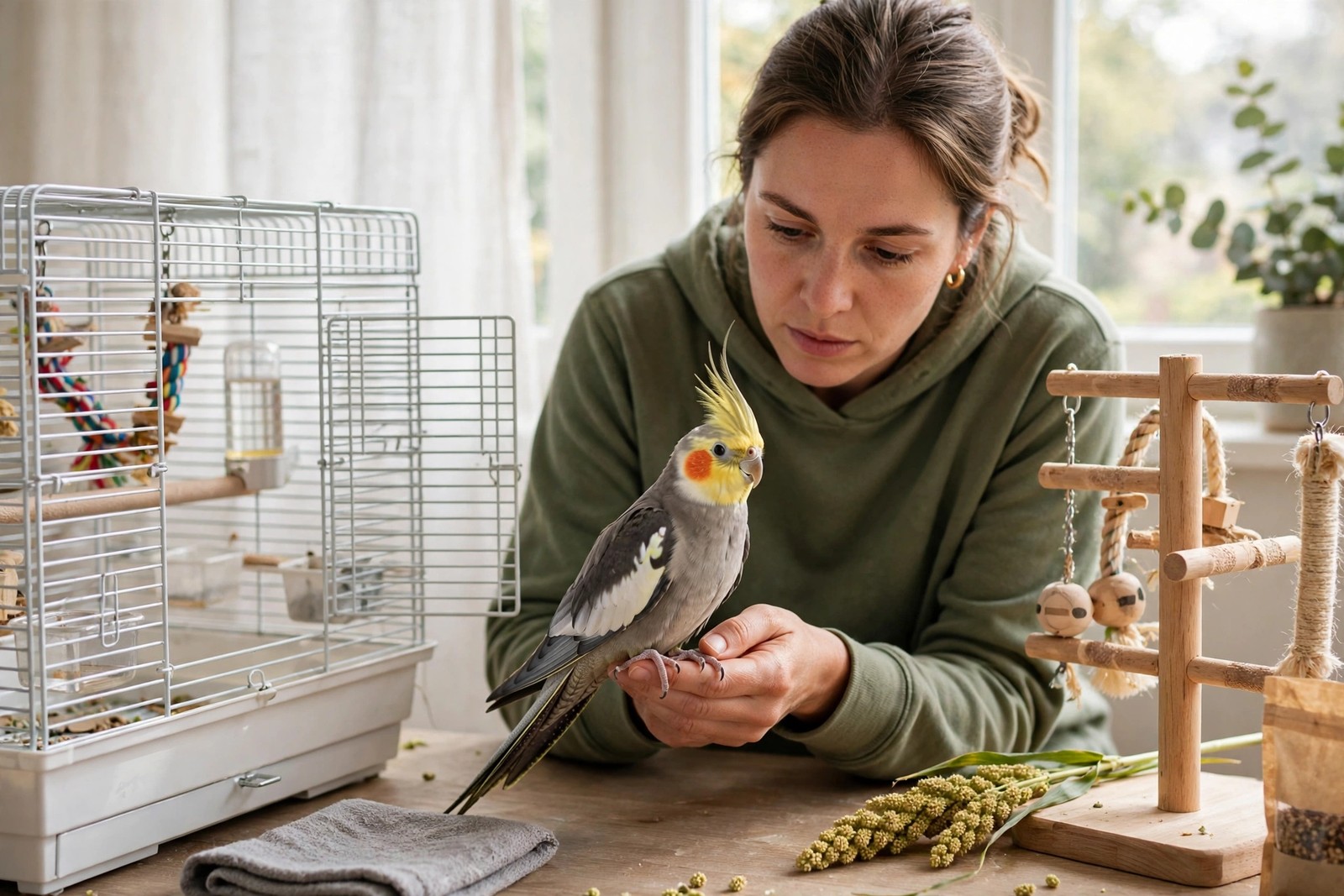
What surrounds the shake matters more than the shake itself. A brief tremor after a bath or a preen, a flutter of excitement when you walk in, or a shiver in a cold, wet bird who then settles is ordinary cockatiel behaviour. The worrying version looks different: trembling that continues at rest, repeated through the day, and arriving alongside fluffed feathers, closed eyes, a bird sitting low or down on the cage floor, faltering balance, weakness, or droppings that have changed — that cluster points to a sick bird, and cockatiels, like all birds, hide sickness until they cannot.
Cold, Fear, or Illness — Reading the Cluster
Check the environment first: room temperature (cockatiels are comfortable roughly where you are, and suffer in cold drafts), recent bath or misting, and frights. Then watch the whole bird for ten quiet minutes from a distance: a bird who shakes, then preens, eats, and whistles is telling a different story from one who shakes, stays fluffed, and ignores food. Weakness signs — grip failing on the perch, stumbling, using the beak to climb — raise the urgency sharply, as they can accompany serious illness, toxins, or nutritional problems (calcium and vitamin issues feature in seed-heavy diets). Keep a shaking, unwell bird warm and quiet and get avian veterinary advice the same day rather than observing for a few days; in small birds the trajectory matters more than the snapshot.
Working With Your Vet
With a shaking cockatiel, work in a set order: watch quietly first, write down when the trembling began and what came with it — fluffing, a weaker grip, quieter whistling, less seed eaten — and leave any diagnosis to the avian vet who examines the bird. Reading like this can help you judge urgency, but only an examination can name a cause, and a short phone video of an actual episode, with the date and that day's appetite and droppings noted, tells the vet far more than a description given from memory at the desk.
Continuous shaking with fluffing, weakness, balance problems, or not eating is a same-day avian vet visit — do not wait to see if a small bird improves alone.
For this species, a simple dated log earns its keep quickly: jot the day a shake first appeared, how long each bout lasted, whether your cockatiel was still eating seed and millet, what the droppings under the perch looked like, and whether a new cage mate, a moved cage, or a colder room entered the picture that week. A single trembling afternoon can mean little; three dated entries showing longer bouts and a bird eating less draw the pattern no owner spots by remembering. Refresh that baseline after a moult, a diet change away from all-seed feeding, or any new medication, because each of those shifts what normal shaking looks like for your bird.
For a bird who hides illness this well, that dated record of episodes, droppings and appetite — gathered in KinsLe, where the Pet Passport holds it as one portable packet alongside earlier vet findings — gives the examination a head start that memory alone cannot.