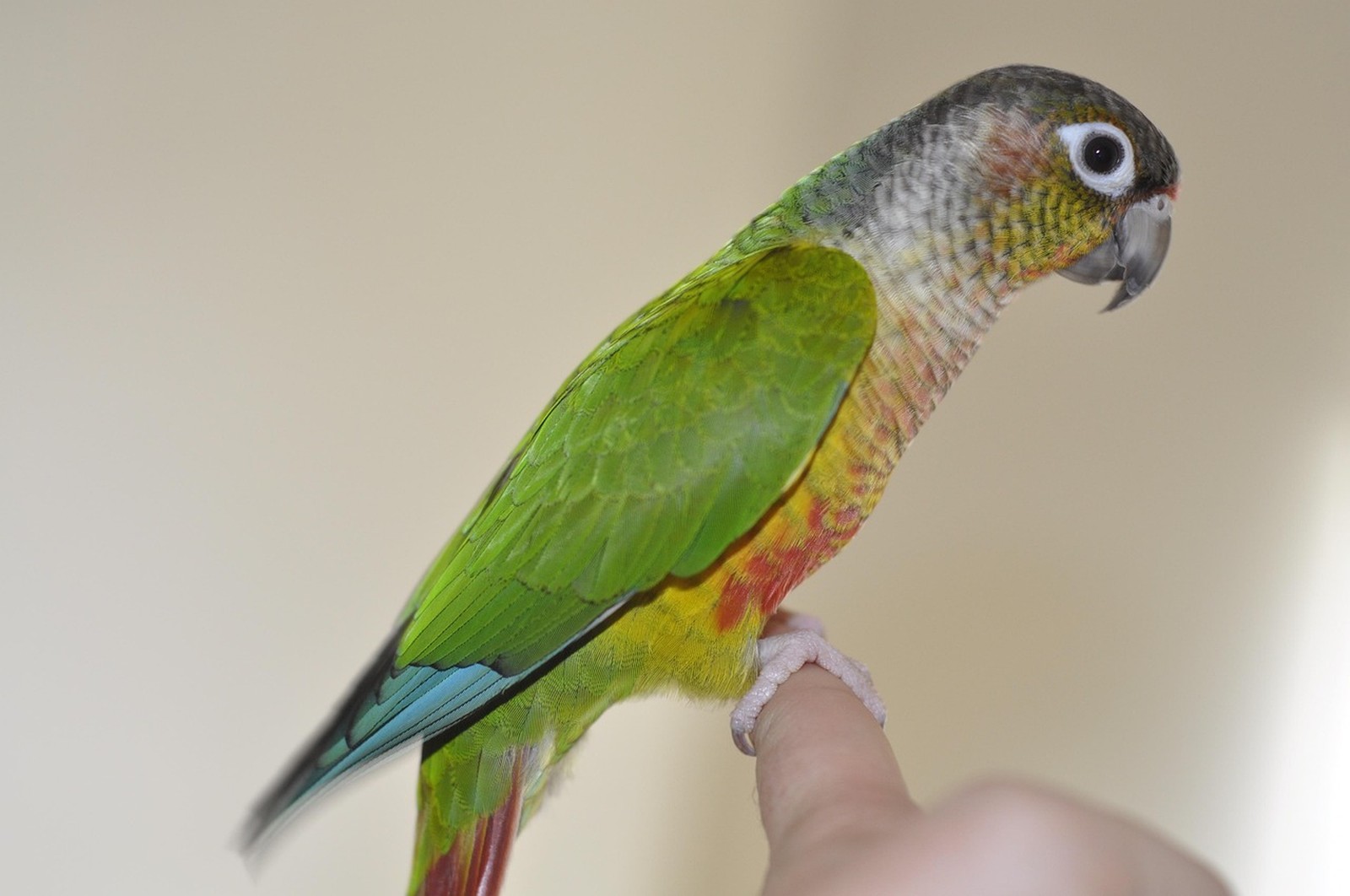
It tends to happen at a tender moment: your conure is on your hand or shoulder, bobs his head in a steady pumping rhythm, works his beak, and deposits a warm lump of softened food on you with every sign of pride. In conure language this is not an accident or a stomach upset. Feeding a partner is courtship and pair-bond behaviour: adult conures feed their mates, parents feed chicks, and a hand-raised pet who has selected you as the central figure of his flock adapts the gesture to the cast available. You are being proposed to, regularly, at close range.
What Bonding Regurgitation Looks Like
The healthy version is controlled and deliberate. The head bobs vertically in rhythm, the neck stretches, the bird may pin his eyes and make small sounds, and the food comes up neatly and is presented toward your hand, face, a favourite toy, a mirror, or another bird, sometimes repeatedly and with clear disappointment that you do not eat it. The bird before and after is bright, active, eating normally, and producing normal droppings; there is no mess on his face or head feathers, because the movement is tidy and directed. It appears in social moments rather than randomly through the day, and the trigger list is usually visible on reflection: stroking, cuddling into a lap, or feeding time with a favourite person.
The Hormonal Encouragement You May Be Giving
Regurgitation aimed at people often runs at full strength because the household is unknowingly courting back. Stroking a conure along the back, wings, or under the wings is, in bird terms, mate contact; hands-on contact that stays with the head and neck reads as friendly flock behaviour instead. Warm, soft, mushy foods offered by hand, access to dark nest-like spaces such as boxes, tents, and cupboards he can claim, very long daylight hours, and constant close cuddling all tell a conure that breeding conditions are excellent and his chosen partner is receptive. Owners caught by surprise by the regurgitation are often running several of these at once, and the bird is simply answering the advertisement.
Vomiting Is a Different Picture Entirely
Illness vomiting in a conure is uncontrolled where regurgitation is deliberate. The head flicks or shakes side to side, food and fluid are flung and end up stuck to the face, head, and cage bars, and the bird looks wrong around the episode: fluffed, quiet, sleeping more, eating less, losing weight, or producing changed droppings. Crop problems, infections, and swallowed foreign material all sit on the list of causes an avian vet would consider, and none of them can be sorted from home. A bird showing the vomiting picture, or regurgitating repeatedly outside social moments, straining, or bringing up food with a sour smell, should be seen promptly, and it is worth taking a photo of the droppings and noting when episodes happen to take with you, because the pattern is part of the evidence.
Responding Without Rejecting the Bird
Do not punish, shout at, or theatrically reject him; he has offered you the highest compliment in his repertoire and punishment only confuses a bonded bird. Calmly set him on his stand or hand him a toy, end the cuddle session for the moment, and adjust the encouragement list: head-only scratches, no warm mushy food from your fingers for a while, nest-like hideouts removed or closed, and a consistent, properly dark night's sleep. If he regurgitates to a mirror or one toy obsessively, that object may need to retire temporarily too. The behaviour usually settles to occasional offerings once the courtship signals cool, and the bond survives intact, because you have changed the season rather than rejected the bird. When you need the difference between courtship and illness checked by eyes other than yours, KinsLe's Pet Services Directory helps you find an avian veterinarian or experienced bird professional locally, which for a species this small and quick to decline is a search worth doing before an emergency forces it.