
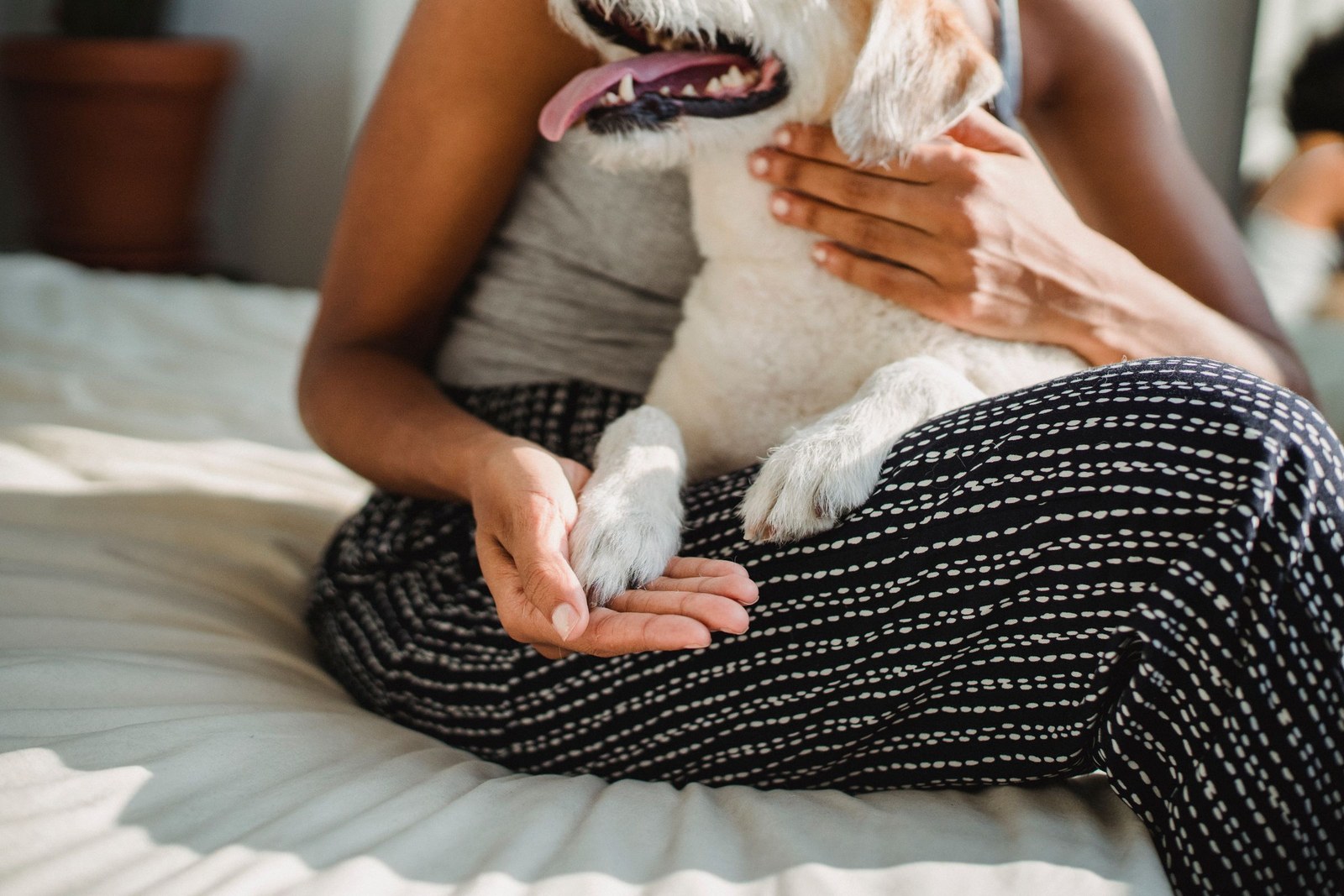
Your dog is anxious while you're packing because dogs track routine like a schedule they can smell, hear, and see — and moving tears that schedule apart. Boxes appear, furniture disappears, visitors come and go, and the familiar smells of home get taped shut. Even a confident Labrador or a laid-back senior beagle can turn clingy, pant, pace, lose interest in food, or start shadowing you from room to room. It is not misbehaviour. It is your dog asking whether the rules — and their place with you — are still safe.
Why Packing Feels So Unsettling to Dogs
Dogs do not understand "new house." They understand change. The couch where they nap is suddenly against a different wall, their toys are in a bin, and you are stressed, distracted, and moving faster than usual. Dogs read our tension closely, and many mirror it.
Certain dogs feel it more. Rescue dogs with an unknown history, puppies still learning the world, and seniors who rely on predictability can struggle most. Watch for early signs: lip licking, yawning when not tired, whale eye, tucked tail, sudden barking at normal sounds, or accidents from a dog who was reliably housetrained. Catching those signals early lets you ease the pressure before moving day itself.
Keep One Corner of Normal
The single most helpful thing you can do is protect one un-packed safe spot until the very last moment. Leave your dog's bed, blanket, water bowl, and a couple of favourite toys in one quiet corner, and pack that area last. If possible, keep feeding, walks, and bedtime at the usual times, even if everything else has shifted by an hour.
Short, sniff-heavy walks help more than frantic exercise. Let your dog sniff a lamppost for a full minute. Scatter a handful of treats in the grass for a find-it game. Give a long-lasting chew in that safe corner while you pack another room. These small, familiar rituals tell your dog that, boxes or not, the important parts of the day still happen.
Try to pack gradually rather than in one chaotic weekend, and close doors to finished rooms so your dog is not wandering through towers of boxes.
A Calmer Moving Day Plan
On moving day, the safest place for most dogs is not in the house at all. Ask a trusted friend or family member to keep them for the day, or book a familiar sitter. If your dog must stay, settle them in one closed, quiet room with water, bedding, and a sign on the door so movers do not open it by mistake — and check fences and gates at the new home before any door is opened there.
In the new place, re-create that safe corner first, before the big furniture debate starts. Walk the perimeter on leash, let your dog sniff each room at their pace, and keep the first evening deliberately boring: dinner, a short walk, settle. New homes plus overtired, overstimulated dogs are a recipe for a rough first night.
Talk to your veterinarian before the move if your dog's anxiety is severe — pacing that will not settle, drooling, refusing all food, or trying to escape. They can advise on whether extra support is appropriate for your individual dog.
How KinsLe Helps You Hold the Routine Together
When packing takes over, it is easy for a partner to assume the other person fed the dog, or for the evening walk to slip entirely. KinsLe's Care Teams let you assign feeding, walks, medication, and grooming duties to specific people, and each task is marked complete with a timestamp when it is done. During a move, that simple shared checklist means your dog's routine survives even when your own is in boxes.
Moving will still be busy, but your dog does not need to feel the chaos. Care Teams makes the written move-day schedule somebody's named job throughout: your friend owns each morning walk, your partner owns both feeds, and a timestamp on KinsLe marks every duty the moment it is done.