
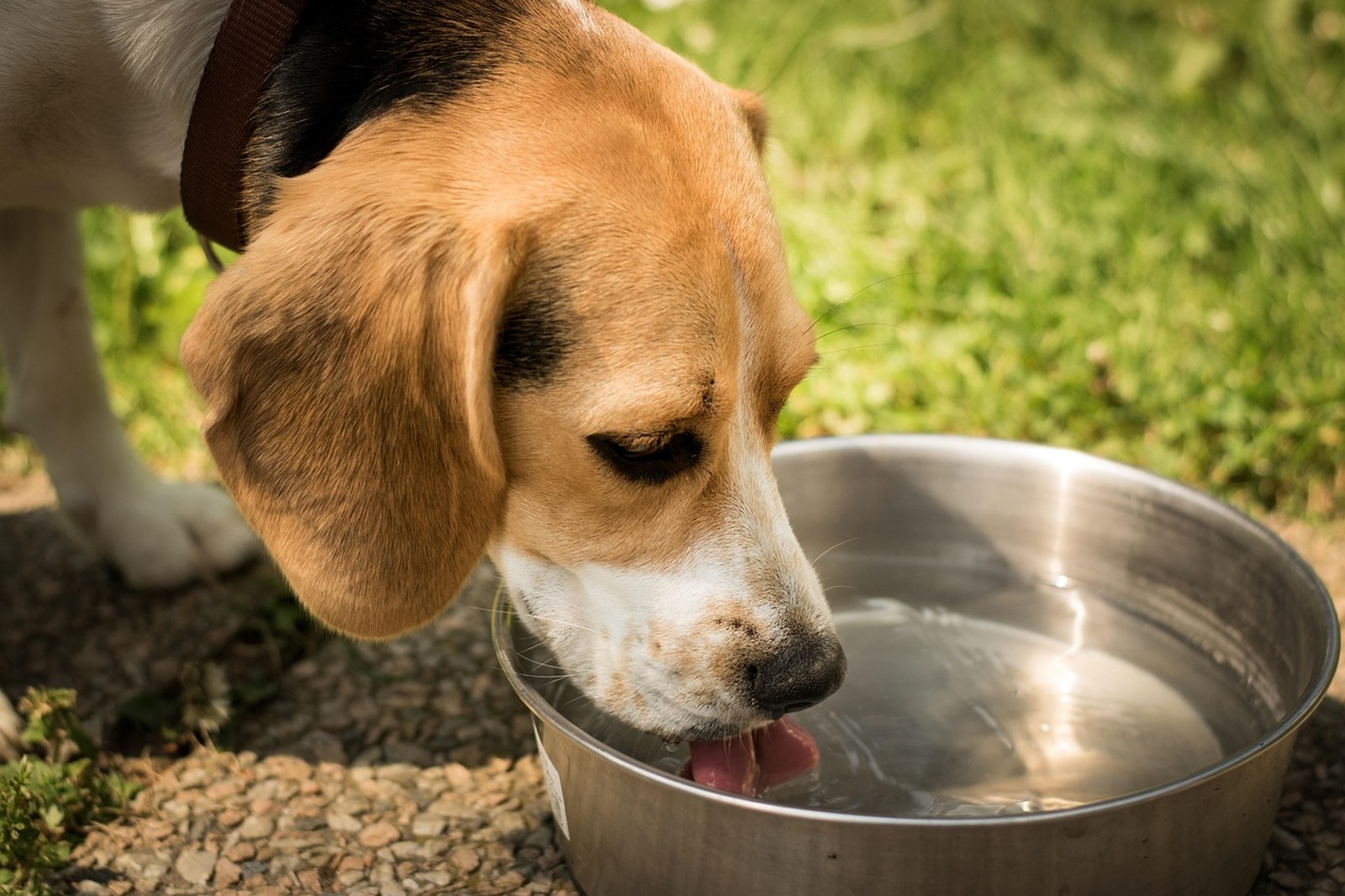
Rule Out the Everyday Causes First
Thirst is a symptom with many innocent authors. A hot day, a long run, a salty chew, a house that has suddenly become warmer, or a switch from wet food, which carries much of its water inside the meal, to dry kibble can all send a dog to the bowl more often for a day. Some medications prescribed for other conditions also increase drinking as a known side effect, which is why a recent prescription belongs in the picture. If the extra drinking follows one of these changes and your dog is otherwise himself, watch for a day or two and see whether it settles as the cause passes.
When Extra Thirst Is the Body Signalling
A sustained, marked increase in drinking is different, because the body is asking for more water for a reason. Drinking and urination usually rise together: the bowl empties faster, walks involve more stops, and a house-trained dog may start asking to go out at night or having accidents. Conditions involving the kidneys, liver, hormone balance, or blood sugar can all sit behind that pattern, as can an infection or a womb infection in an unspayed female, which can move quickly. None of these can be separated by watching at home, which is precisely why persistent extra thirst earns a vet visit rather than a wait-and-see month.
Measure Instead of Guessing
Owners are often unsure whether drinking has truly doubled or merely feels different, so put a rough number on it. Fill the bowl from a measuring jug for a day or two, note refills, and keep other water sources in mind, from garden bowls to puddle drinking on walks. Record the companion details a vet will ask about: how often he is urinating, whether appetite and weight are changing, his energy, and anything new in diet or medication. A short, honest record like that can shorten the path to an answer considerably, because the vet is working from observations rather than impressions.
Never Restrict the Water
It is tempting to limit the bowl to reduce the puddles, but a dog drinking heavily is usually compensating, and restricting water can make an underlying problem worse while adding real distress. Keep water freely available, plan more frequent toilet trips, and make the appointment. Seek help the same day if heavy drinking arrives with vomiting, collapse, a swollen belly, blood in the urine, a dog who cannot settle, or an unspayed female who is off her food and lethargic after a season. At the visit, expect questions, an examination, and likely urine and blood tests, since those are what turn thirst from a vague sign into a named cause.
Keeping the Drinking Record Where It Belongs
Write down the measured amounts, when the change began, and the signs that came with it while they are fresh, because the timeline itself is diagnostic information. If tests follow, their results and the vet's advice join the same record, giving you a clear before-and-after if thirst changes again. In KinsLe, your dog's Pet Passport holds that drinking record with his other health notes in one portable packet, so the vet sees the whole pattern at the appointment.