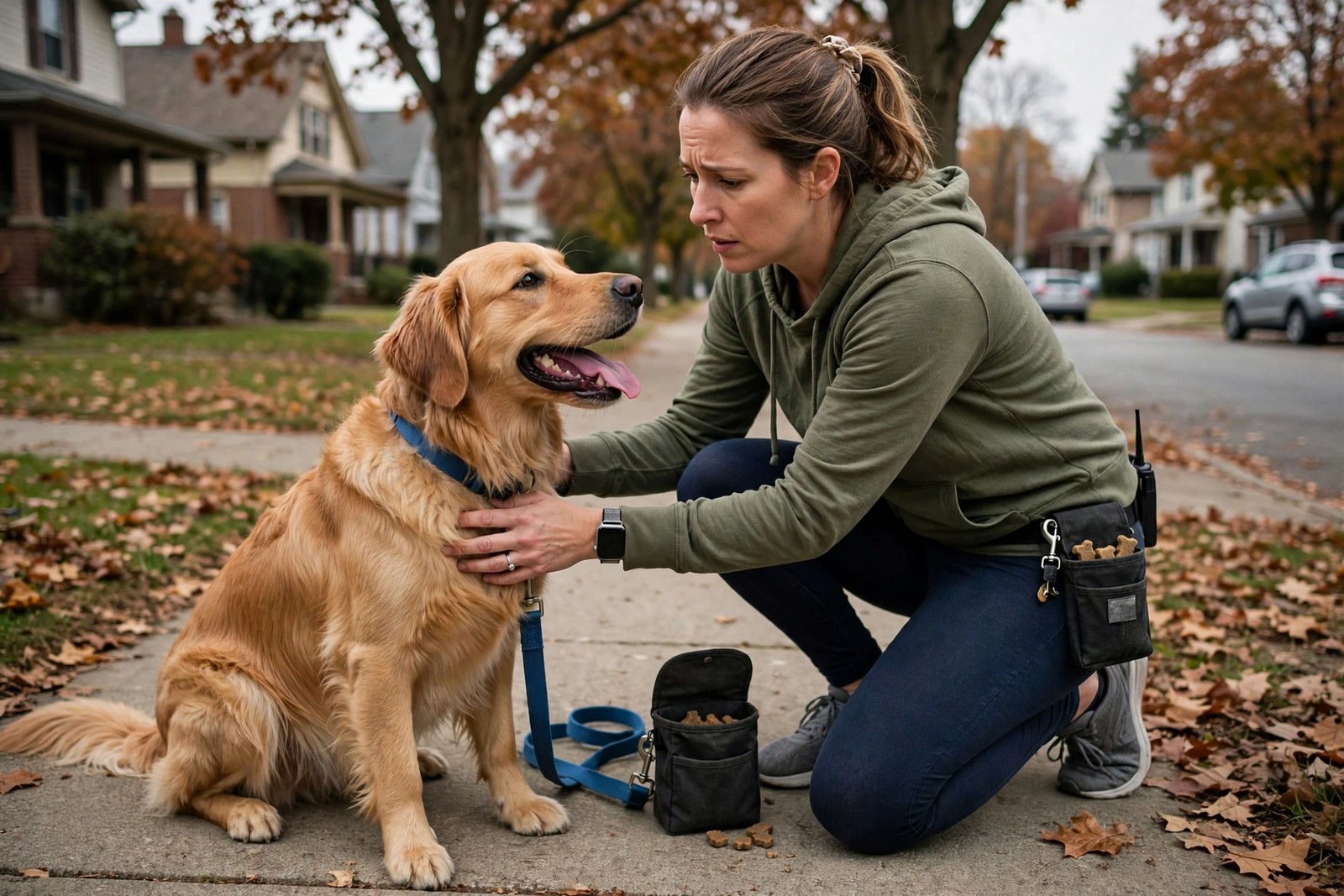
Panting in a cool room, with no walk behind it, deserves a second look. Pain sits high on the list of explanations — a sore joint, an aching stomach or an inflamed ear can all do it — and anxiety, nausea, fever, heart or lung trouble and anaemia belong there too, along with Cushing's disease, which can also bring a pot belly, extra thirst and hair loss, and medicines such as steroids like prednisone. A dog panting at rest in a cool room, repeatedly or for the first time, is giving you information — the job is to work out which item on the list it is.
When Panting Is an Emergency and When It Is a Pattern
Emergency panting looks like this: laboured, noisy breathing, effort from the belly, blue or pale gums, drooling with distress, restlessness that cannot settle, or panting with collapse — that dog goes to an emergency vet now, because breathing problems decompensate fast. Pattern panting is the other shape: episodes at predictable times (night-time restlessness in a senior can be pain or cognitive change), panting that tracks with specific events, or a gradual increase over weeks. Note when it happens, how long it lasts, gum colour, appetite, thirst, and any new medication, and take that log to a routine vet appointment — panting is a symptom vets take seriously but cannot diagnose from the word alone. Never dismiss new rest-panting in a senior or a flat-faced breed as 'just what they do'.
Working With Your Vet
Bring the vet a panting diary rather than a single example. Note the time each episode started, how long it lasted, what had happened in the hour before — a walk, a visitor, a thunderstorm, a meal — and anything that came with it: restlessness, drooling, a change in gum colour, extra thirst or a new medicine. Steroid courses deserve a special note, since panting that begins with prednisone and fades as the course ends tells its own story. Filming one typical episode on your phone shows the effort and the sound in a way a description at the desk cannot.
Laboured or noisy breathing, pale or blue gums, panting with collapse or inability to settle is an emergency; new regular rest-panting earns a vet appointment within days.
Keep that diary running for a fortnight even if episodes seem random. Panting that lands at the same hour each night, follows meals, or appears only on days a particular medicine is given stops looking random on paper, and the pattern is often what lets a vet choose between pain relief trials, heart checks and hormone testing. Update the diary whenever anything changes — a new home, a new drug, a new life stage — because his baseline will have moved with it.
Keep the episode diary with steroid dates and earlier findings in the Pet Passport on KinsLe, so any vet, yours or an emergency clinic, starts from the same record.