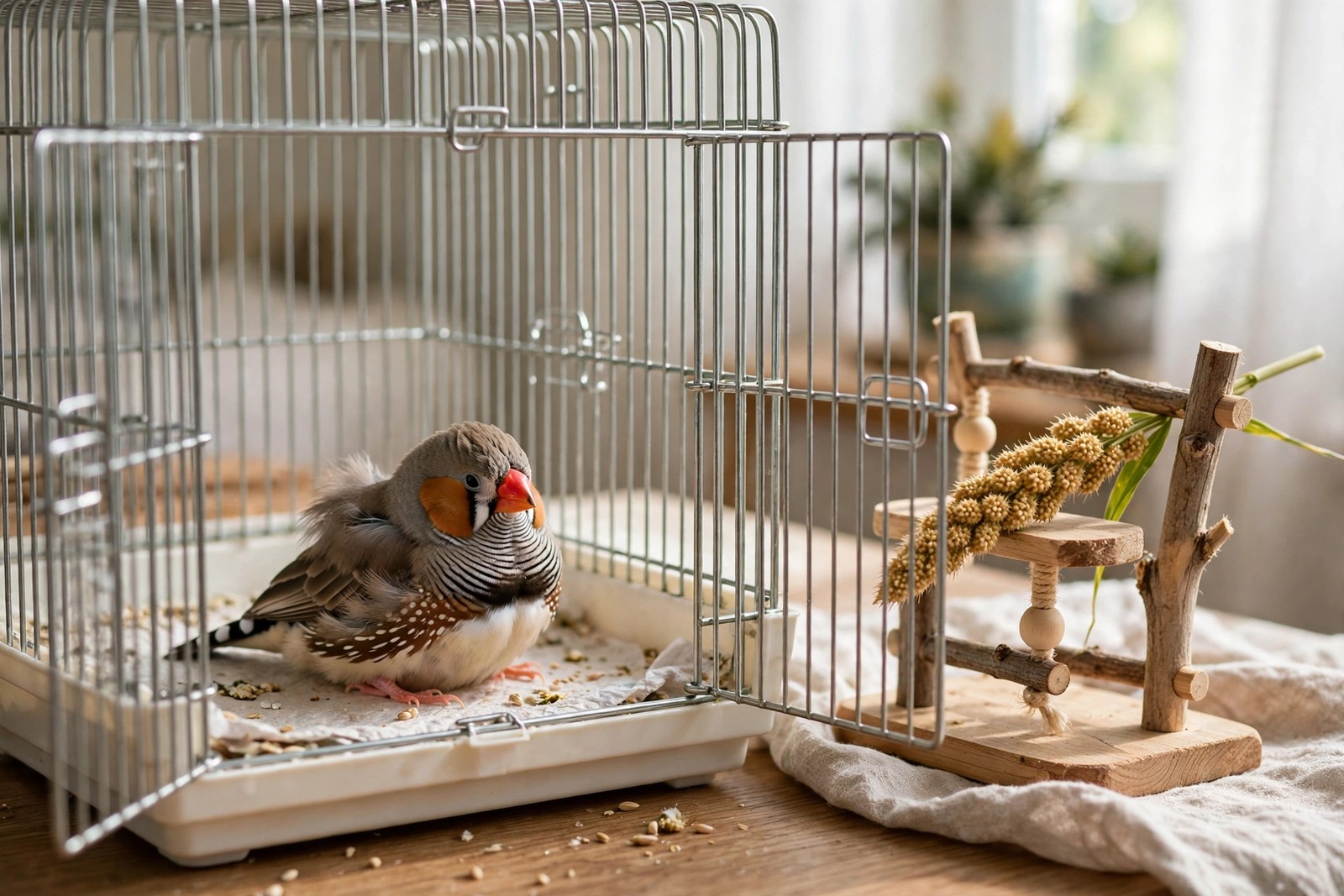
A finch down on the cage floor, fluffed into a ball instead of perching or flying, has crossed from unwell into emergency territory. Those puffed feathers are a bird trapping heat it can no longer generate, and finches carry almost no reserves to fall back on once they reach that state. Causes include infections, egg-binding in hens, injury, poisoning (including fumes), severe mite burdens, and simple cold in a bird already depleted — but the cause matters less than the hour. Warmth, quiet, and a vet call are the whole owner job description right now.
The Next Sixty Minutes
Gently move the bird (minimal handling, support the whole body, never squeeze) into a small warm hospital setup: a small cage or box lined with soft cloth, warmth in the mid-to-high 20s °C from a covered heat pad on one side or a lamp at a safe distance so the bird can move away from the heat, subdued light, and food and water in shallow dishes at floor level. Then phone an avian vet or emergency service immediately and take their direction, including on whether to offer anything by beak — never force food or water into a weak bird's beak, as aspiration kills. Check the basics they will ask: is it a hen who may be egg-bound (straining, swollen abdomen), any new birds, sprays, non-stick cooking, or cage mates bullying. Speed is the treatment you control: owners who act in the first hour give these tiny birds their only real chance.
Working With Your Vet
With a bird this small, observation has to happen alongside the call, not instead of it: note when you found her on the floor, whether she had eaten that morning, whether a hen might be straining to lay, and any recent sprays, new cage mates, or cold nights — then hand those facts to the avian vet, because the diagnosis is theirs to make. Guidance like this can tell you how fast to move, but it cannot examine a finch, and the details you captured in the first minutes are often the clues the vet has no other way to recover.
A fluffed finch on the cage floor needs an avian vet or emergency service now — warm the bird, keep it quiet, and call while you do it.
After an emergency like this, a few dated lines per day protect the rest of the aviary: when the finch last perched normally, how much seed disappeared, whether her droppings changed, and how any cage mates are behaving, since they shared her air, food and stress. Finches are weighed in grams and decline in hours, so yesterday's ordinary entry is what proves today is different. Revisit those notes after any change — a new bird joining the cage, a course of treatment finishing, the breeding season starting for a hen — because each one resets what a healthy day looks like for a bird this fragile.
Having that history ready as a single portable packet — the Pet Passport in KinsLe — means the emergency vet works from facts, not from a frightened owner's recollection at the cage side.