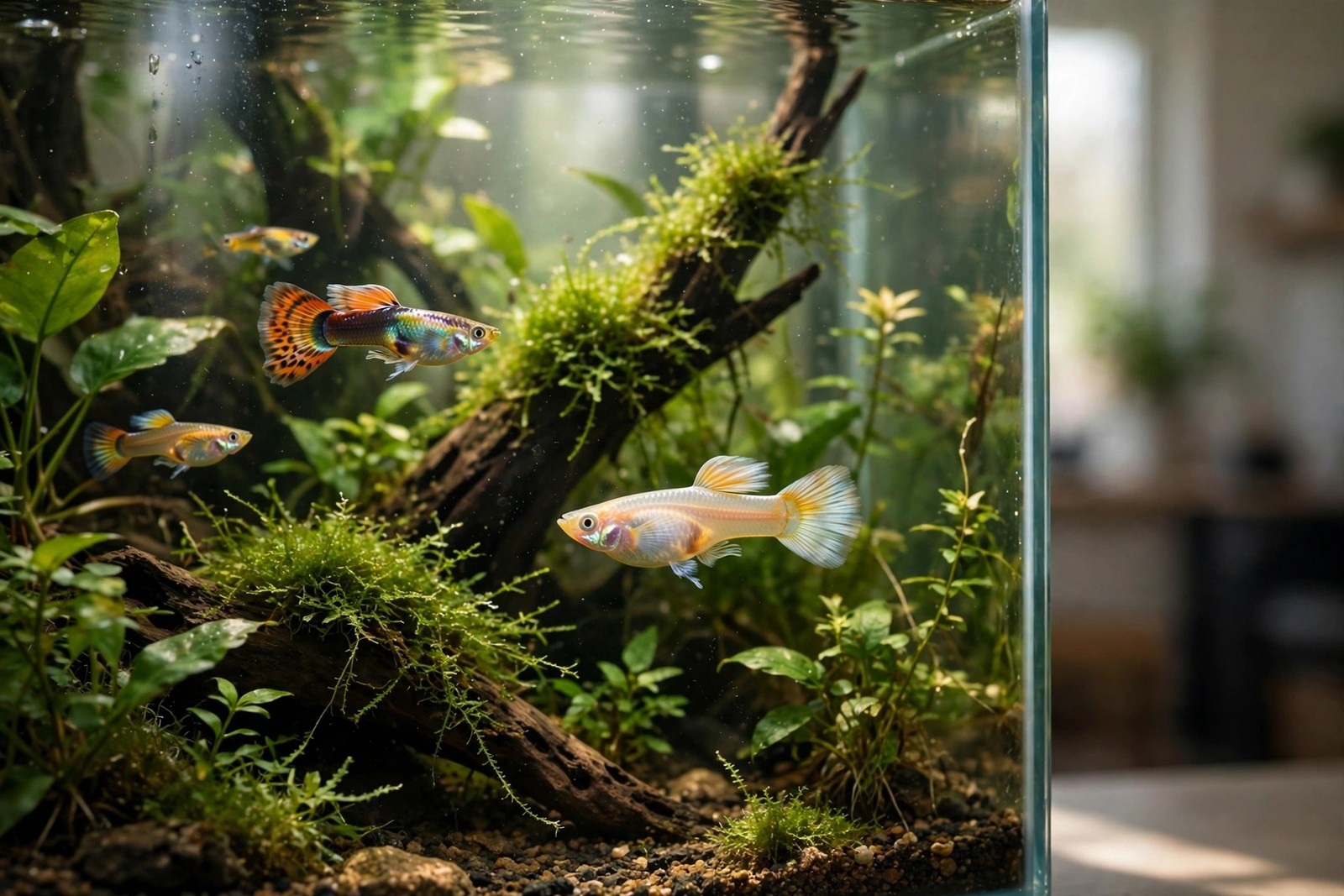
A fish's colour is closer to a mood ring than a paint job: its pigments brighten or wash out with its sense of safety, its health and how settled it feels, so fading usually reports on conditions before it reports on disease. The common causes are stress (bullying, a new tank, handling, transport — many fish arrive home pale and colour up within days), water quality (ammonia, nitrite, wrong temperature or pH), poor or old diet lacking the carotenoid pigments that support colour, lighting (colour looks and develops differently under different light), background and substrate (fish pale against a light background and darken against a dark one — it is camouflage, and it is normal), illness and parasites, and simply age. A fish who is pale and otherwise bright, eating, and swimming normally is usually telling you about environment; pale plus symptoms is a different matter.
Working the Colour Checklist
Start with water tests and the calendar: what changed recently — new fish, a move, a filter clean, a heatwave, a missed water change? Check the quiet facts too: a pale fish being chased at feeding time is a bullying case; a whole tank fading suggests water or lighting; one species fading on a new food suggests diet. Colour returning within days of stability returning confirms it was stress. The worrying combinations are pallor with clamped fins, flashing, spots or fungus, weight loss, stringy droppings, or appetite loss — that cluster means disease or parasites and earns isolation plus specialist advice. Long-term, colour is husbandry: varied quality food with natural colour-supporting ingredients, stable parameters, a background on the tank, and tank mates who let everyone live in peace.
Working With Your Vet
Colour change is worked through in a particular order: watch the fish, write down when the fading began and what shifted in the tank around the same days, and leave any diagnosis to a veterinarian. Reading about causes can help you judge how urgent the change looks and what to test next, but it cannot examine skin, gills or droppings for you — and dated photographs taken under the same light are often the clearest evidence an aquatic vet can be handed.
Colour loss with clamped fins, not eating, spots, or wasting needs prompt specialist advice; isolated pallor in a bright, eating fish is a water-and-environment check first.
For a fading fish, photograph it weekly in the same spot under the same light, and file each picture beside that week's water readings, food changes and tank events. Pallor that turns out to track a new background, a swapped light or a bullying tank mate shows itself in that sequence in a way memory never manages, and a fortnight of dated images tells a vet more than a worried description at the appointment. Revisit the sequence whenever the tank changes — new fish, new food, a move — because each one resets this fish's normal colour.
Store the dated photos, test results and food changes in KinsLe's Pet Passport — the portable records packet kept for this fish — and the next fade can be measured against the last instead of remembered.