
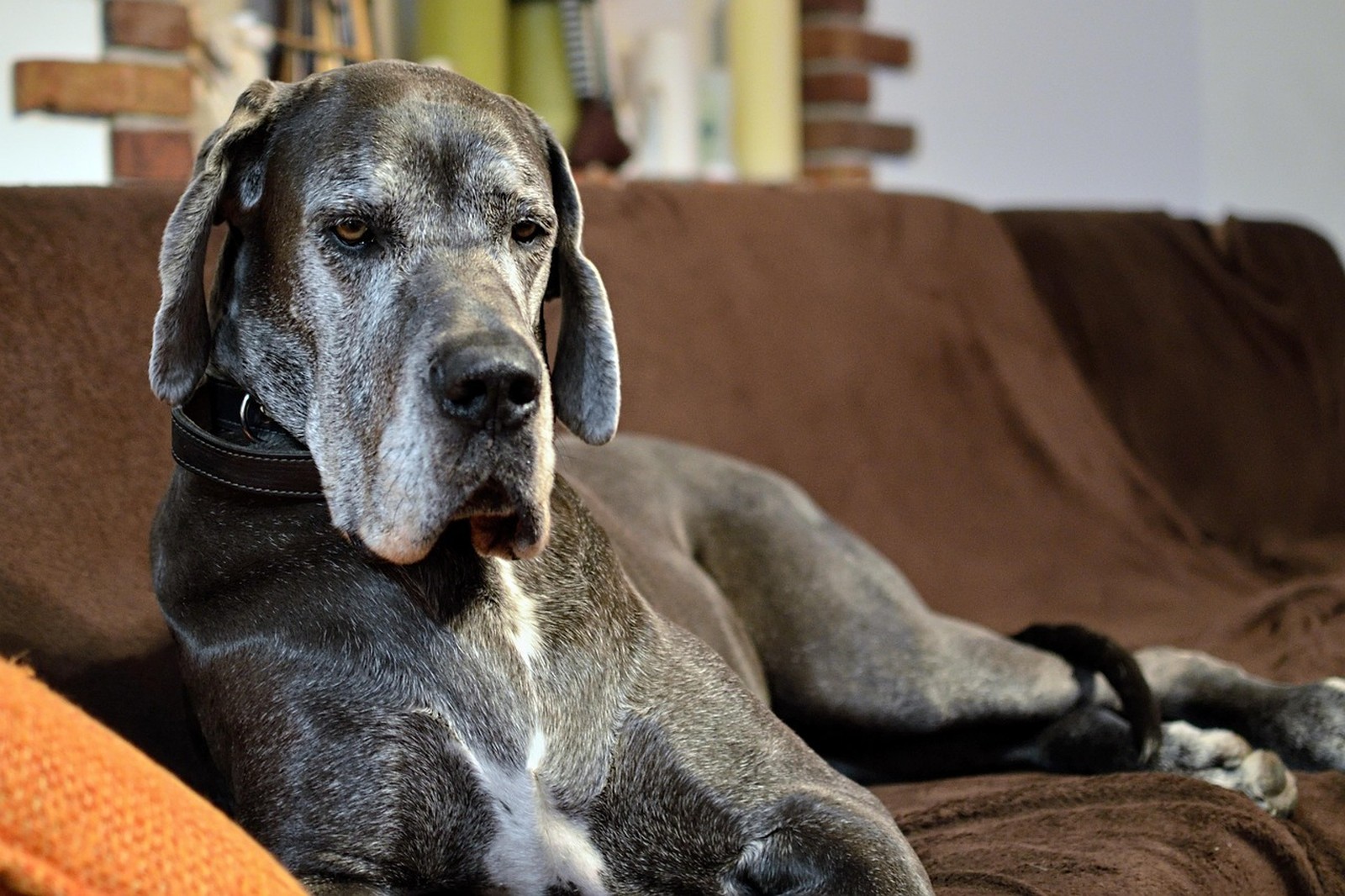
In a Dane, the company a missed meal keeps decides everything
A Great Dane turning away from food always earns a careful ten minutes, because this breed combines a giant frame, a deep chest, and a stomach emergency that moves fast. Many Danes skip a meal for ordinary reasons and are fine, but the early signs of the serious problem look, at first glance, like ordinary discomfort: restlessness, drooling, and no interest in dinner. Owners of this breed learn to sort those two stories quickly and without embarrassment about overreacting.
Start with posture and comfort. A Dane who is lying in his usual loose sprawl, breathing slowly, drinking, and happy to be stroked may simply feel off colour. A Dane who cannot settle, keeps getting up and lying down, looks at his flank, stretches repeatedly, or stands with a hunched, uncomfortable stance is showing you something that outranks the food question entirely.
Ordinary reasons a Dane goes off food
Mild stomach upsets happen in Danes as in any breed: a scavenged find on a walk, a too-quick change of food, or rich extras can produce gassiness, gurgling, a loose stool, and one refused meal. Heat also flattens a giant dog's appetite; a Dane who has been warm all afternoon will often eat late in the evening once the house cools.
Stress and routine changes register strongly in a breed this attached to its people. Visitors, building work, a new home, or a family member away can take a meal or two off a sensitive Dane. Joint discomfort matters as well: a big dog whose hips, elbows, or spine ache may not relish standing at the bowl, and feeding position is worth noticing if he eats lying down or gives up halfway.
Growth phases in a young Dane can wobble appetite for a day, and an entire male distracted by a nearby season, or a female approaching hers, may skip meals for reasons that have nothing to do with the stomach.
Your first hour with a Dane who will not eat
Keep him calm and still. No exercise, no play to build an appetite, and no large meal or huge drink while you are assessing him, because activity and a loaded stomach are the last things a brewing emergency needs. Offer modest amounts of water and let him rest where you can see him.
Check the belly with your eyes and a flat hand: does it look distended behind the ribs, feel tight like a drum, or make him flinch and shift away? Watch for drooling, lip-licking, repeated swallowing, grass-eating, or attempts to vomit. Note the exact time he last ate a full meal, last drank, last passed a stool, and when the restlessness began.
If everything you find is calm and comfortable, note it and watch rather than feeding experiments. A small portion of his usual food later, in a quiet room, tells you more than a rich substitute ever will.
The signs that mean drive now, questions later
Retching or trying to vomit and bringing nothing up, a swollen tight abdomen, heavy drooling, pacing that will not stop, pale gums, weakness, or collapse: in a Great Dane these are treated as an emergency until a vet proves otherwise. Phone the clinic, tell them a Dane with suspected stomach trouble is coming, and go. Minutes genuinely matter with this presentation, and no home remedy, walk, or wait-until-morning belongs in the plan.
Repeated productive vomiting, diarrhoea with blood, inability to keep water down, or a Dane who eats nothing for a day and is dull with it also need same-day care. Even the quiet version deserves a call in this breed if it stretches into a second day.
On the drive in, one person should watch him while the other drives, and a KinsLe Pet Passport entry made now, while the sequence is fresh, spares everyone a muddled reconstruction later.