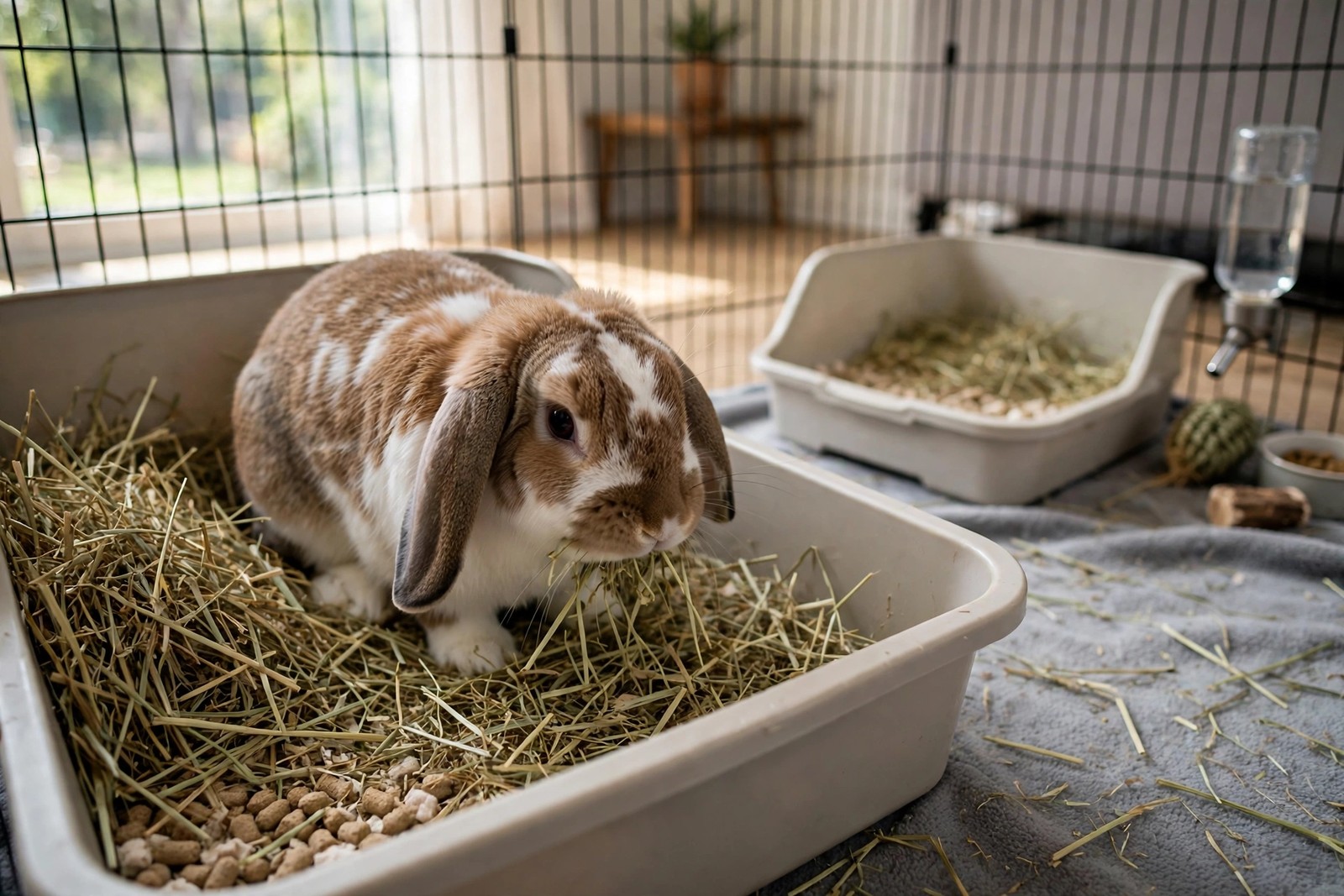
Most rabbits are naturally tidy and pick one or two corners for toileting, which is why patchy litter habits are usually a setup problem rather than a training failure. Work through the box, the hay, the hormones, and health in that order, changing one thing at a time so you can see what actually fixed it.
Placement, Numbers, and the Hay Rule
A rabbit will not travel far to a single box in a corner it never chose. Watch where droppings and urine actually land, then put boxes there, even if that is not the tidiest spot in the room. Large pens and free-roam rabbits often need two or three boxes. The box itself should be roomy enough for the rabbit to turn around in, with a low entry side for youngsters, seniors, and any rabbit with stiff joints.
Hay is the detail owners most often miss. Rabbits graze and pass droppings at the same time, so a box with no hay nearby asks the rabbit to split two linked behaviours. Fill one end of the box with hay, or hang a hay rack directly over it, and litter reliability usually rises within days. Use a paper-based or plain wood-pellet litter under the hay end, and avoid clumping cat litter and strongly scented litters, which a rabbit may eat or dislike enough to avoid the box entirely.
Hormones and Marking
An unneutered male or unspayed female reaching maturity, roughly from four to six months, often starts leaving droppings and urine outside the box on purpose. That is marking, not forgetting. Sprayed urine on walls, pellets scattered along boundaries, and chin rubbing on furniture all point the same way. Discuss neutering with a rabbit-savvy veterinarian; marking usually reduces substantially in the weeks after surgery, and litter habits settle with it. A bonded rabbit may also mark more when a new animal's scent enters the home.
Cleaning: Fresh, but Not Scent-Free
A filthy box repels a rabbit, but a box scrubbed daily with strong-smelling disinfectant can also lose the scent cue that says this is the toilet. A middle routine works: lift soiled litter daily, top up fresh litter and hay, and do a fuller clean with a mild, well-rinsed method such as diluted white vinegar for urine scale once or twice a week. Keep one box slightly scented while another is washed if your rabbit is particular.
When It Is Medical Instead
See a rabbit-savvy veterinarian promptly if inconsistent use comes with straining, tiny or absent urine, blood in the urine, thick gritty urine, a wet bottom, loss of appetite, or sitting hunched and grinding the teeth. Urinary infection, bladder sludge, stones, and arthritis pain that makes climbing into a high-sided box hurt can all present first as litter misses. Cut a low doorway into one side of a spare box while you wait for the appointment; if use improves, pain or access was part of the story. Once the setup is right, most rabbits return to one reliable corner within a couple of weeks, and KinsLe Care Teams keeps the daily litter lifts and weekly deep cleans assigned so the routine stays in that narrow band between too dirty and too clean.