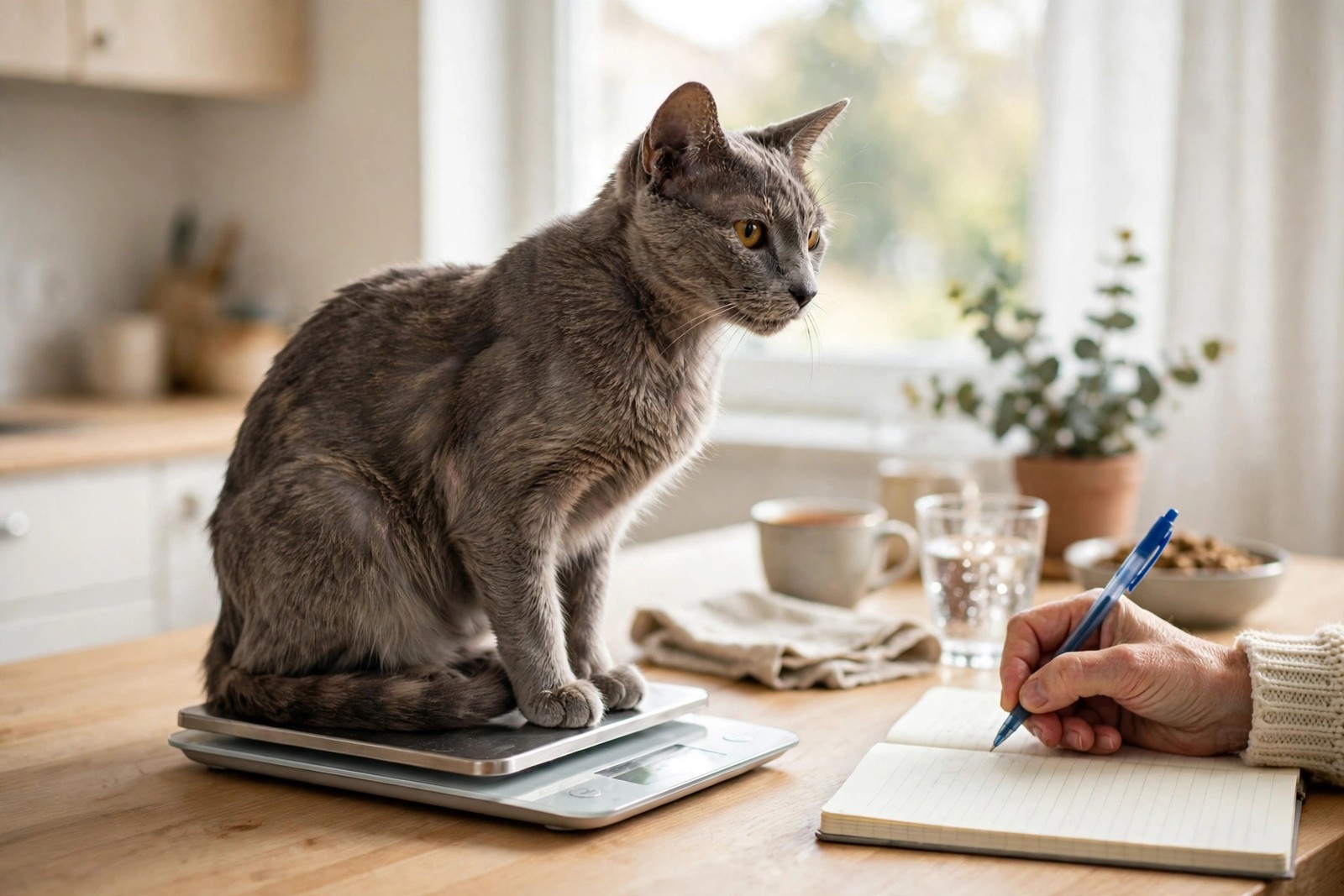
A senior cat who is getting thinner, whether slowly over months or noticeably over weeks, needs a prompt vet investigation rather than a wait-and-see month or a richer food. Cats hide illness well, and by the time weight loss shows, the cause has usually been building quietly. Several quite different conditions produce the same shrinking outline, they need different management, and only examination and testing can separate them, which is why this symptom deserves urgency without panic.
Conditions your vet will want to investigate
An overactive thyroid is a well-recognised cause in older cats: the cat often stays hungry, even ravenous, and may become restless, drink more, and lose weight despite eating well. Chronic kidney disease commonly brings increased thirst and urination, a fading appetite, and gradual loss of both fat and muscle. Diabetes can cause weight loss alongside a strong appetite, greater thirst, and larger litter clumps. Dental disease works differently: a cat with a sore mouth may approach the bowl eagerly, then drop food, chew on one side, eat less kibble than wet food, or quietly skip meals. Intestinal disease can reduce how much nourishment the body absorbs, sometimes with vomiting or softer stools and sometimes with neither. Cancer also belongs on the list a vet considers in a senior, along with liver and heart disease. Naming these is not a diagnosis of your cat; it is the reason a hands-on examination, and usually blood and urine tests, come before any food change.
What to track before and between visits
Weigh your cat weekly on the same scales, ideally at the same time of day, and write the figure down rather than trusting feel. A bony spine under your hand is useful information, but a dated series of weights shows your vet the speed of the loss, and speed changes decisions. Alongside the weekly weight, note how much food actually disappears, because a bowl emptied by another pet can disguise a cat who is barely eating. Record thirst and litter habits, any vomiting or stool changes, new hiding, reduced jumping, and bad breath or drooling. Take a clear photograph from above and from the side each week as well; gradual change is hard to see day to day and obvious in a dated sequence.
Feeding and comfort while answers are pending
Do not simply add treats, switch to a richer food, or start a supplement before the visit, because an abrupt diet change can upset the stomach, muddy the test picture, and delay the real answer. Keep feeding the familiar diet in the usual amounts, offer meals in a quiet spot away from other pets, and make sure food, water, and a litter tray are easy to reach without jumping or stairs. If your cat seems keen but eats little, smaller meals offered more often can be gentler than one large bowl, and warming wet food briefly can release smell that tempts a fading appetite. Tell the clinic when you book if weight is falling fast, appetite has stopped, or your cat is vomiting or very withdrawn, since those details can move the appointment sooner.
After the first visit
Expect a plan rather than a single answer: results may point to one condition, several may overlap in an older cat, and management often combines diet changes your vet directs, follow-up blood tests, and rechecks of that weekly weight. Bring your dated notes to every recheck, because a cat whose weight steadies on the same scales tells a different story from one still sliding. Keeping the record straight matters even more if different family members feed the cat or a sitter steps in, since everyone needs the same feeding instructions and the same current weight. KinsLe's Pet Passport gathers your cat's weekly weights, test results, and vet visit notes into one portable records packet, so whichever clinic, sitter, or family member needs the full picture can see the whole trend at a glance.