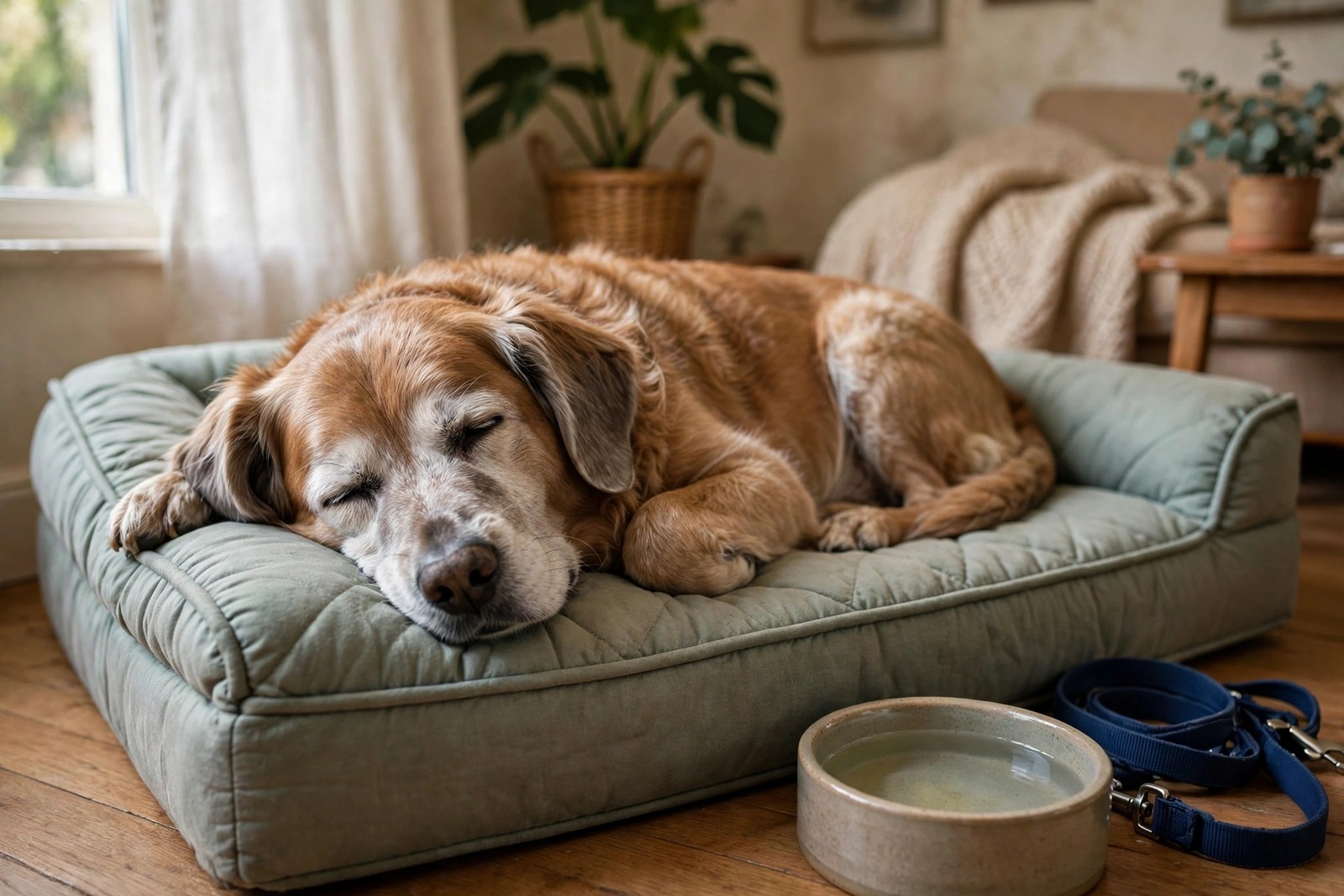
An older dog who once bounced up for every doorbell and now sleeps through most of the day alarms many owners, yet a gradual increase in sleep is one of the most normal changes in a senior dog. The skill is telling restful ageing apart from sleepiness that is a symptom, and that distinction rests on speed of change and on what else changed with it.
What Normal Senior Sleep Looks Like
Ageing muscles and joints recover more slowly, the brain cycles into deeper sleep, and a senior dog conserves energy for the parts of the day that matter. A normal pattern is more naps, earlier evenings, and slower starts, balanced by a dog who still brightens for a walk, eats with appetite, greets people, and can be roused easily and cheerfully. Total sleep spread across day and night commonly rises well beyond the adult pattern, especially in large breeds, which age faster than small ones. A dog that has drifted into this pattern over a year, with stable weight and appetite, is usually showing age, not illness.
Red Flags That Need a Veterinarian
Book a check when sleepiness arrives over days or a few weeks, or arrives with company:
- Hard to wake, disoriented on waking, or sleeping through meals and favourite events.
- Weight gain with a thinning coat and feeling the cold, or weight loss with a fading appetite.
- New stiffness, reluctance to walk, or sleeping only in one rigid position, which can point to pain.
- Staring, pacing at night, house soiling, or other confusion signs suggesting cognitive dysfunction.
- Withdrawal after losing a companion animal or person, with lost interest in play and food, which can reflect low mood as well as illness.
At the visit, a veterinarian may examine joints and heart, and may suggest blood tests that can pick up problems such as an underactive thyroid or anaemia, both of which can present mainly as tiredness. Bring a list of all medicines and supplements, because sedating side effects and interactions are an easily missed cause of a suddenly sleepier dog.
Supporting a Sleepy Senior Well
Do not let a sleeping dog become an inactive one. Short, frequent, gentle walks, ideally two or three brief outings rather than one long march, protect muscle, joints, digestion, and mood. Keep some mental work in the day: a snuffle mat, a rolled towel with food inside, or a slow sniffy route past interesting smells. Place a supportive bed in a warm, draught-free social spot rather than isolating a senior in a quiet back room, and keep food, water, and a toilet route easy to reach without stairs where possible.
Track a simple baseline for two weeks: hours asleep, walk length enjoyed, appetite, and brightness on waking. That record turns a vague worry into evidence, shows whether a change is gradual or sudden, and measures whether treatment or a new routine is helping. Reviewed at each senior check, which most vets suggest twice a year for older dogs, those notes in KinsLe Pet Passport build a life-stage record that makes every future change easier to judge.