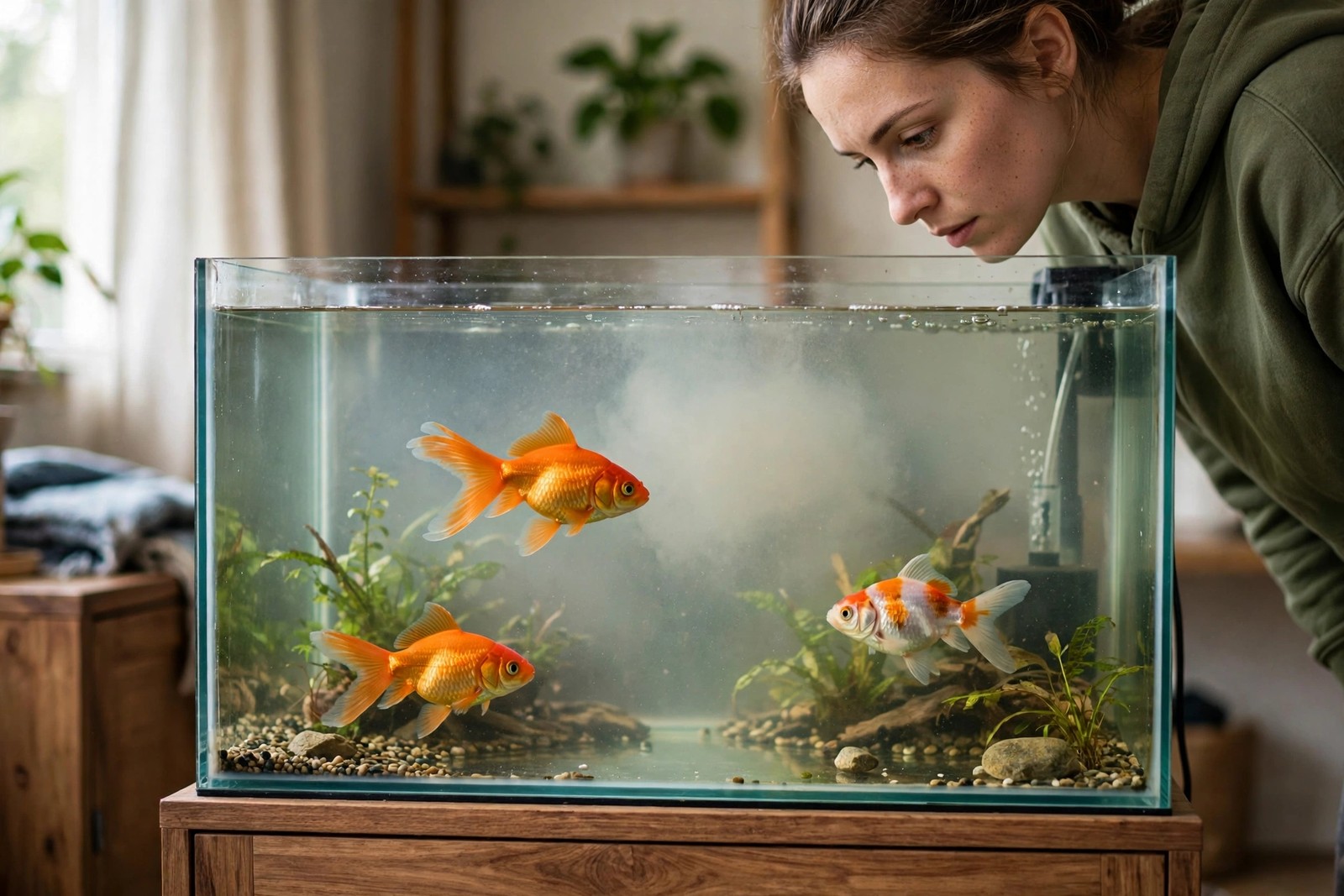
Cloudy water has three usual culprits, and the color tells you which one you're dealing with. White or milky cloudiness in a new tank is typically a bacterial bloom while the nitrogen cycle establishes. Green water is an algae bloom, driven by too much light or too many nutrients. Gray, hazy water in an older tank usually means overfeeding, disturbed substrate, or a filter that needs attention. In nearly every case the fix is measured, not dramatic: test the water, cut back feeding, do a modest partial water change, and give the tank time — tearing everything down and replacing all the water almost always makes it worse.
White and Milky: The Bacterial Bloom
During cycling, free-floating bacteria multiply explosively as they colonize the tank, and the water turns milky white. It looks alarming but is usually harmless and self-correcting: as the bacteria settle onto filter media and surfaces, the water clears within a few days to a week. Resist the urge to do huge water changes, which just restart the bloom. Test ammonia and nitrite, keep feeding minimal (or none, if no fish are in yet), and wait. A bloom in an established tank is different — it can signal a bacteria die-off from a filter left off, medication, or an over-enthusiastic filter cleaning — so test promptly and do a 25 percent water change if ammonia shows.
Green Water: Algae Having a Party
Green water is a bloom of free-floating single-celled algae, and it means light plus nutrients exceeded what your plants and routine could handle. Cut light to 6 hours a day (or blackout the tank for two to three days if it's severe), reduce feeding, and check whether the tank is catching direct sunlight. Test nitrate — chronically high nitrate from infrequent water changes feeds blooms. A UV sterilizer clears green water reliably if the problem keeps returning, but fix the light and nutrient causes first or the algae will simply re-bloom. Green water isn't dangerous to fish directly, though heavy blooms can swing oxygen at night, so keep surface agitation going.
Gray Haze and Floating Debris
A grayish cast or visible particles usually has a mechanical cause: rotting uneaten food, a substrate bed stirred up by rearranging decor, a decaying plant, or filter media so clogged that water bypasses it. Siphon debris during a partial water change, rinse the filter media gently in tank water (never tap), and audit your feeding — most home tanks are fed more than they need, and the excess becomes tomorrow's haze. Also check for a dead fish or snail hidden behind decorations; it's a more common cause than anyone likes to admit.
The Fix-It Checklist, in Order
One: test ammonia, nitrite, nitrate, and pH — numbers first, guesses second. Two: cut feeding to once a day or pause a day entirely. Three: do a 20 to 25 percent water change with treated, temperature-matched water. Four: inspect and gently service the filter. Five: trim light hours. Six: wait 48 hours and re-test before doing anything bigger. If fish are gasping, lethargic, or the cloudiness follows a chemical spill or medication, skip the waiting and get help the same day.
When a Local Expert Helps
A good aquarium shop can test a water sample with professional kits and spot what home tests miss. KinsLe's Pet Services Directory helps you find local groomers, vets, sitters, and trainers — and it's the place to look for aquarium-savvy help near you when cloudy water won't resolve or fish start showing symptoms. Bring a fresh sample in a clean container and a note of your recent test results and changes. Pet Services Directory through KinsLe points you to an experienced fish shop nearby, where staff can test a fresh water sample with their own kits and talk you through what the readings mean before you change anything else.