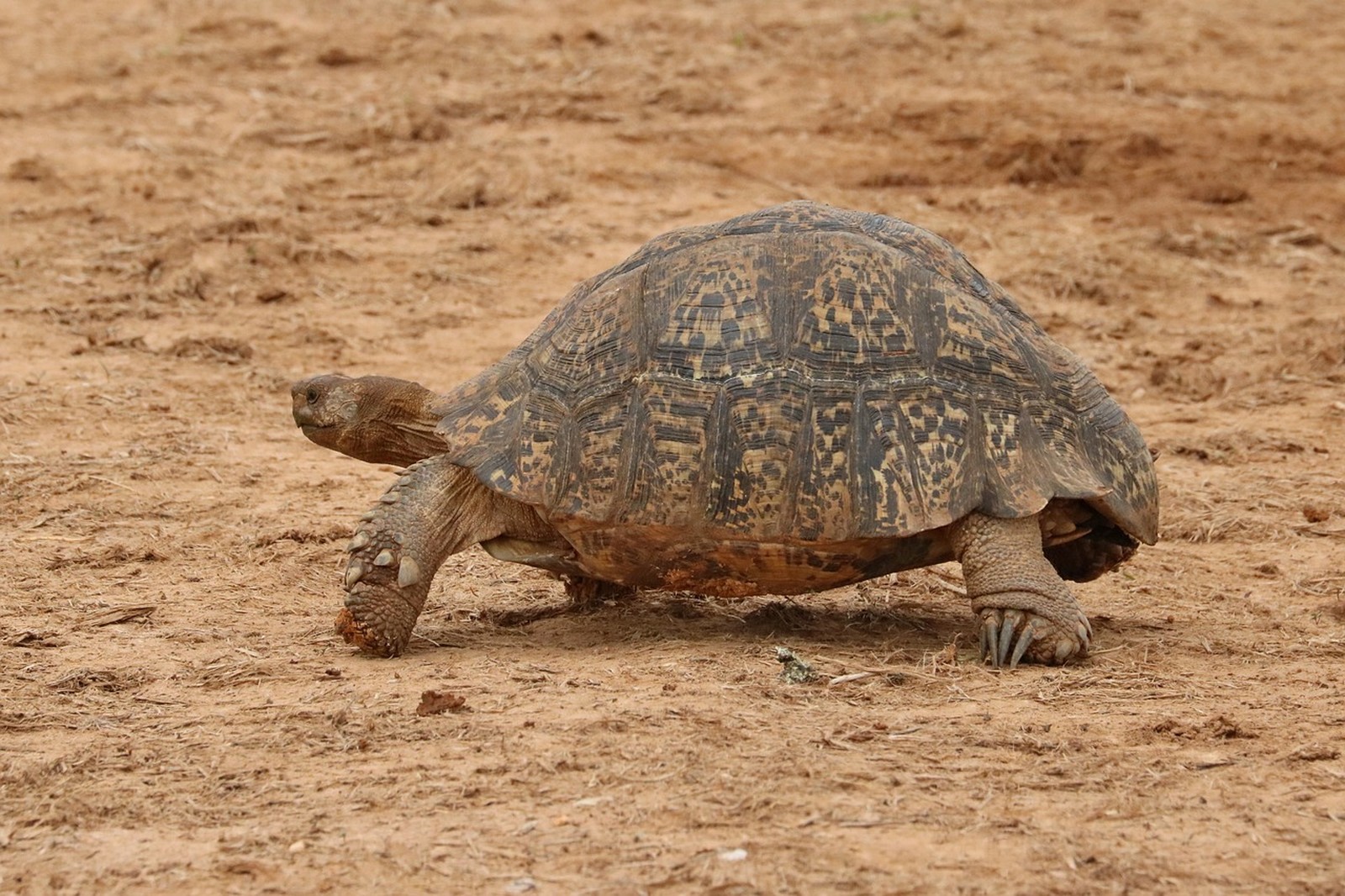
A tortoise that walks past its food pile for days is giving you a symptom, not a verdict, and the causes range from a lamp that has quietly failed to a genuine illness. Work through them in order: environment first, because it explains a large share of cases and is yours to fix today; then season and diet; then health. Judge your tortoise against its own normal pattern, because a grazer that eats little on a cool day differs from an eager feeder that has stopped entirely.
Cold Is the Cause to Rule Out First
Tortoises run on external heat. Digestion slows sharply as body temperature falls, and a tortoise that cannot reach its preferred warmth will refuse food it would normally take, because eating without the warmth to process the meal invites it to sit and rot in the gut. Measure the basking spot and cool end with a thermometer rather than trusting the heater dial: many common grassland species bask at a spot around 95°F (35°C) with a cool end nearer 70°F (21°C), and a slipped or ageing bulb can drop the hot spot enough to stop feeding entirely. Check that the ultraviolet light is present, in date and at the right distance too, because appetite and calcium use both depend on it.
Season, Brumation and Recent Change
Appetite follows the calendar. A tortoise coming out of brumation often eats little for the first days while it rehydrates and warms through, then builds back to normal meals over a week or two; warm daily soaks and offered water matter more in that window than piling up food. Short, dark days can dull appetite if light and heat have slipped. A recent move, new enclosure or new animal in the home can also put a tortoise off food for several days while it settles. In each of these cases the tortoise should still be alert, moving in the warm part of the day, drinking or soaking willingly, and holding its weight.
Diet Problems and Simple Constipation
Sometimes the menu is the message. A tortoise fed a narrow diet, or one filling up on favoured soft foods such as fruit and lettuce, may refuse fibrous weeds and grasses. Offer a varied pile of appropriate leafy weeds and greens, chopped and mixed so favourites cannot be picked out alone, and try feeding after a warm soak, when the gut is active. Constipation is a quiet cause of appetite loss too: dry droppings, straining, and long gaps between droppings point to it, and regular shallow warm soaks, water always available, and a fibre-rich diet help simple cases. Never offer food intended for other species, such as dog or cat food, to tempt a tortoise, because the protein levels are wrong for it.
Health Signs That Move This to a Veterinarian
Appetite loss stops being a home puzzle when other signs travel with it. A runny or bubbly nose, wheezing or clicking breathing, breathing with the mouth open, swollen or closed eyes, a soft or damaged shell, discharge at the mouth, or marked lethargy all call for a veterinarian who treats reptiles, promptly rather than after another week of watching. Parasites are another hidden cause, particularly in recently acquired tortoises, and only a faecal test confirms them. A female that stops eating, grows restless and digs with her hind legs may be carrying eggs, and needs laying conditions and veterinary advice if it continues. Weigh your tortoise weekly while appetite is poor, because steady weight loss turns a wait-and-see case into an appointment.
Supporting Appetite While You Investigate
Keep the routine calm: lights and heat on a steady schedule, food at the warmest part of the day, and handling kept to essentials. Offer soaks before food and remove uneaten food daily. Write down each day's temperatures, soak, offering and result, because that record tells a veterinarian far more than a summary from memory. Keeping those notes in KinsLe's Care Teams, where feeding duties are marked complete with a timestamp, means the fading appetite of a tortoise is visible in the record early, while it is still a small problem to solve.