
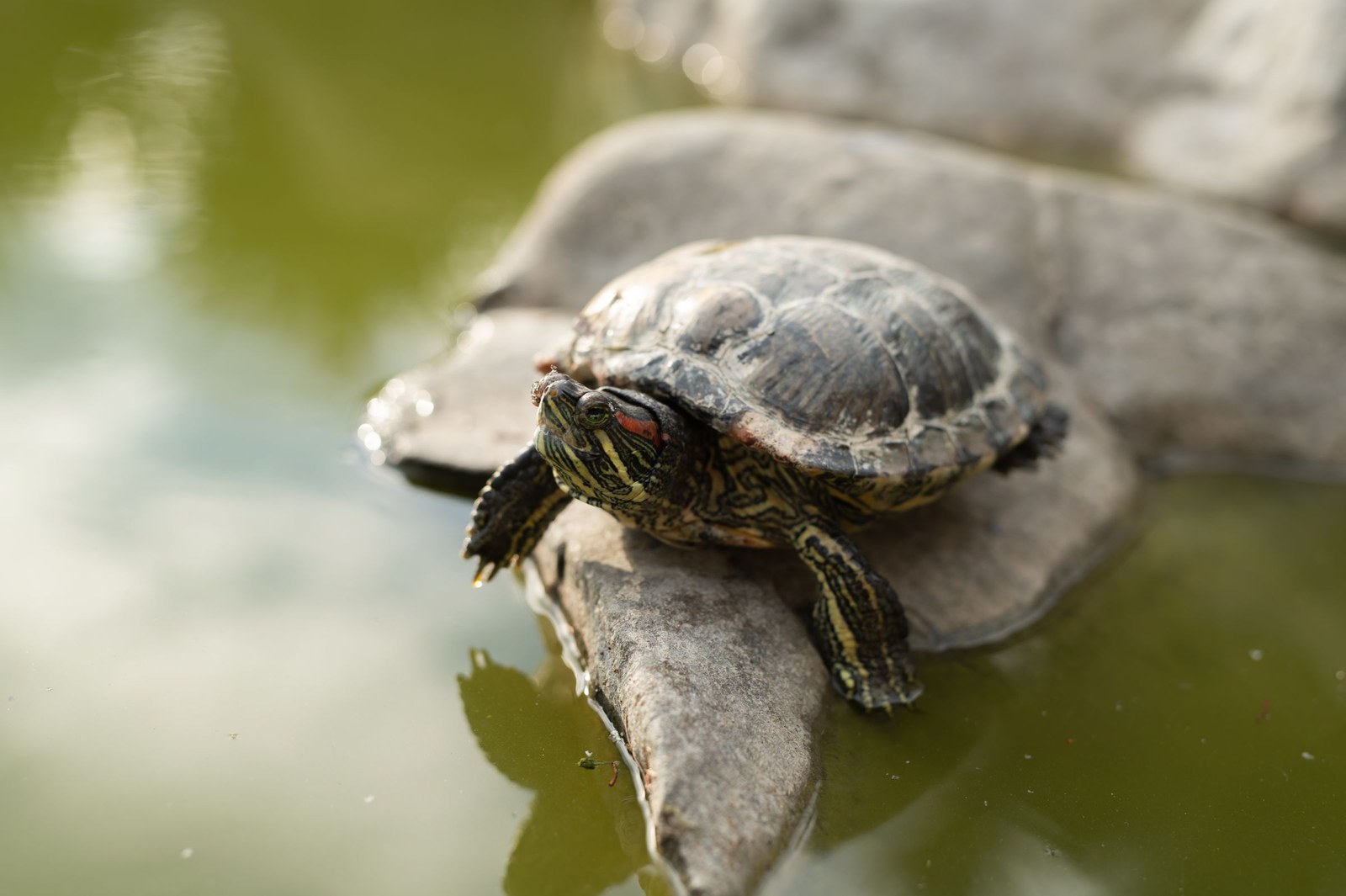
The most common reason a turtle stops basking and eating is temperature: if the water is too cool or the basking spot is not warm enough, a turtle's metabolism slows, appetite shuts down, and it may skip basking altogether because warming up no longer feels worthwhile. Check your thermometers before assuming illness — a failed heater or a bulb that has quietly lost output is a very frequent culprit. If temperatures and lighting are correct and the behavior lasts more than a few days, or comes with wheezing, swelling, discharge, or lopsided swimming, a reptile vet should take a look.
The Two Temperatures That Run a Turtle's Life
Aquatic turtles like red-eared sliders regulate everything through their environment:
- Water temperature drives digestion and immune function. Too cool, and food sits undigested; the turtle stops asking for more.
- Basking spot temperature must be noticeably warmer than the water so drying off and warming up is inviting. If the basking area is barely warmer than the tank, many turtles simply will not bother climbing out.
- Bulb age matters. UVB bulbs lose output long before they burn out visually. A bulb that "still lights" may be delivering very little UVB, which undermines appetite and shell health over time.
Verify with real thermometers — one in the water, one at basking height — rather than trusting the dial on a heater or the feel of the glass.
Other Benign Explanations to Rule Out
A new tank, a new tankmate, recent handling changes, or a move to a different room can put a turtle off food for a few days. Seasonal shifts in daylight can also slow some turtles down. Watchful waiting is reasonable for two or three days in an otherwise bright, active turtle — but keep notes rather than relying on memory about when it last ate.
Signs It Is More Than the Thermostat
Book the vet when you see any of these alongside the appetite loss:
- Wheezing, bubbles at the nose, or open-mouth breathing
- Swollen or closed eyes
- White or fuzzy patches on skin or shell
- Swimming tilted to one side, or unusual lethargy and weakness
- No interest in food beyond several days despite corrected temperatures
Do not try to force-feed a turtle, and do not warm the tank far beyond its normal range to "jump-start" appetite — overheating creates a new emergency. Steady, correct temperatures and a vet visit are the safe route.
Give Your Vet the Timeline, Not a Guess
Vets solve these cases with history: when the turtle last ate, when basking stopped, what the temperatures read before and after you fixed them. KinsLe's Pet Passport is the records packet for your turtle — vaccines where relevant, medications, allergies, and your care documents — and keeping appetite and basking notes alongside those records means you can hand your vet a clear picture of exactly when things changed. Pet Passport on KinsLe turns those dated entries — water and basking temperatures, each feeding attempt, and a weekly weight — into a packet your reptile veterinarian can read at the appointment itself, rather than leaving you to reconstruct the timeline from memory.