
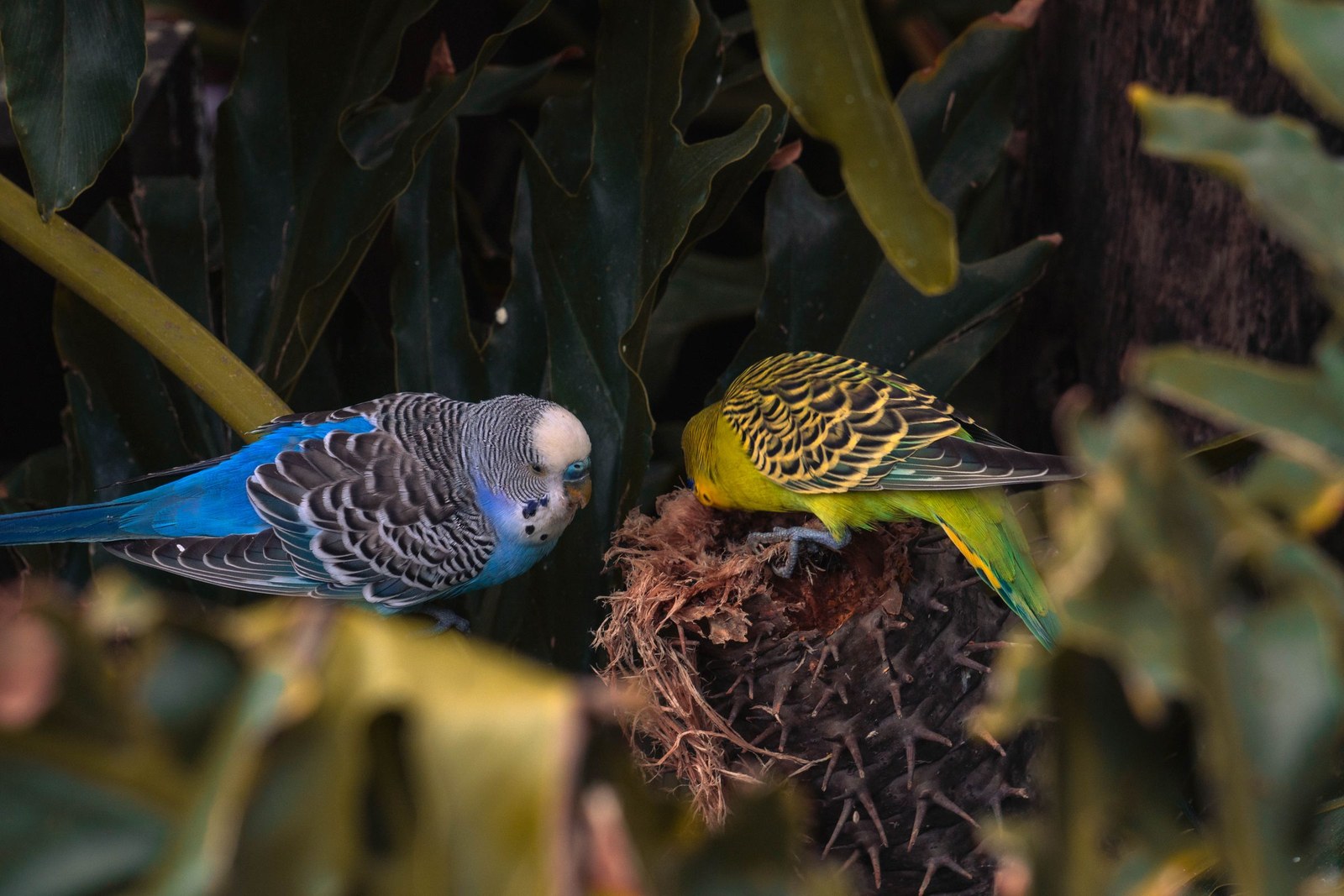
Your young budgie is most likely going through its first molt, which is completely normal at around three to four months old as baby feathers are replaced with adult plumage. New pin feathers pushing through are itchy and uncomfortable, and that alone explains the crankiness, the extra dropped feathers, and a bird who wants handling on its own terms for a while. With comfort, sleep, and patience, this stage passes.
What a First Molt Looks Like
Expect a steady scatter of small downy and body feathers, spiky pin feathers appearing especially on the head and neck, and more preening and head-scratching than usual — often against perches and cage bars. Your budgie may look a little scruffy or patchy mid-molt, nap more, sing less, and be quicker to nip or move away when a hand approaches a tender spot.
Molting is work for a small body. Growing a full set of feathers demands energy and nutrients, so a slightly quieter, hungrier, moodier bird for some weeks is well within normal. The molt comes in waves rather than all at once, which is why the crankiness can seem to fade and return.
How to Help Your Budgie Feel Better
Comfort measures make a real difference:
- Offer lukewarm misting or a shallow bath dish so your budgie can soften pin feather sheaths and soothe itchy skin
- Protect plenty of sleep — a quiet, covered rest period of around ten to twelve hours helps a molting bird recharge
- Serve a varied diet with the fresh foods your bird already accepts, since feather growth is nutritionally demanding
- Ease off demanding training and new tricks until the molt passes; keep sessions short, familiar, and easy to decline
- Let your budgie preen undisturbed, and never pull or squeeze pin feathers to help — they are sensitive and still growing
A gentle mist on a warm morning, a favorite treat, and a calm room will do more than any fussing. Keep handling invitations open but optional.
What Is Not a Normal Molt
Feather loss with bare, irritated skin, large bald patches, bleeding pin feathers, or a bird who stops eating, stays fluffed and silent on the cage floor, or changes droppings noticeably is not something to chalk up to molting. Neither is heavy feather loss well outside expected molt timing, or plucking behavior where a bird is damaging its own feathers. In those cases, contact an avian vet promptly rather than waiting for the molt to end — young birds deserve a professional check when the picture does not fit.
Keep Everyone's Care Consistent
A molting budgie does best when every person in the household handles feeding, misting, and quiet time the same way. Mixed messages — one person training hard, another offering baths at random times — add stress to an already itchy few weeks.
Share the Molt Routine With Care Teams
With KinsLe's Care Teams, you can assign feeding and grooming duties and see timestamped completions, so everyone helps your young bird through the molt the same way and nothing — a bath opportunity, a fresh-food serving, an early lights-out — depends on one person's memory. Set the gentle routine once and let the whole household follow it. Care Teams on KinsLe keeps the molt routine written and shared — one named person takes morning seed and fresh food, a second handles the lukewarm misting, and a third settles the cage cover in place for an early night — each job logged with its completion time, so the budgie gets calm, consistent handling while pin feathers are sore.