
Pink or red urine is never a wait-and-see sign in a cat: a problem somewhere along the urinary tract is producing it, and pinning down which one takes an examination plus tests, not guesswork from the colour alone. Book a veterinary visit promptly, the same day if you can, and treat it as urgent if your cat is also straining, producing very little urine, crying in the box, or seems unwell in herself.
What blood in the urine can look like
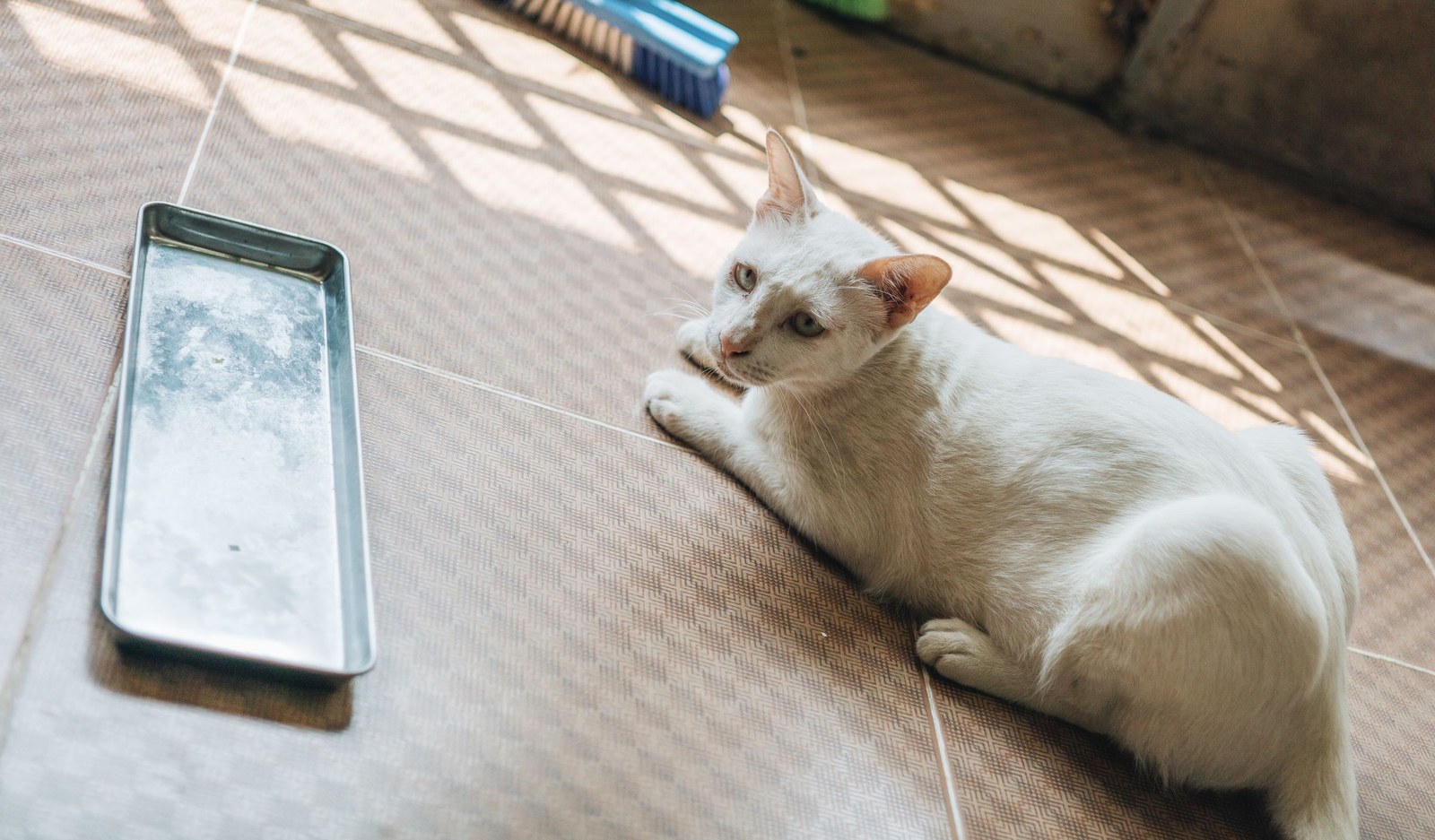
Sometimes it is obvious: pink or red-tinged urine, or a litter clump with a rosy cast. Sometimes it is subtler — urine that looks slightly tea-colored, tiny specks in the box, or blood you only spot because your cat peed somewhere visible, like a pale bathroom floor. White or light-colored litter makes changes easier to catch, which is one reason a sudden switch to peeing outside the box deserves attention rather than annoyance: cats often choose a cool, smooth surface when urinating feels uncomfortable.
Note what accompanies it. Is your cat visiting the box more often? Producing smaller amounts? Drinking more, eating less, grooming under her tail more than usual, or hiding? That surrounding picture matters a great deal to your veterinarian, even though none of it, on its own, names the cause.
Why guessing the cause does not work
Blood can appear with several different problems in the bladder and urinary tract, and they are managed differently. Stress-related bladder irritation, infection, crystals or stones, and other conditions can all produce similar-looking urine. That overlap is precisely why a veterinarian will want to examine your cat and run tests rather than advise over the phone.
Do not give your cat leftover antibiotics, human pain relief, cranberry products, or any other home treatment — some are dangerous for cats, and all of them can muddy the test results your vet needs. Keep fresh water available, keep the litter box clean and easy to reach, and let the clinic's findings lead the plan.
What to expect at the veterinary visit
Your vet will examine your cat, feel her bladder, and usually test a urine sample — which may be collected at the clinic — for blood, crystals, and signs of infection or inflammation. Bloodwork or imaging may be suggested depending on what the first results show and how your cat is doing overall. Ask what they are ruling in or out at each step; understanding the reasoning makes the waiting much easier.
Practical help you can offer: tell the clinic when you first saw blood, how many times since, roughly how much urine each trip produced, and whether appetite, drinking, and energy are normal. If you can safely get a photo of the discolored litter or urine, bring it. If your cat pees in the carrier on the way — common and forgivable — mention it, as the clinic may still be able to use information from it.
Monitoring at home, before and after
Until you are seen, and during any follow-up period your vet sets, keep a simple log: litter box trips per day, approximate amount each time, color notes, water and appetite observations, and any crying or straining. Escalate to emergency care without waiting for your appointment if your cat strains and produces nothing, becomes lethargic, vomits, stops eating, or the bleeding looks heavy.
Those notes turn a vague worry into evidence your vet can act on. If you are unsure which changes merit an urgent call, put a follow-up question to KinsLe's Kinny; he answers using the KinsLe Answers library.