
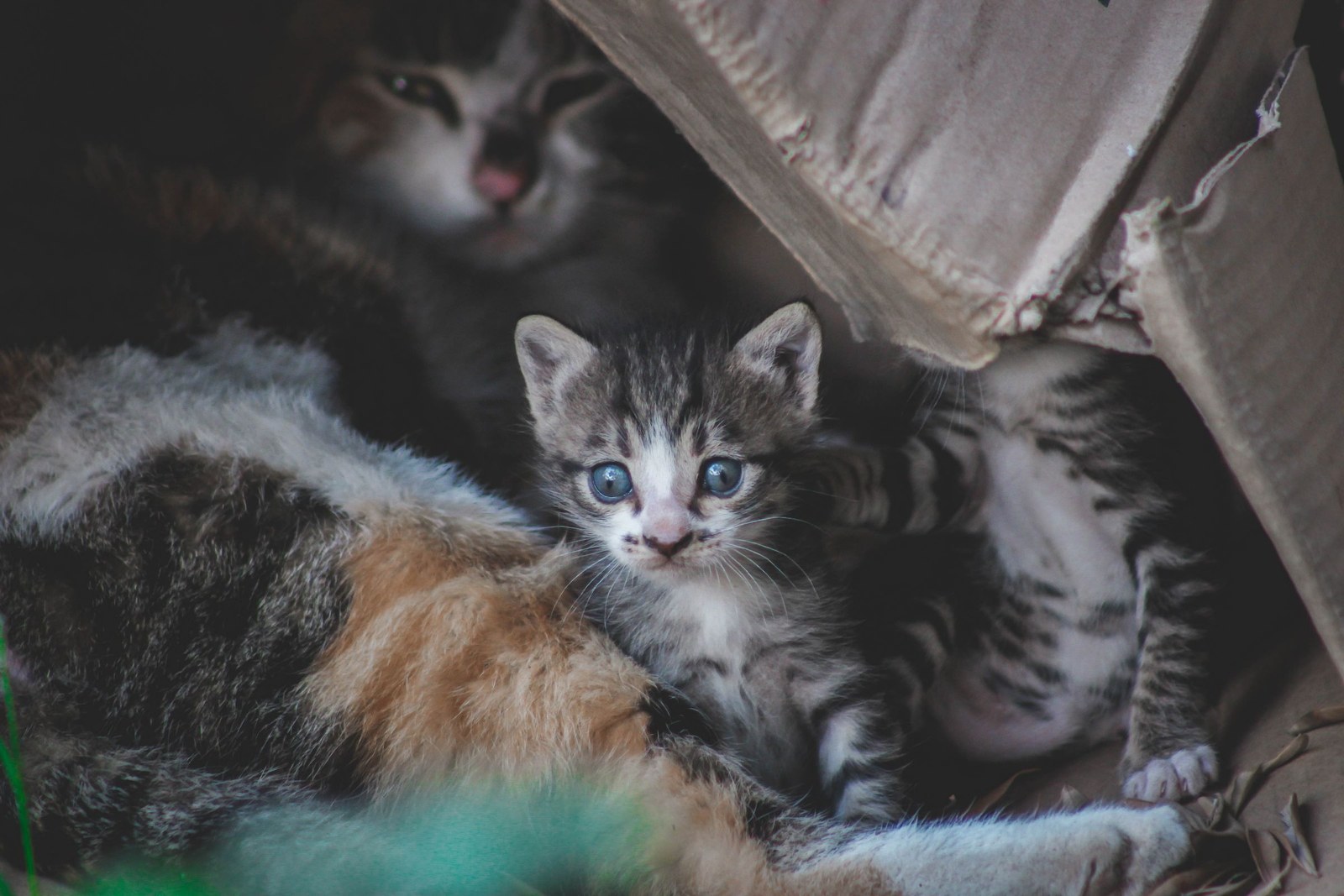
If your kitten isn't using the litter box yet, the cause is usually practical, not personal: the box is too tall to climb into, too far away for tiny legs, too dirty, or she's simply so young that she doesn't always make it in time. Work through the setup first — most litter problems in kittens are solved by changing the box, the location, or the cleaning schedule rather than the kitten.
The usual suspects, in order
Access. A standard litter box wall that an adult cat steps over without thinking is a climbing expedition for an eight-week-old. Use a low-entry box, or cut a low doorway into one side of a storage-style box and sand the edge smooth. Then count her range: a kitten playing two rooms away from the only box may not make the trip. Add a second low box near where she actually spends her day.
Cleanliness. Cats are particular, and kittens learn the habit faster in a box that is scooped daily. A box that smells to you is overwhelming to a kitten standing in it. If the box went unscooped while you were at work, a miss beside it is a review, not a rebellion.
Litter itself. Heavily scented litter, a sudden brand change, or a texture she dislikes can all cause refusals. Go back to unscented, fine litter — the closest match to the sand-like texture cats instinctively prefer — and change only one variable at a time so you learn what actually helped.
Location. Boxes beside loud appliances, in high-traffic hallways, or right next to food and water bowls all get quietly boycotted. Quiet, private, and separate from dinner is the winning combination.
Age matters more than attitude
Very young kittens — especially those weaned early or separated from their mother young — may not yet have the control or the fully formed dig-and-bury instinct of an older kitten. Mother cats model litter behavior, and kittens who missed those weeks sometimes need extra patient repetitions: place her in the box after meals and naps, praise success, and clean misses with an enzyme cleaner so yesterday's accident spot doesn't keep advertising itself as a toilet.
Confining a learning kitten to one kitten-proofed room with her box, bed, food, and toys for a stretch often fixes wandering misses — the box is always close, and the habit forms before she earns run of the house.
When it is not a training problem
Call your veterinarian promptly if misses come with straining, crying in the box, blood, diarrhea, going very frequently in tiny amounts, or a kitten who was reliably trained and suddenly is not. Those signs can point to a medical issue that no amount of retraining will fix, and kittens are small enough that digestive and urinary problems escalate fast. Never punish a kitten for a miss — she cannot connect the scolding to the puddle, and fear around the box area makes everything worse.
Keeping the whole household on the same page
Litter training falls apart when each family member runs a different system — one moves the box, another switches litter, a third forgets the enzyme cleaner. KinsLe's Family Sharing is the per-pet care circle around your kitten, with roles for the people helping, so everyone at home can follow the same litter setup, feeding plan, and cleanup routine instead of improvising their own. Family Sharing on KinsLe puts the written litter plan where the whole household can see it — box locations, the low-entry choice, scooping times, and the cleaner to use on misses — so each person reads one shared version before changing a thing.