Seed-only eating is the most common feeding problem in pet budgies, and it has three separate causes that each need a different fix. Treat it as a recognition problem, a choice problem, and a caution problem, rather than stubbornness, and conversion becomes far more successful.
Why Seeds Win Every Contest
Most budgies are weaned onto seed, so seed is the one food a young bird has learned from its parents and flock mates is definitely food. Anything new, a green leaf, a piece of carrot, a formulated pellet, may simply not register as edible, and wild budgies survive by being suspicious of unfamiliar foods, a caution called neophobia. On top of that, a loose seed mix is a pick-and-mix: a budgie can select energy-dense favourites, especially millet and other oil-rich seeds, and flick aside plainer grains, ending up full but short on vitamin A, calcium, and balanced protein.
The Rules That Keep Conversion Safe
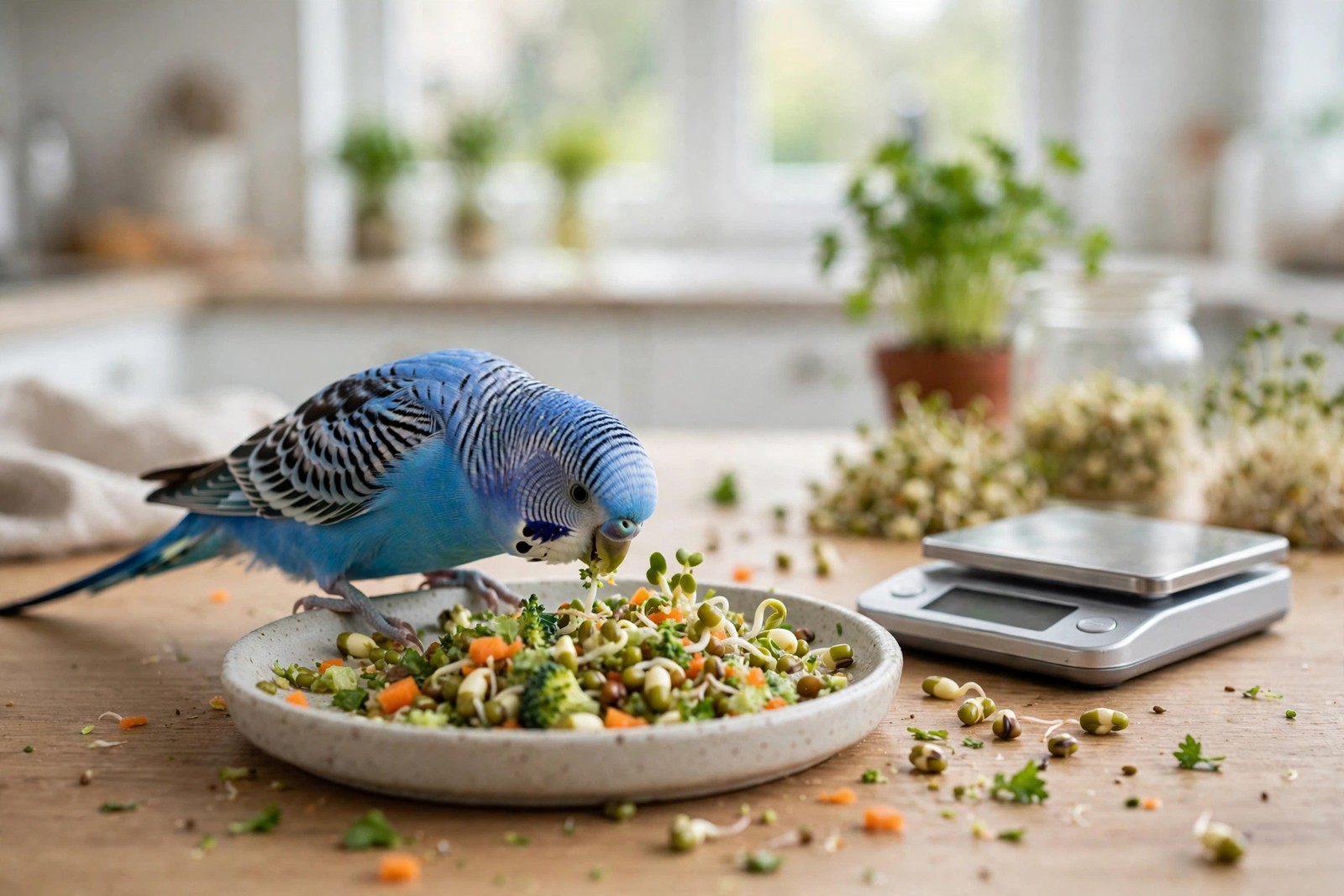
Never remove seed and wait for hunger to force the issue. A budgie is tiny, with a fast metabolism, and a bird that does not recognise the new food as food can go downhill within a day. Weigh your bird on a small gram scale at the same time each morning; a falling weight or scant, dark droppings mean the bird is not eating enough and the plan must slow down. Any budgie that sits fluffed, stops calling, and produces almost no droppings needs an avian veterinarian promptly, not a firmer diet plan.
A Conversion Plan That Works With the Bird
- Bridge with sprouted seed. Seed that has been soaked and just sprouted looks familiar, is softer, and is nutritionally better than dry seed. Many budgies accept sprouts, then accept other soft fresh foods placed beside them.
- Serve vegetables when hunger helps. Offer finely chopped greens, grated carrot, sweetcorn, and broccoli florets first thing in the morning, clipped to the bars or in a shallow dish, and leave them for a couple of hours before seed goes in.
- Mix formulated food gradually. Stir a small proportion of a budgie-sized formulated food into the seed, raising the share over several weeks as you see it being eaten, not just billed around the bowl.
- Eat socially, on bird terms. Budgies copy flock mates. A tame bird may investigate food placed near where you eat, and a companion budgie that already eats vegetables is the finest teacher available.
- Repeat without drama. A rejected food offered calmly ten or fifteen times is often accepted on the next try. Remove fresh food after a few hours so it does not spoil, and try a different shape, since some budgies prefer a whole leaf to chop, or chop to a leaf.
Expect weeks to a few months, not days. The goal is a varied plate: a measured amount of quality seed, formulated food being eaten reliably, and fresh vegetables taken daily. Keep a short daily note of what was offered, what was eaten, and the morning weight, and share it with your avian vet at routine visits, because diet history explains a great deal about a budgie's health. Rotating the weighing, sprouting, and fresh-food jobs in KinsLe Care Teams keeps the conversion plan identical in every pair of hands, which is what a cautious little bird needs.