
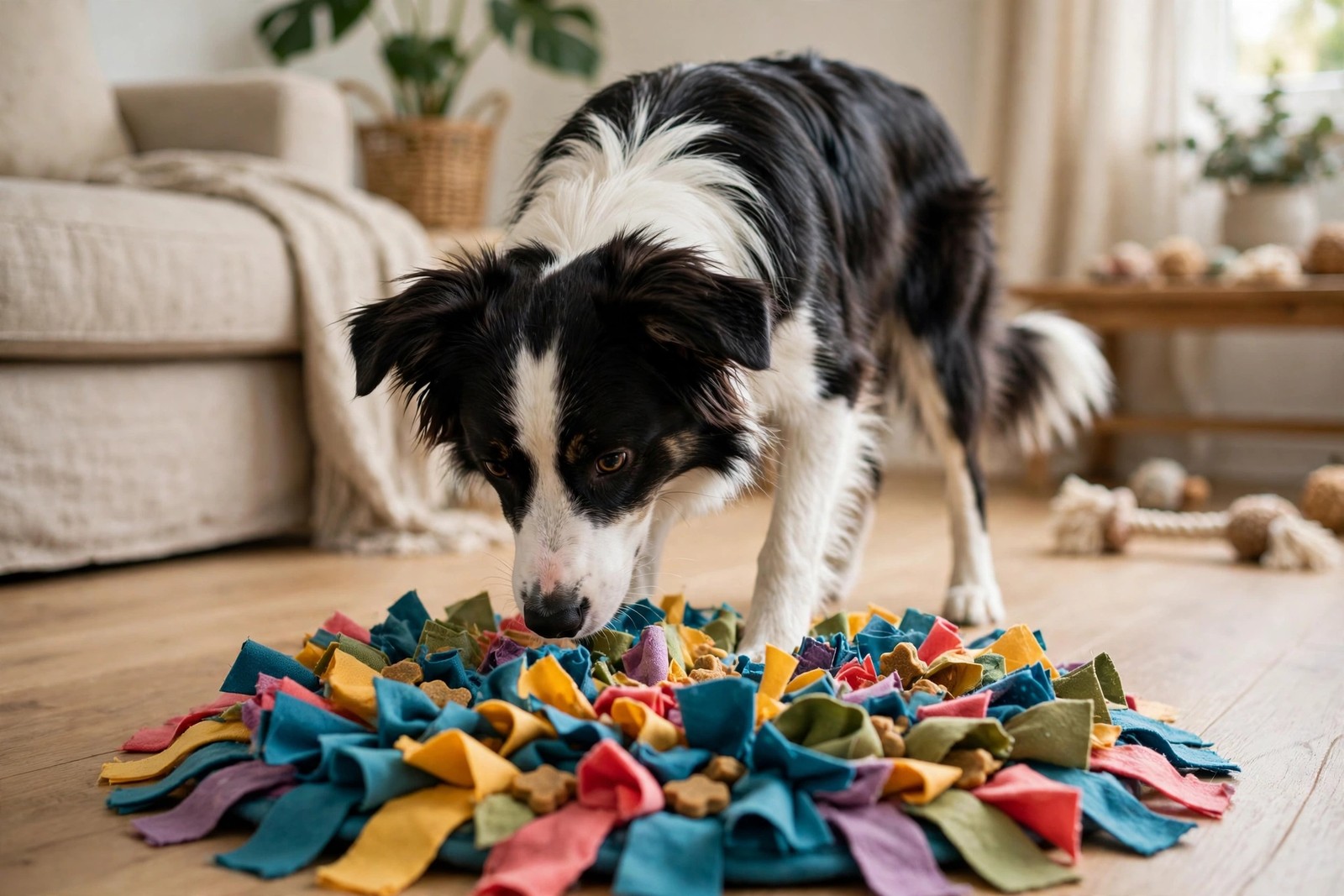
Yes — for most dogs, puzzle toys and snuffle mats genuinely help with boredom, because working for food through scent and problem-solving uses your dog's brain in a way that a walk alone does not. Many dogs finish a good puzzle session and settle for a nap, calmer than after physical exercise alone. The key is starting easy enough that your dog succeeds, then raising the difficulty gradually so it stays rewarding instead of frustrating.
Why Working for Food Works
In the wild, canids spend much of their day searching for food. Our dogs get dinner delivered in thirty seconds, which leaves a capable nose and brain underemployed — and underemployed dogs invent jobs: barking at windows, raiding bins, chewing furniture, pestering you through the evening. A snuffle mat recreates a simple version of foraging, scattering kibble through fabric folds your dog must nose through. A puzzle toy asks for pawing, nudging, sliding, or rolling to release food piece by piece.
This is mental exercise, and it tires dogs differently from running. An elderly arthritic dog who cannot do long walks can still do satisfying scent work. A young, high-energy collie may need both — a run and a puzzle — but owners often notice the puzzle is what finally switches them off afterwards.
Start with part of your dog's normal meal rather than extra food, so enrichment does not quietly add calories. For most dogs, using a portion of their daily kibble in puzzles is the simplest approach.
Start Easy, Then Build the Challenge
The biggest beginner mistake is making it too hard. On day one, scatter treats visibly on top of an open snuffle mat. Let your dog win fast and often. With a rolling or sliding puzzle, load every compartment and leave lids loose or open. Success builds the habit; frustration builds a dog who flips the whole thing over or walks away.
Over days and weeks, bury treats deeper in the mat, close lids, freeze a stuffed food toy for a longer session, or hide a loaded puzzle in another room for a search game. Watch your dog, not the calendar — if they are happily engaged for ten minutes, the level is right. If they are whining, pawing frantically, or chewing the toy itself, step back a level and help them succeed.
Rotate formats across the week: snuffle mat Monday, lick mat Wednesday, cardboard shredding box Friday. Variety keeps the brain work novel.
Fitting Puzzles Into Real Household Life
Enrichment fails when it depends on one person's memory. Decide as a household when puzzle time happens — perhaps while the family eats dinner, or as the morning leave-for-work ritual — and who preps it. Pre-portion several days of puzzle kibble into containers at the weekend so weekday prep takes a minute. Supervise early sessions, pick mats and toys up afterwards, and wash them regularly; snuffle mats collect drool and crumbs quickly.
Adjust for your dog: puppies need very easy, short games and constant supervision; seniors do best with scent games that do not require force; dogs on restricted diets can work for their prescribed food or veterinarian-approved treats.
Sharing the Job With KinsLe Care Teams
KinsLe's Care Teams let family members take turns prepping the day's puzzle or snuffle mat, with each duty assigned to someone and marked complete with a timestamp. That stops the two classic household errors — the puzzle done twice because nobody knew, and the puzzle skipped entirely because everybody assumed. The record is right there for the whole team to see.
Over a week, those small completed ticks build the consistent enrichment routine that actually changes a bored dog's behaviour.
Across the week, the written Care Teams rotation on KinsLe names a specific family member for Monday's snuffle mat prep, another for Wednesday's lick mat, and a third for Friday's shredding box — each prep timestamped once finished, so enrichment still happens on evenings when the usual person is busy.