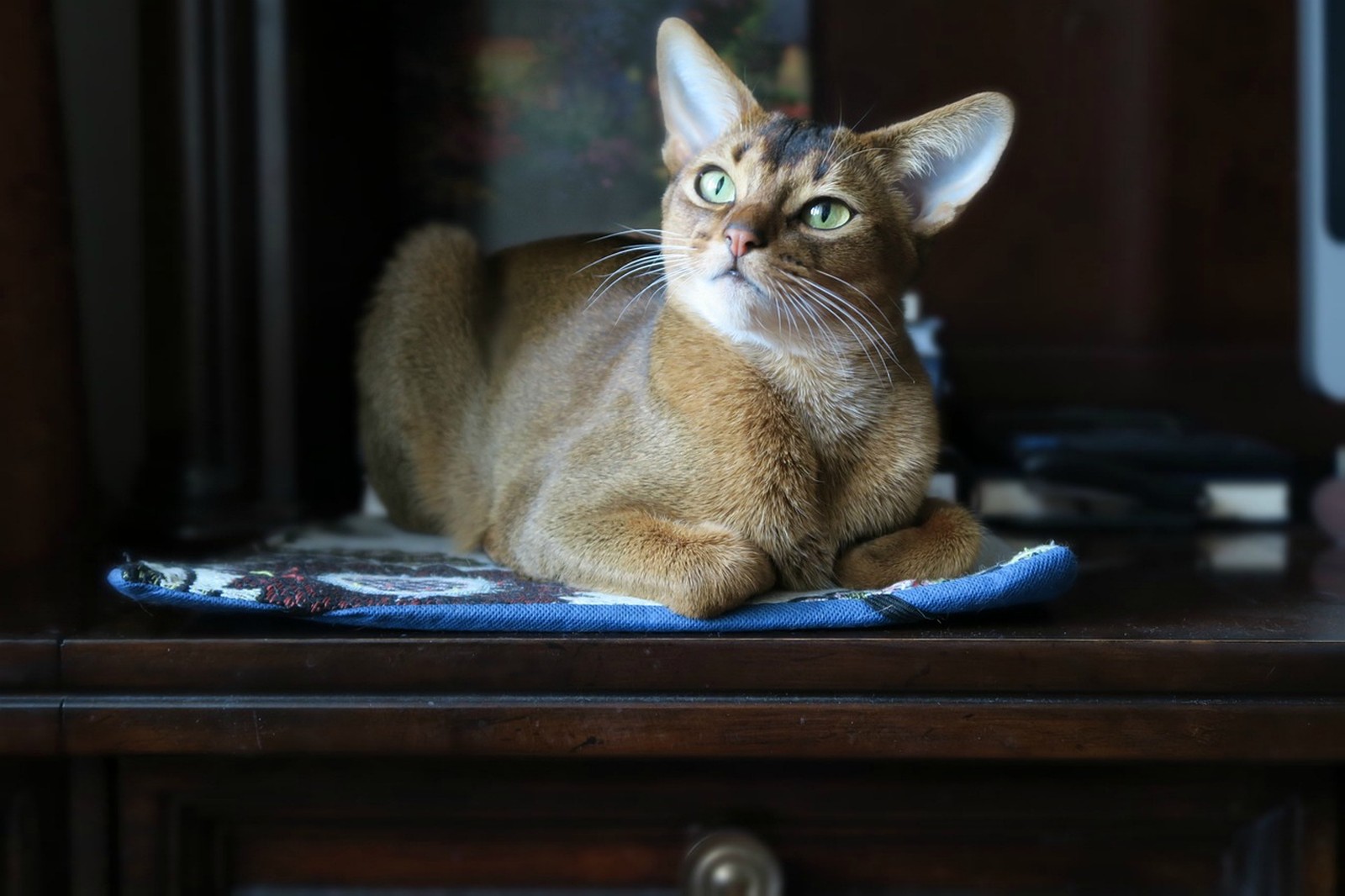
Yes — Abyssinians usually do well indoors, and many owners prefer it because the breed's curiosity can lead it straight toward open doors, balconies, and busy streets. The catch is that an Abyssinian is not a decorative lap cat. This is one of the most athletic, inquisitive house cats you can live with, and an under-stimulated Abyssinian will invent its own entertainment, which often means curtains, shelves, and kitchen counters.
What an Abyssinian Actually Needs Indoors
Height matters more than floor space for this breed. Abyssinians climb and leap confidently, so a tall, stable cat tree, cleared shelving they are allowed to use, and a window perch with a view of birds or street life will be used every single day. Rotate wand toys, balls, and cardboard boxes so the environment changes, because novelty is what holds this breed's attention. Puzzle feeders for part of the daily food ration turn meals into the hunting and problem-solving work their brains expect.
Play Is a Daily Requirement, Not a Bonus
Plan on at least two proper interactive play sessions a day, using a wand toy they can chase, stalk, and catch, and end each session with a small meal or treat so the hunt feels complete. Short solo toys left in a basket rarely satisfy an Abyssinian for long; they want a partner in the game and will follow you from room to room asking for one. Kittens and young adults are the most demanding, and a second young, playful pet can help, but it does not replace time with you.
Signs Indoor Life Is Not Working
Watch for pacing at doors, loud and repeated calling, knocking objects off shelves, over-grooming, or pestering other pets. Those are usually boredom signals in this breed, not spite, and the first fix is more height, more play, and more food puzzles rather than punishment. A harness and lead, introduced slowly indoors first, suits some Abyssinians who crave outdoor smells, but many are just as content with a secure window seat.
Safety Details Owners Miss
Because Abyssinians explore high and narrow places, anchor tall furniture, check washing machines and dryers before closing them, and keep cleaning chemicals and small swallowable objects locked away. Secure window screens properly, since an excited Abyssinian leaning on a loose screen while watching birds can push it out. Keep houseplants checked for feline safety before placing them on the shelves this breed will definitely visit.
When the whole household shares the work — morning wand play, an evening puzzle refill, a weekly check that perches and trees are still wobble-free — an indoor Abyssinian stays fit, settled, and closely bonded to its people, and KinsLe's Care Teams keeps those jobs assigned and ticked off so this busy breed's routine never slips on a hectic day.