
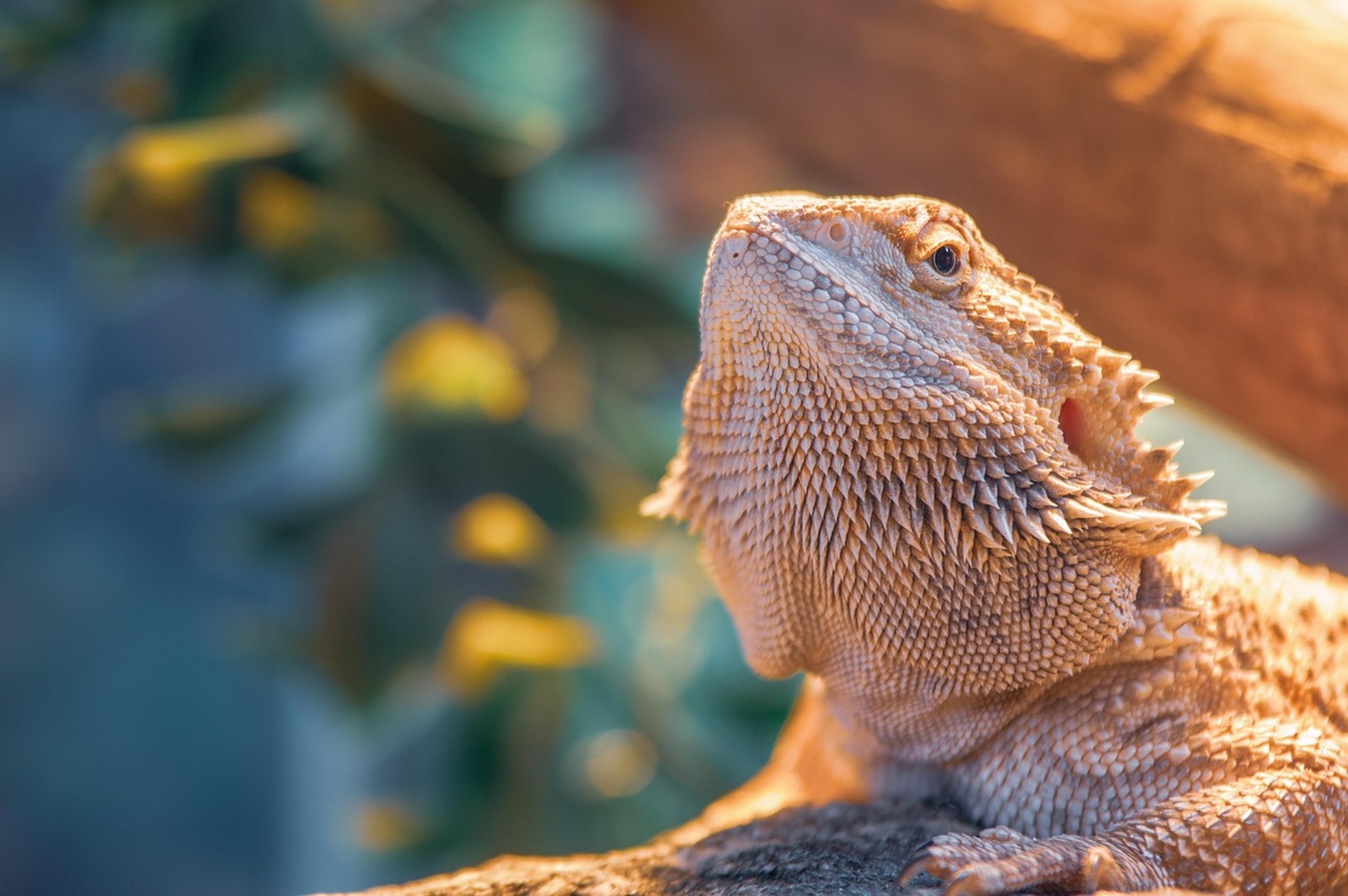
Yes, and the reason is personality: bearded dragons are alert, tolerant of handling, active by day when you can watch them, and rarely inclined to bite. The caution is workload. This is not a set-it-up-and-admire-it reptile. A dragon needs fresh food prepared daily, live insects bought and kept, and lighting that fails silently if you forget it — so a beginner succeeds here by enjoying routine, not by avoiding it.
The Setup Is the Real Price Tag
An adult dragon, which commonly grows to around two feet including the tail, needs an enclosure of about 120 gallons — roughly four feet long, two feet wide, and two feet tall — so it can move between heat and shade. One end holds a basking spot around 100 to 110°F; the other end stays in the low 80s. Across the warm half runs a tube-style UVB light, because without UVB a dragon cannot use dietary calcium properly and can develop weak, deforming bones. UVB output fades long before the tube stops glowing, so replace the bulb on the schedule its maker states and write that date down the day you fit it. Expect the enclosure, lighting, and heating together to cost far more than the lizard itself.
Feeding Changes Completely as They Grow
A baby dragon is mostly an insect eater, taking small live insects several times a day. An adult flips that ratio: a daily salad of leafy greens such as collard or mustard greens, with squash and other vegetables, becomes the staple, and live insects drop to a few sessions a week. Dust insects lightly with calcium powder as your veterinarian advises, offer variety rather than one feeder insect, and remove uneaten live insects at night, since a hungry feeder can nibble a sleeping dragon. Salads wilt and get scattered, so expect a quick enclosure tidy most days too.
Questions to Ask Before You Buy
Ask what the dragon is currently eating, whether it takes greens willingly, and when it last passed droppings normally — a dragon already refusing salad is harder for a beginner to convert. Reptiles are not vaccinated, so instead ask about any past vet visit and whether a stool check for parasites has been done; a vet check soon after purchase is a sensible first step for any new dragon. Watch for a seller keeping only one dragon per enclosure, too: these are solitary animals, and sharing a tank invites bullying. If everyone in the house knows who chops the salad, who feeds the insects, and who checks the basking temperature each morning, the routine holds even on busy weeks — KinsLe's Care Teams feature lets you assign exactly those dragon duties to each household member and marks every completed task with a timestamp, so nothing in the daily cycle is silently missed.