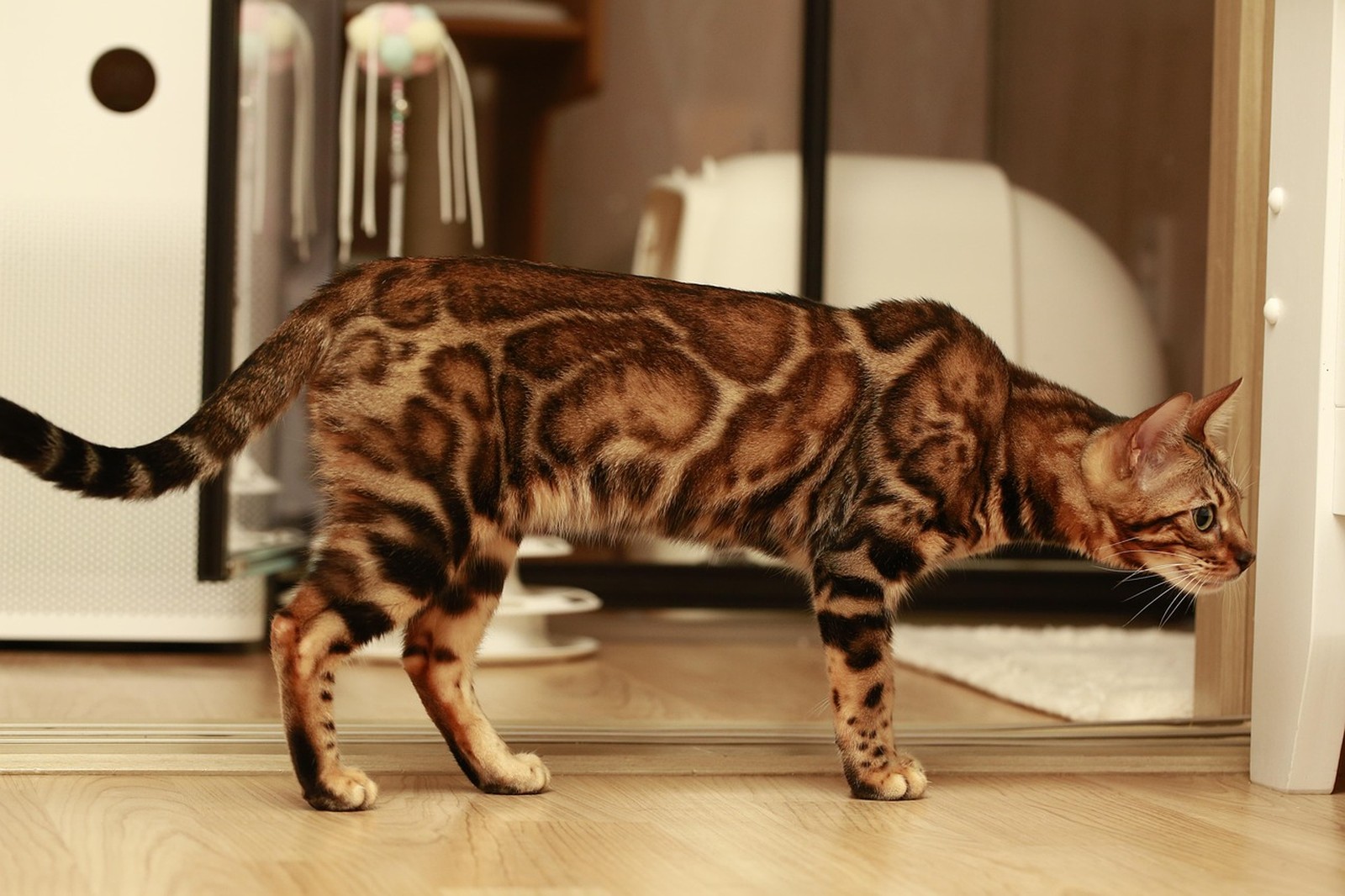
Yes — but a Bengal is the hard case of indoor keeping, and honesty matters here. Indoor life protects any cat from traffic, predators and fights, and it protects wildlife from the cat. The question is whether the indoors you offer can absorb the energy of one of the most athletic, intelligent and stimulation-hungry breeds in the cat world. Done passively, no. Done deliberately, a Bengal can thrive inside for its whole life.
What Boredom Looks Like in a Bengal
An under-stimulated Bengal does not mope quietly. Expect loud demand yowling, night-time racing and door-dashing, opening cupboards and lever-handled doors, unrolling and shredding household paper, ambushing ankles, and sometimes stress behaviours such as over-grooming or toileting outside the litter tray. These are not a bad cat; they are a working mind with nothing to work on. If your Bengal shows them, the first fix is almost always more structured activity, not discipline — though a vet check is sensible if behaviour changes suddenly.
Building the Indoor Territory
Think in three dimensions and in rotations:
- Vertical world: a floor-to-ceiling tree, wall shelves or a cleared bookcase route, with a high perch by a window for watching birds and street life
- Hunting cycle daily: two or three interactive play sessions of 10 to 15 minutes with a wand toy, ending with a small meal or treat so the hunt-catch-eat sequence completes
- Puzzle feeding: part of the daily ration in puzzle feeders, boxes and scattered hunts rather than all of it sitting in a bowl
- Rotating novelty: swap toys every few days, bring in cardboard boxes and paper bags (handles removed), and refresh scratching surfaces before they are destroyed
- Water play: many Bengals are fascinated by water — a dripping tap session or a shallow tray with floating toys is real enrichment for this breed
The Middle Paths: Catio and Harness
Two options bridge indoors and outdoors without free-roaming risk. A catio — a mesh-enclosed balcony or garden pen with shelves and a scratching log — gives weather, smells and bird-watching on tap, and many Bengals use one for hours daily. Harness training is the other: start indoors for a few minutes at a time, let the cat set the pace, and build to garden or quiet-street walks of 20 to 30 minutes. A Bengal that gets either option plus indoor play is rarely a cat pining for the street.
Apartment dwellers can absolutely keep a Bengal this way; what they cannot do is keep one casually. KinsLe's Care Teams keeps the system honest by assigning play sessions, puzzle-feeder refreshes and harness walks to specific family members each day, with completed tasks time-stamped — so your Bengal's stimulation rota survives work trips and busy weeks instead of quietly lapsing.