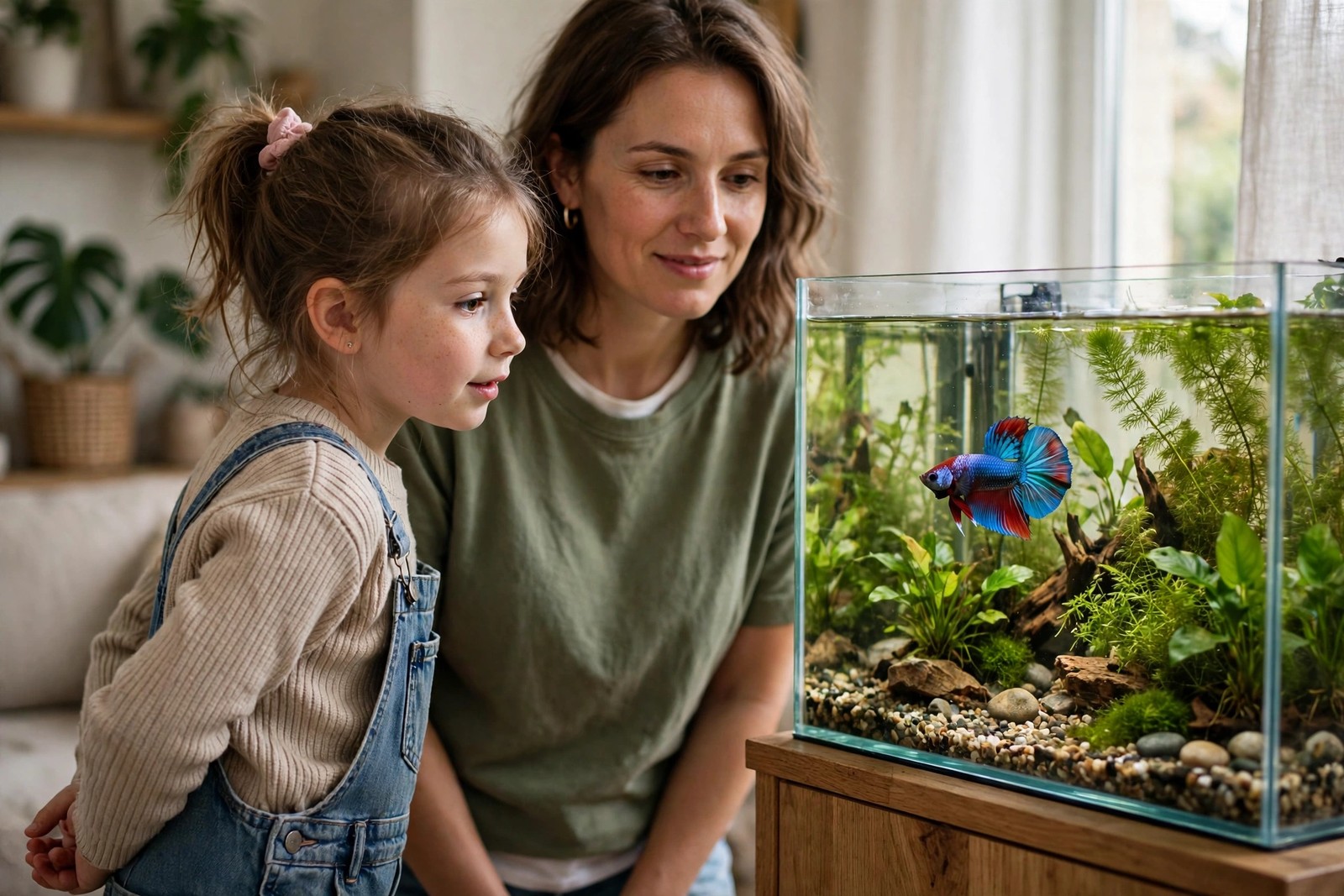
A betta can be a genuinely good first pet for a child, provided everyone is honest about whose pet it really is. The fish is engaging, personality-filled, and quiet, with a workload that is small but non-negotiable and entirely adult-sized in its technical parts. Families who understand that split usually love keeping one. Families sold a betta in a tiny unheated bowl as a child's no-effort starter pet usually lose the fish within the year, which is a sad first lesson in pet keeping.
What a Betta Actually Needs
Bettas are tropical fish. A healthy setup means a tank of at least five gallons with a gentle filter, a heater holding the water around 76 to 82 degrees Fahrenheit, a lid because bettas jump, and water that has been cycled or at least conditioned and tested so ammonia does not burn the fish's gills and fins. Once a week, roughly a quarter of the water comes out and is replaced with temperature-matched, dechlorinated water. Feeding is a few pellets once or twice a day, with real restraint: a betta's stomach is about the size of its eye, and overfeeding by enthusiastic small hands is the most common beginner mistake. None of this is difficult, but testing water, handling a heater, and siphoning are jobs for an adult or an older teen being supervised.
What Kids Genuinely Get From a Betta
The reward side is real and often underestimated. Bettas are solitary and intelligent for a small fish. They learn who feeds them, swim to the glass at feeding time, follow a finger along the tank, build bubble nests at the surface when settled, and flare their gills and fins in a dramatic display at a reflection. For a child, a betta teaches observation, routine, and gentleness: care happens by watching, keeping a schedule, and keeping hands out of the water. It is a good match for a calm child who enjoys watching animals and for households that cannot have a furry pet because of allergies or rental rules.
The Limits to Accept Before You Buy
A betta cannot be cuddled, carried around, or played with, and tapping the glass, netting the fish for fun, or shaking the tank genuinely harms it. Males must live alone; two males will fight, and most tankmates are a risk rather than company. Lifespan is typically two to four years with good care, so a betta is neither a weekend novelty nor a decade-long companion, and a child should know the fish will die someday before that day arrives. If your child mainly wants physical interaction with a pet, a betta will disappoint, and it is kinder to choose differently now than to lose interest in a living fish later.
Setting Up the Family System
Assign the jobs out loud on the day the tank arrives. The adult owns water changes, water testing, heater and filter checks, and any medicine decisions. The child owns daily observation and reporting: Is he eating? Is he swimming normally or sitting on the bottom? Is the bubble nest there? That reporting job matters, because the child watching every day will spot clamped fins, white spots, or a fish refusing food before anyone else does. Keep a simple log together for the first month, including feeding amounts, so the whole family calibrates what normal looks like for this particular fish.
Putting those assignments in KinsLe's Care Teams, where each pet's duties are listed and completed tasks are marked off, means the water change happens on schedule even in a busy week, and your child's observation notes sit in the same place as the care record.