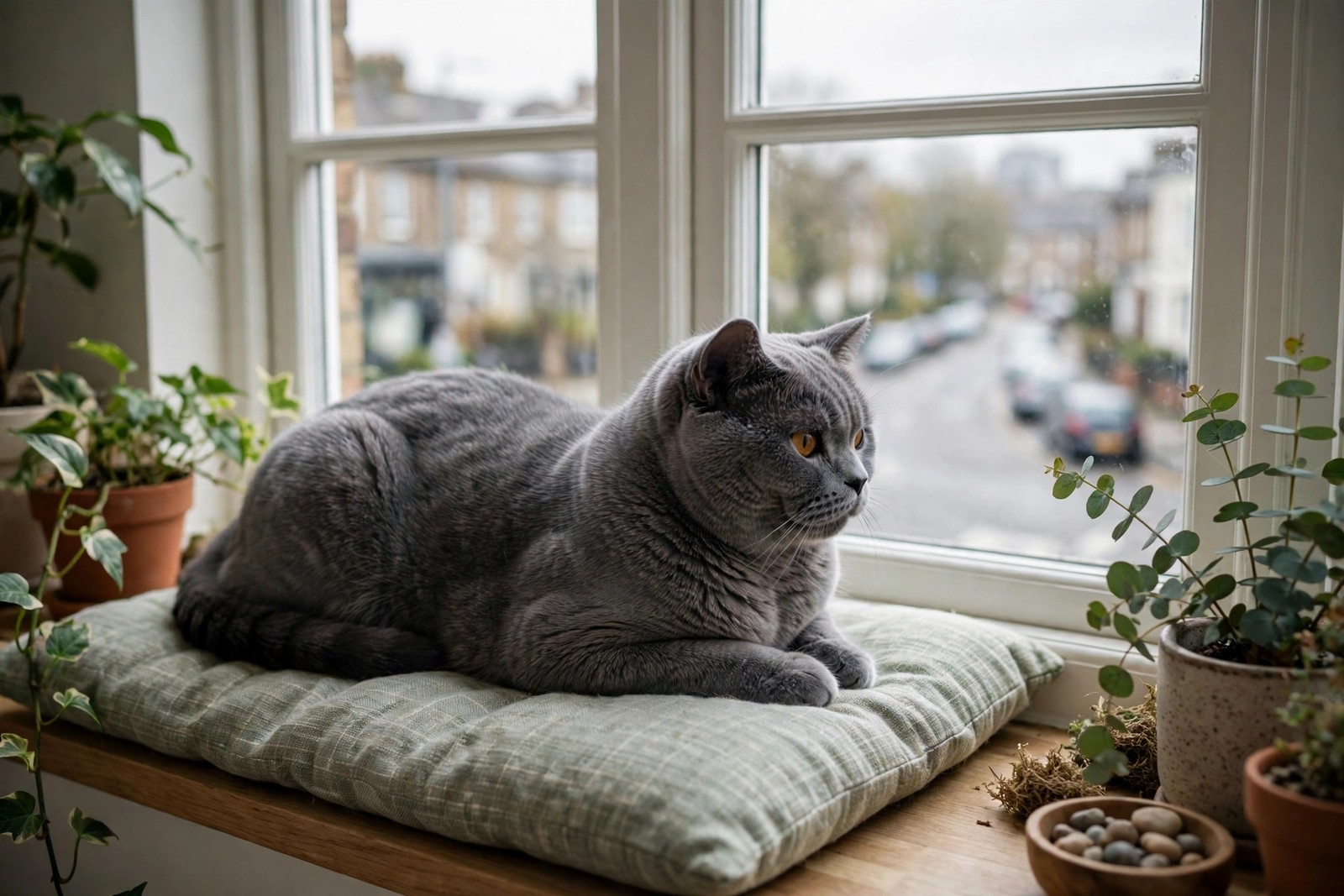
Yes — and here the answer is more wholehearted than for most breeds. Where an athletic breed has to be persuaded that indoor life is enough, the British Shorthair generally regards a warm, predictable home as the entire point. This is a calm, sedentary-leaning, deeply home-centred cat, and indoor keeping aligns with its temperament rather than fighting it.
Why Indoors Suits This Breed
British Shorthairs are not great roamers by inclination. They play in short bursts, nap extensively, and prefer a defined territory with familiar people in it to adventure outside it. They are also notably unbothered by apartment life provided the basics are in place: a scratching post, a perch where they can watch the world from a window, a quiet sleeping spot, and laps available at the cat's choosing. Their dense double coat and solid build were made for cool climates, and indoors they are protected from the traffic and territorial fights that are the real dangers for any cat — British Shorthairs are lovers of routine, not fighters.
That said, contented does not mean zero input. A cat this placid still needs a litter routine kept scrupulously, some vertical and hiding space, and human interaction every day, even if most of it is simply shared quiet.
The Real Indoor Risk: Weight
The breed's famous appetite and low activity are a hazardous pairing indoors. British Shorthairs gain weight readily, neutered males especially, and the breed's naturally stocky, cobby build hides extra kilos deceptively well — a cat can look reassuringly round while quietly becoming obese, with the strain that places on joints and health over time.
Manage it as a system, not a hope:
- Weigh the cat monthly and keep a note — you should be able to feel ribs under a thin fat covering, and see a waist from above
- Measure meals rather than free-feeding from a topped-up bowl, and count treats within the day's food
- Build in two short play sessions a day, even five to ten minutes with a wand toy, which is meaningful exercise for this breed
- Ask your vet at annual checks to score body condition honestly, since owners' eyes adjust as the cat grows rounder
A Simple Verdict
If you want an indoor cat and can offer calm company plus portion discipline, the British Shorthair is arguably the easiest breed in this entire guide to keep happily inside. No catio engineering, no harness programme, no enrichment rota is required — just consistency about food, which is precisely where households slip when several people feed one persuasive cat. For a cat who will happily ask three people for breakfast, KinsLe Family Sharing lets the owner share the cat's profile with each relative they pick.