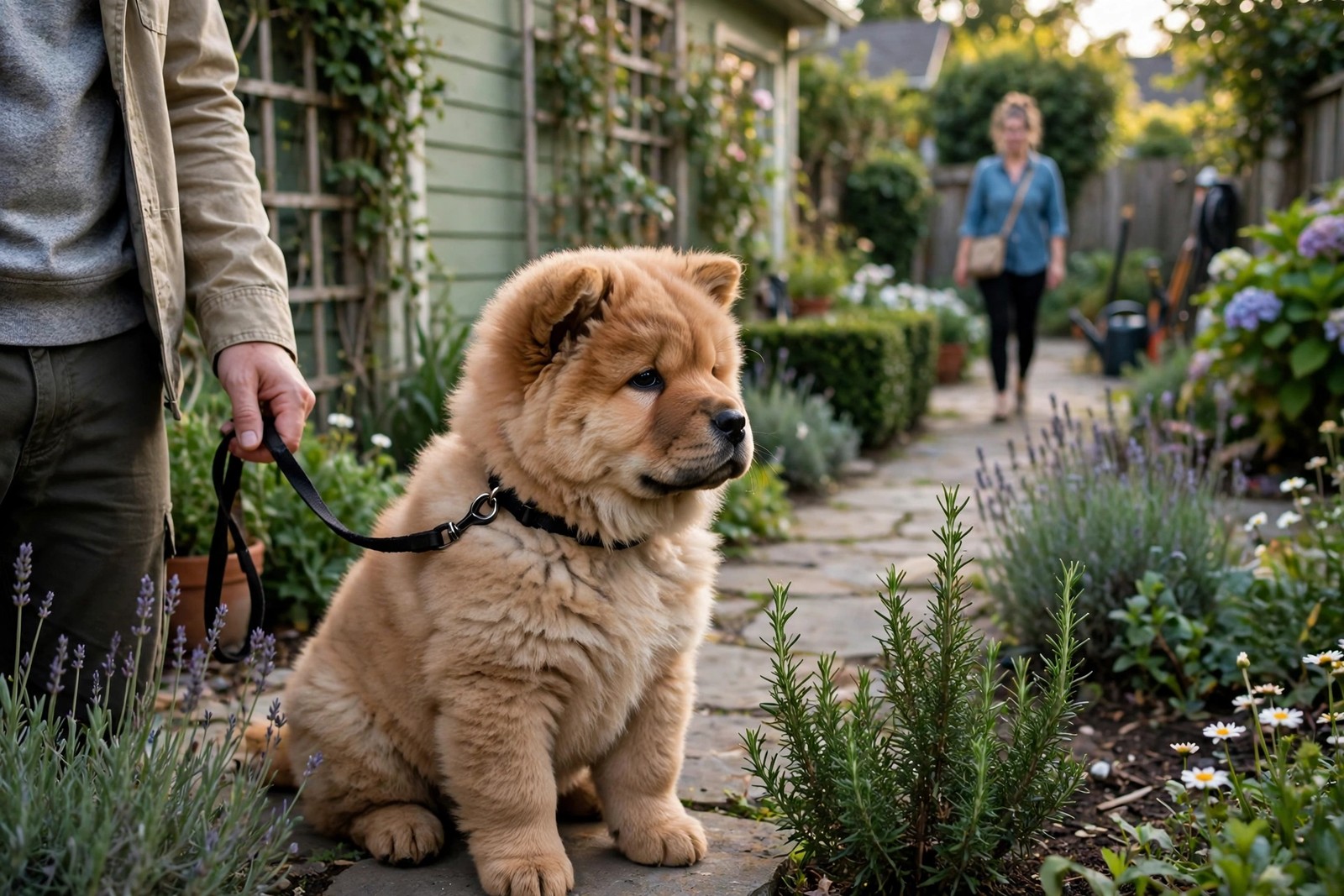
Broadly, yes. The Chow Chow's reputation is not a myth invented by insurers or films: most Chows are genuinely aloof with strangers, indifferent to fuss from people they do not know, and naturally territorial about home and family. What the reputation leaves out is the other half of the breed — a well-bred, well-raised Chow is calm, dignified, and deeply devoted at home, and is rarely a dog that goes looking for trouble. Problems come when that reserved, guarding nature meets a puppyhood with too little of the outside world in it.
What Aloof and Guarding Actually Look Like
A Chow typically does not bounce up to greet visitors. It watches, decides, and may accept a quiet stroke or may walk away — and that choice must be respected. Guarding shows as stillness and positioning, placing itself between family and door, rather than frantic barking. Never encourage guests to hug, corner, or insist on handling a Chow, and teach children in the home the same rule: affection happens on the dog's terms. Forcing contact on a breed this self-contained is how bites happen.
The Socialization This Breed Needs From Puppyhood
Start the week your puppy comes home, working around your veterinarian's guidance on safe exposure. The goal is many brief, uneventful, positive experiences, not a few overwhelming ones. Let your puppy watch the world from your arms or a quiet spot: people in hats and uniforms, children at a distance, cyclists, traffic, visitors entering calmly. Pair the sight with a treat and leave while it is still boring. Invite steady visitors to ignore the puppy until it chooses to approach, then reward it and let the visitor drop treats rather than reaching over its head.
Handling and Dog Meetings Need Deliberate Practice
Chows have a dense double coat that needs regular grooming, and they will be handled by veterinarians and groomers for life, so practise at home in tiny steps: touch ears, lift paws, look at teeth, run a brush through the coat, reward, stop. Keep each step short and pleasant so handling never becomes a battle with a strong adult dog. With other dogs, choose calm, well-mannered adults and brief parallel walks over chaotic group play; a Chow does not need dozens of dog friends, but it does need to learn that other dogs are normal and safe to ignore.
Keep Going Through Adolescence
The common failure is socializing hard for two months, then stopping. A Chow's guarding instincts strengthen as it matures, roughly through its second year, so keep the visitor routine, handling practice, and calm outings going the whole time. If guarding of doors, food, or family members starts to harden into growling at ordinary life, get a qualified, reward-based trainer involved early rather than hoping the dog grows out of it — with this breed, patterns set young tend to stay.
Finding that breed-aware help locally is much easier when it is gathered in one place, and KinsLe's Pet Services Directory connects Chow owners with nearby trainers, groomers used to dense double coats, and sitters, so the specialist support this breed needs is never a guessing game.