
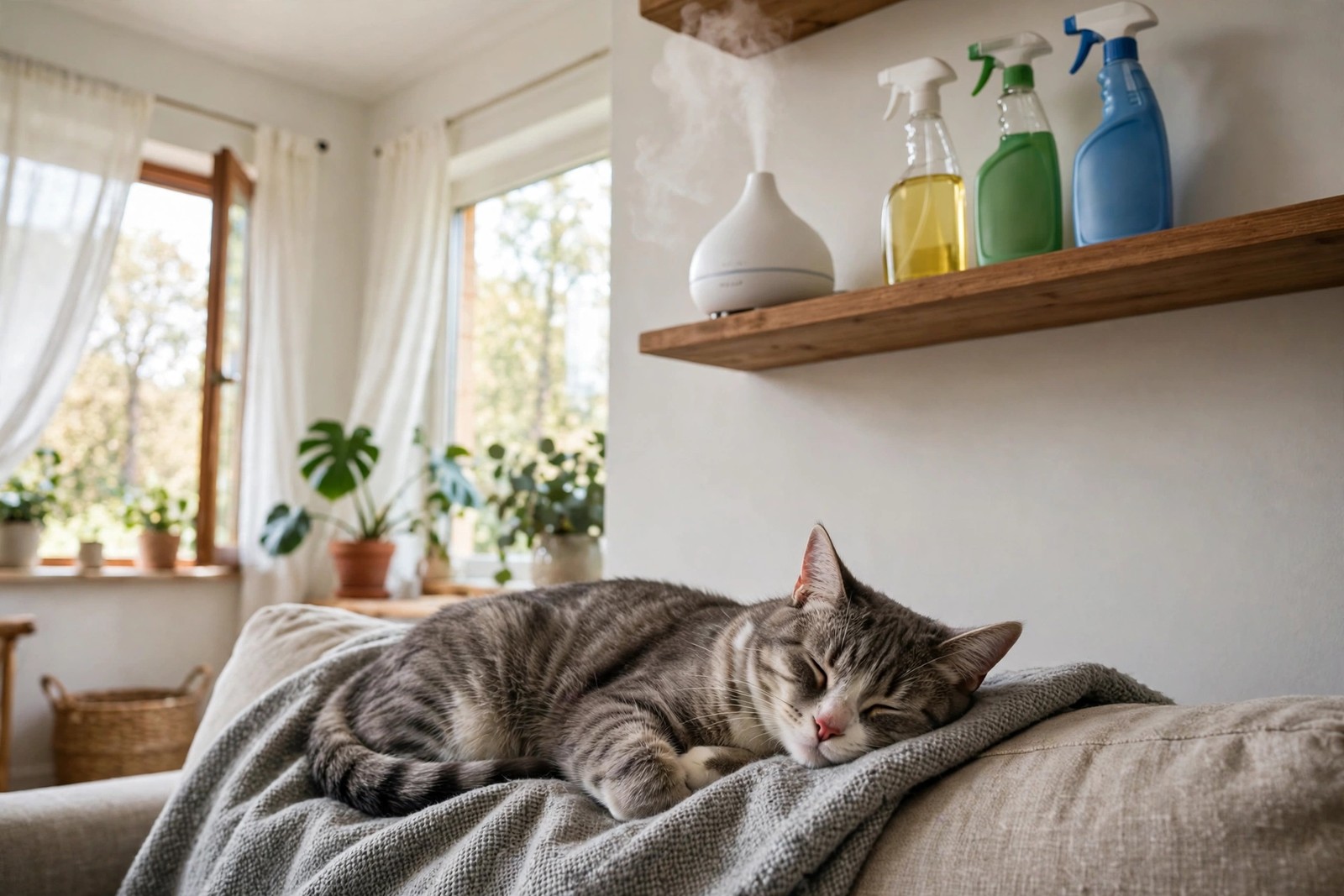
Many essential oils and strong scented cleaners are not safe around cats, especially in concentrated form. Cats lack some of the liver enzymes needed to break down certain compounds found in oils and harsh sprays, and diffusers can settle tiny droplets onto fur that your cat then grooms off and swallows. The safest approach is simple: keep concentrated oils and strong chemicals out of the rooms your cat uses, ventilate well, and ask your vet before introducing a new product.
Why Cats Are Unusually Sensitive
A dog or a person can process many plant compounds and phenols that a cat handles poorly, because the feline liver is missing a key pathway for breaking them down. That means substances most households think of as "natural" can build up in a cat's system. Tea tree, wintergreen, peppermint, citrus, pine, and eucalyptus oils are among those commonly flagged as risky for cats, particularly when concentrated or applied to skin or fur. Plug-in diffusers and reed diffusers add a second problem: they run all day in enclosed rooms, and airborne droplets land on coats, bedding, and paws.
Warning Signs Worth Knowing
This is general awareness, not a diagnosis — but contact your vet promptly, or an emergency vet if yours is closed, if your cat shows drooling, pawing at the mouth, watery eyes, sneezing or coughing, difficulty breathing, vomiting, wobbliness, tremors, or unusual lethargy after a new scented product is used. Breathing difficulty in a cat is always urgent. If oil gets on her coat, stop her grooming it off if you safely can, keep her warm and calm, and call your vet for advice before washing her with anything — the wrong shampoo can spread the oil or add new chemicals to the problem. Never apply essential oils to your cat's skin, ears, or bedding as a home remedy, flea treatment, or calming aid without veterinary guidance.
Safer Ways to Keep a Home Smelling Fresh
- Ventilation first: Open windows and run fans; fresh air beats fragrance in most rooms.
- Cat-free zones for scent: If you love a diffuser, run it in a room your cat cannot enter, for limited periods, with the door closed — never in the room where she sleeps or eats.
- Choose cleaning products carefully: Look for unscented or lightly scented options, rinse cleaned surfaces where your cat walks or lies, and let floors dry fully before she walks on them.
- Store everything sealed and shut away: Oils and sprays in a closed cupboard, never on a counter a cat patrols.
- Skip the "natural" assumption: Natural does not mean cat-safe. When in doubt, leave it out, or check with your vet.
Litter trays deserve a mention too: heavily perfumed litter can put cats off using the tray at all, so an unscented litter in a ventilated spot usually serves everyone better.
Noting Sensitivities Where Carers Can See Them
If your cat has reacted to a product before, or your vet has flagged a sensitivity or allergy, that information should not live only in your memory. A sitter, a family member, or a new partner cleaning the house needs to know which sprays stay in the cupboard. Writing it down where her carers already look for feeding and medication notes means the warning survives your absence.
How KinsLe's Pet Passport Helps
KinsLe's Pet Passport is your cat's records packet — vaccines, medications, allergies, and documents gathered in one place and shareable with vets and sitters. Add her known sensitivities and allergies to it, and anyone caring for her can see at a glance which products to avoid, alongside the rest of her health record. It turns a private worry into shared, practical protection. Once those product reactions are recorded, Pet Passport on KinsLe tells a house sitter which cleaner is safe and which spray once made her drool.