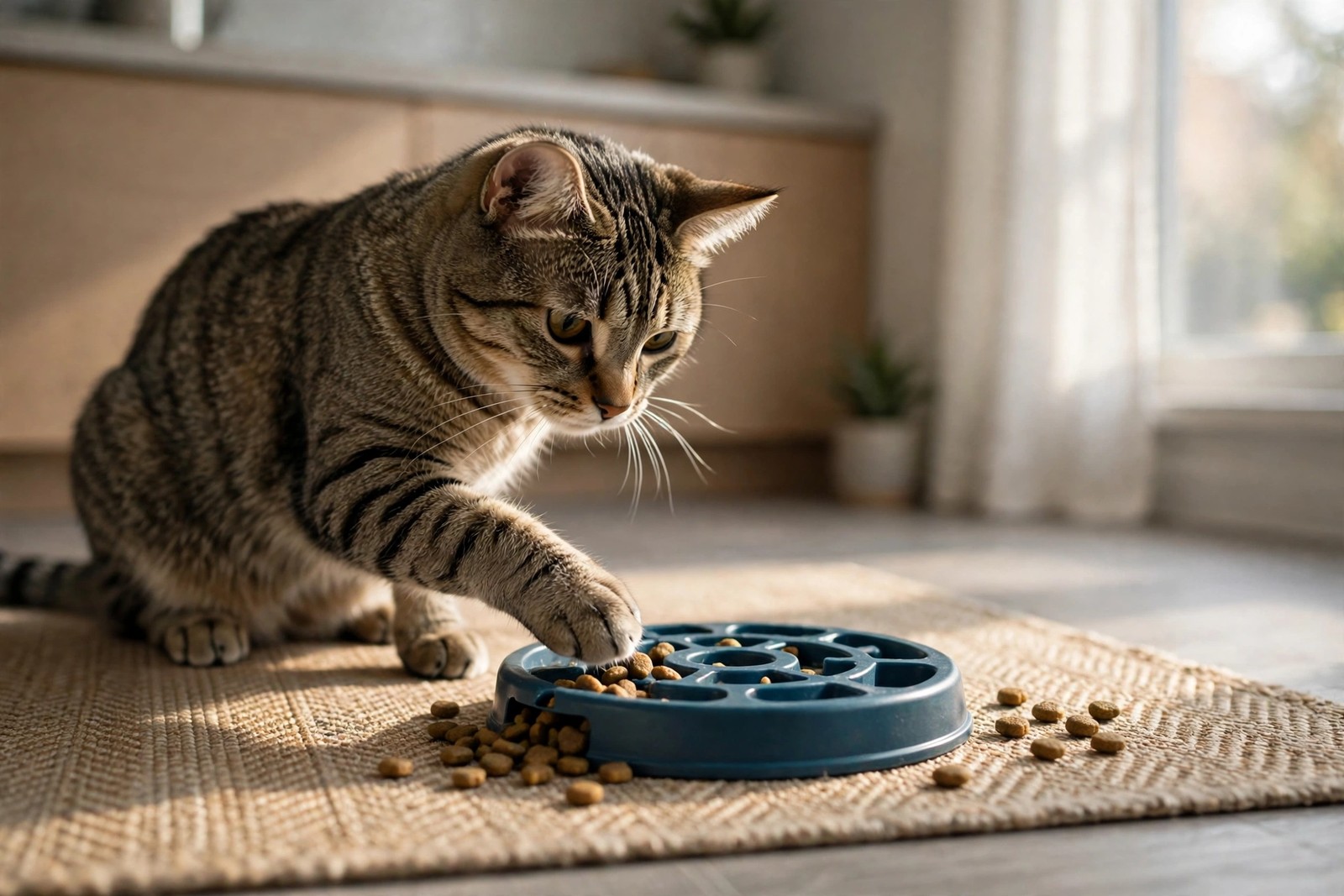
Yes, a food puzzle earns its place in most indoor homes. A bowl asks nothing of a cat: the meal is found, eaten, and gone in minutes, often so fast that a greedy eater brings it back up. A puzzle spreads that same food across pockets, sliders, cups, or a rolling body, and the cat has to paw, nudge, and think its way through the meal. That effort is the point. It slows eating, stretches a small ration into a longer activity, and gives an indoor cat a daily problem worth solving.
Start Easy, Then Raise the Difficulty
The first puzzle should be almost embarrassingly simple: kibble visible in open cups or a shallow tray with divots, so the cat wins food within a minute of investigating. Early success teaches the cat that the strange object pays, and a cat that understands the game will work at harder versions later. A cat that meets a difficult puzzle first may paw at it twice, conclude it is broken, and walk away from puzzle feeding for good.
Raise the challenge one step at a time. Cover some cups, use a puzzle that requires sliding pieces aside, or scatter part of the meal in a snuffle-style mat once the basics are solid. Watch how the cat solves each level. Frustration looks like walking away, meowing at you, or batting the puzzle hard enough to spill it; the right level looks like steady, focused work with food appearing regularly. Keep one easy puzzle in rotation alongside any harder one, so every day includes a win.
Hygiene and the Ration Rule
Treat a puzzle like what it is: a food bowl with corners. Wash it the way you wash bowls, with hot soapy water and a full dry, because wet food residue and kibble dust lodge in seams and go stale or worse. Puzzles used for wet food need washing after every use; dry-food puzzles still need a wash several times a week. A puzzle that smells of old food teaches the cat to avoid it and invites ants in warm weather.
The second rule protects the cat's waistline. Puzzle food is meal food, measured out of the day's ration before the puzzle is filled, not a bonus layered over full bowls. A cat fed a complete breakfast and then given a loaded puzzle has simply been fed twice. Portion the ration first, set aside the puzzle share, and let the bowl carry the rest. Households using puzzles for weight control should weigh the cat regularly and share the trend with their vet, since the puzzle only helps if the total stays honest.
Making It a Household Routine
Puzzles fail quietly when they depend on one person's memory. In KinsLe's Care Teams, the morning plan can name Marta as the person who fills the easy and hard puzzles from the measured ration, and Jonah as the person who washes both puzzles in the evening and sets them out to dry. Each finished job is marked with a time stamp, so nobody refills a puzzle that was already served, and a cat on a measured ration never gets a second helping by accident. Notes beside the duties record which puzzle level the cat has mastered and which one still frustrates it, so difficulty rises on evidence rather than guesses. The Care Teams schedule in KinsLe can show Marta on morning puzzle duty and Jonah on evening washing, with each finished job time-stamped for the next person.