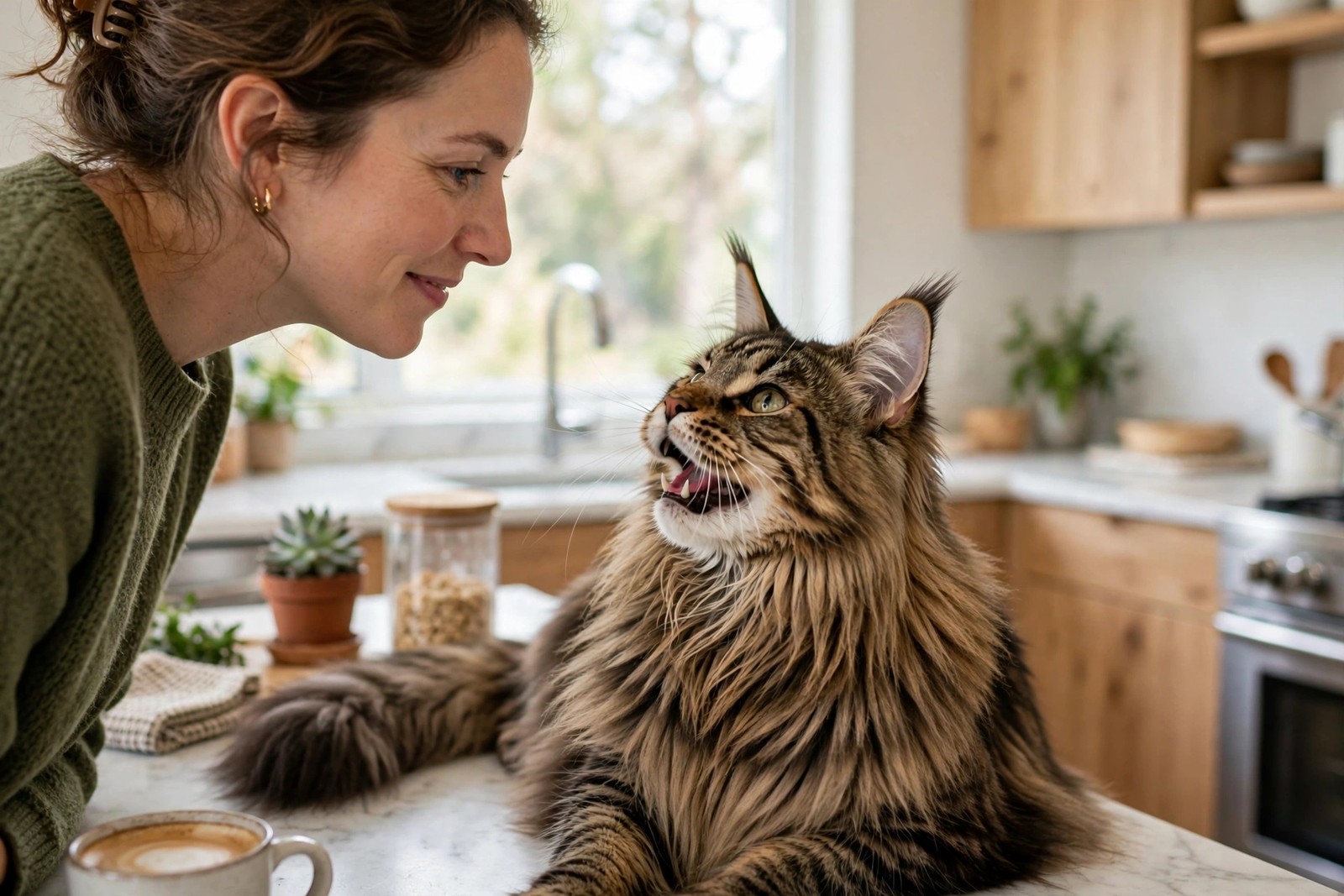
Maine Coons are talkative in style but not in volume, and that distinction is the whole answer. Few breeds communicate as often or as expressively, yet the sounds themselves are soft, musical, and easy to live with. Owners routinely describe feeling as though the cat is narrating its day in a small voice that seems mismatched to a cat who may weigh fifteen pounds or more. If very talkative means loud and insistent, the answer is no. If it means a cat who checks in with you constantly, in a pleasant voice, the answer is very much yes.
Chirps, Trills, and Warbles Instead of Meows
The Maine Coon repertoire leans on closed-mouth and semi-closed sounds. The trill is the signature: a rolling, rising chirrup used as a greeting, an invitation to follow, or an announcement that the cat is about to jump up beside you. Short chirps punctuate hunting and window-watching, especially at birds and squirrels. Many Maine Coons also produce a soft warbling murmur while walking a room, soliciting attention, or settling, a sound owners compare to the cat talking to itself. A standard open-mouthed meow appears for specific requests, but usually at modest volume, and this breed rarely produces the prolonged, carrying yowl associated with genuinely loud breeds.
A Conversation, Not a Performance
What makes Maine Coons feel so communicative is responsiveness. Talk to one and it will frequently answer, trill for trill, maintaining an exchange while it works, plays, or follows you between rooms. They tend to stay involved in family life well into maturity, maturing slowly over three to five years, and their sociability includes this running commentary on shared activity: the cat trotting in to report something, the cat answering its name, the cat commenting from the doorway of whatever room you have moved to. It is interaction pitched at conversation level, rarely raised, and most people who feared a big cat would be a big noise find the opposite within a week.
When a Maine Coon's Voice Should Worry You
Because this breed's normal register is soft and bright, two changes stand out. A Maine Coon who stops trilling and goes quiet and withdrawn may be unwell or in pain, and in a normally engaged cat that silence is itself a symptom worth a vet conversation. A cat who begins loud, persistent crying, especially at night or alongside appetite or litter-box changes, is equally out of pattern. Maine Coons can also simply learn that a certain sound earns a fast response and rehearse it at breakfast o'clock; that is training you have accidentally provided, best reset with predictable feeding times rather than scolding a cat for a lesson it was taught.
Living With a Gentle Commentator
Encourage the voice you enjoy. Answer trills, name the behaviors, and give the cat things worth reporting: a window seat with a view of a feeder, rotating toys, and play that ends in a catch. Vocal Maine Coons are usually engaged Maine Coons, and a bored one may escalate to mischief long before it escalates to noise, knocking objects off counters with great interest in your reaction. Volume is rarely the challenge with this breed; providing enough company and occupation for a sociable, slow-maturing cat is.
Sharing short clips and notes about your cat's particular trills and what they usually mean through KinsLe Messenger, the per-pet communications hub where messages and care updates stay together, means a family member or sitter hears the same gentle vocabulary you do and answers it the same way.