
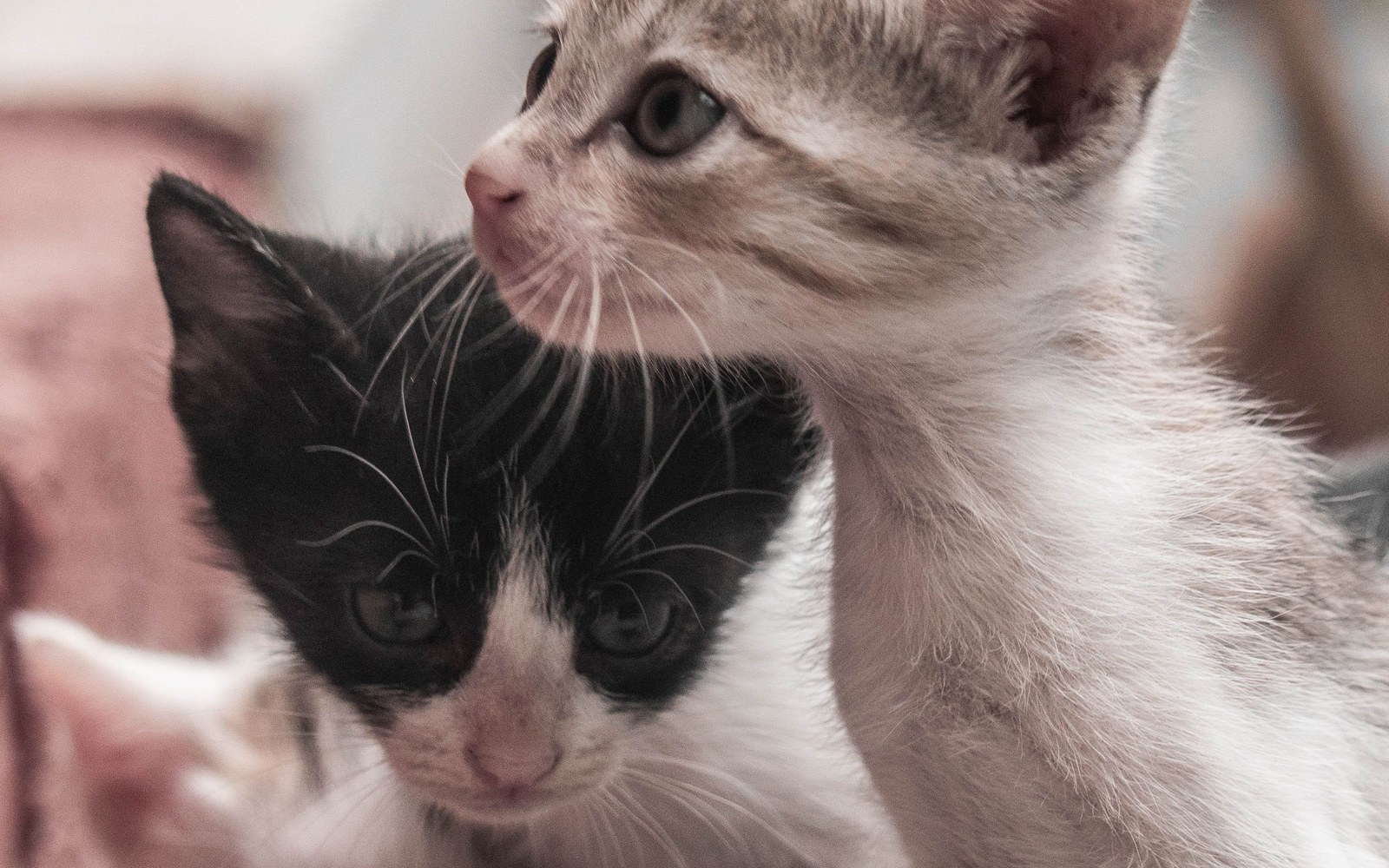
For many homes, yes — adopting two cats together is often easier than adopting one. A bonded pair or two kittens from the same litter arrive with a built-in friend, playmate, and comfort blanket, which usually means less stress on moving day, fewer lonely cries at night, and a smoother settle-in overall.
Why two cats often settle faster
Cats are more social than their independent reputation suggests. A kitten who has always slept curled against a sibling can be genuinely miserable alone in a quiet apartment, while a pair will explore a new room shoulder to shoulder. Play is a big part of it, too. Two young cats burn energy wrestling, chasing, and ambushing each other instead of climbing your curtains at 3 a.m. or ankle-hunting the only human in the house.
Company also matters when you are out. People who work long shifts often worry about a single cat spending ten hours with nothing to do. A companion does not replace you, but grooming, napping together, and shared window-watching fill the day in a way toys alone rarely do. Shelters see this so often that many discount the second adoption fee or actively flag pairs who should go home together.
The honest costs of a pair
Two cats are not twice the work, but they are twice several bills. Plan for:
- Double the food, litter, and routine veterinary care
- Two carriers, and ideally two litter boxes plus one extra
- Separate food bowls and a few duplicate resting spots so nobody has to compete
- A bigger emergency cushion, since two cats can both need care in the same year
Space matters less than layout. Even a small flat works if you add vertical territory — a tall scratching post, shelves, or a window perch — so each cat can choose company or solitude.
Which two cats to choose
The safest bet is a pair the shelter already knows gets along: littermates, a mother and her older kitten, or adults described as bonded. Two unrelated adult cats can also work, but ask staff honestly how each one reacts to other cats in the room. Avoid assuming any two kittens will bond — most do, yet personalities still differ, and a boisterous kitten can overwhelm a timid one.
If you already picture one specific cat, ask whether she has a friend in the shelter she gravitates toward. Staff watch these relationships daily and their matchmaking is usually spot-on.
Setting up for two
Bring both cats home the same day so neither claims the territory first. Set up one starter room with both litter boxes, food, water placed away from the litter, scratching options, and hiding spots for each cat. Let them leave the room at their own pace. Feed small, frequent meals, keep play sessions short and gentle, and expect a few hisses even between friends — new smells make everyone grumpy for a day or two.
Keeping a pair's records straight
Lookalike siblings are famously easy to mix up, which is why each cat on KinsLe gets their own profile with a unique QR ID. Vaccines, weight, allergies, and microchip details stay attached to the right cat, and if one ever slips out, that individual profile is what helps bring her home. Two cats, two identities, no confusion at the vet or at home. Verified QR ID Pet Profiles keep two lookalike companions distinguishable outside the home, because a neighbor who scans one tag sees that cat's photo and your number on KinsLe and can call you about the cat actually in hand.